In a nutshell
- 🧴 The Vaseline + socks trick leverages occlusion to reduce TEWL (water loss), softening hardened skin overnight and easing fissures without aggressive scraping.
- 🧦 Routine: start with clean, damp feet; apply a humectant (10–25% urea or glycerin), seal with a thin film of petroleum jelly, then wear breathable cotton/bamboo socks for 6–8 hours.
- 🧪 Layering strategy: combine humectant–emollient–occlusive for durable hydration; consider gentle keratolytics (lactic/salicylic acid) on alternate nights, and avoid plastic-lined socks to prevent maceration.
- 👟 When results stall: add daytime urea cream, try silicone heel sleeves, improve footwear support, and assess for triggers like eczema, psoriasis, athlete’s foot, or thyroid issues.
- ⚠️ Safety: avoid petrolatum on open or infected cracks; seek advice if you have diabetes, neuropathy, or poor circulation, and escalate care for redness, swelling, discharge, fever, or no improvement after 7–10 days.
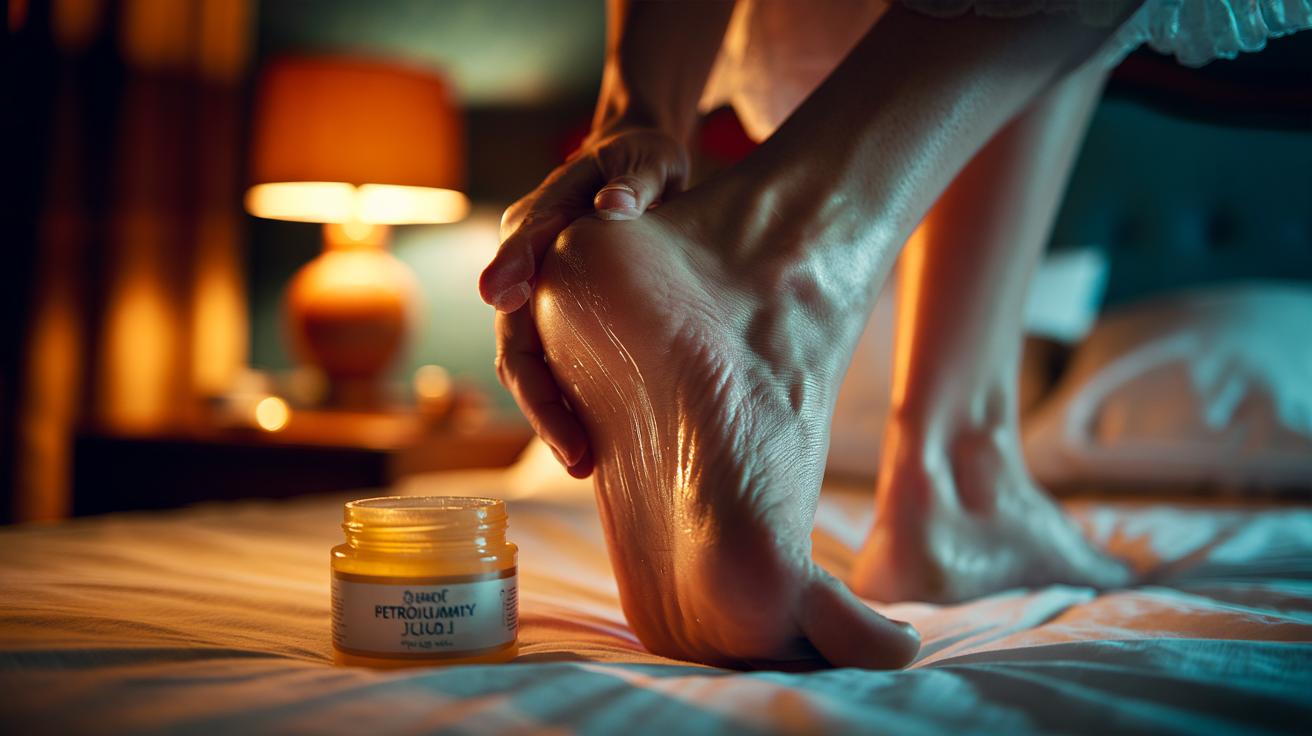
Cracked heels can turn every step into a wince, yet the simplest fix often hides in plain sight: a thin layer of Vaseline (petroleum jelly) and a pair of socks. This classic hack works not by magic but by science, exploiting a skin-care principle called occlusion. By sealing the surface, petrolatum traps water where it matters, softening tough skin and easing fissures as you sleep. Hydration, not aggressive scraping, is the overnight game-changer for sore, split heels. Here’s how occlusion locks in moisture, why socks supercharge the effect, and the safest way to try it—plus the smart tweaks that turn a one-night fix into a lasting routine.
Why Occlusion Works on Cracked Heels
Dry heels are essentially a barrier problem. The outer layer, the stratum corneum, loses water to the air, a process known as transepidermal water loss (TEWL). Petroleum jelly forms a semi-permeable film that dramatically slows TEWL—dermatology literature suggests up to 98% reduction under ideal conditions—allowing the skin’s natural enzymes to break down hardened bonds between dead cells. The result is rapid softening without abrasion. That is why a dab of petrolatum can do more overnight than a week of frantic filing.
There’s a second benefit: reduced friction. Socks over the jelly cushion micro-movements that aggravate fissures, while warmth increases suppleness. Combine occlusion with water-binding humectants (like glycerin or urea) beneath the jelly and you create a layered approach—humectant draws moisture in, emollients smooth, and the occlusive locks it all down. When the skin is hydrated, it flexes rather than splits, making walking more comfortable by morning.
Step-by-Step: The Vaseline + Socks Method
Start with clean, damp—not dripping—feet. Pat dry, then apply a pea-to-cherry-sized amount of a humectant cream (10–25% urea or glycerin). Follow with a thin film of Vaseline; you’re aiming for shine, not slipperiness. Gently massage into heels and any rough edges. Pull on breathable cotton or bamboo socks and leave on for 6–8 hours. In the morning, wash with lukewarm water, pat dry, and apply a light moisturiser. Limit mechanical removal to a few strokes with a fine pumice on dry skin—save heavy-duty filing for a professional.
Do not apply petrolatum to open, bleeding, or obviously infected cracks—seek advice from a pharmacist, GP, or podiatrist. If you have diabetes, poor circulation, or neuropathy, get tailored guidance before using occlusion. Repeat nightly for three to five days, then maintain two to three times a week. A final tip: moisturise after every shower, and rotate a barrier balm into your routine before long walks or standing shifts to prevent relapse.
Choosing the Right Products and Fabrics
Think in layers. A humectant draws water into the stratum corneum; an emollient smooths rough micro-cracks; an occlusive seals it all in. Effective pairings include urea 10–25% under petroleum jelly, or glycerin gel under a waxy balm. If your skin is very thick, a low-strength lactic acid or salicylic acid lotion used on alternate nights can help, but go slow to avoid stinging. For fabrics, breathable socks are key: cotton, bamboo, or fine merino trap warmth without suffocating the skin. Avoid plastic-lined socks unless directed—too much sweat can macerate fragile edges.
Allergies are uncommon with petrolatum, but balms containing lanolin can irritate some people. If you notice redness or itching, stop and switch formula. Night-to-night consistency matters more than brand names. Store your products bedside to remove friction from the habit.
| Function | What It Does | Examples |
|---|---|---|
| Humectant | Binds water into the outer skin layers | Glycerin, Urea (10–25%), Hyaluronic Acid |
| Emollient | Fills micro-gaps, improves flexibility | Shea Butter, Squalane, Ceramides |
| Occlusive | Seals moisture, reduces TEWL | Petroleum Jelly, Beeswax, Dimethicone |
| Sock Fabric | Maintains warmth, limits friction | Cotton, Bamboo, Merino Wool |
When the Trick Falls Short—and What to Try Next
If fissures are deep, painful, or catch on bedding, the overnight fix may need reinforcements. Add a daytime routine: apply a urea-rich cream after showers and use the Vaseline + socks method on alternate nights. Consider silicone-gel heel sleeves for targeted cushioning. Persistent cracking can signal eczema, psoriasis, athlete’s foot, thyroid issues, or footwear that overloads the heel pad. Swap backless shoes for supportive trainers, and address callus build-up with gentle, regular care rather than marathon filing sessions.
Red flags include swelling, warmth, pus, a bad odour, spreading redness, or fever—seek urgent medical advice. People with diabetes or vascular disease should get podiatry input early; small problems escalate quickly. If there’s no improvement within 7–10 days of consistent care, escalate to a pharmacist or GP. A short course of a keratolytic (under guidance) or treatment for a fungal infection can unlock progress when plain occlusion plateaus.
The genius of the Vaseline + socks trick is its elegant simplicity: it restores what your skin is missing—water—and keeps it there long enough to heal. Deployed wisely, it can turn cracked, chalky heels supple overnight and maintain comfort with minimal effort. Keep your routine small and repeatable, choose breathable socks, and layer humectant, emollient, and occlusive for the most resilient results. If your heels could talk tomorrow morning, what would they ask you to change today—your moisturiser, your socks, or your shoes?
Did you like it?4.6/5 (27)