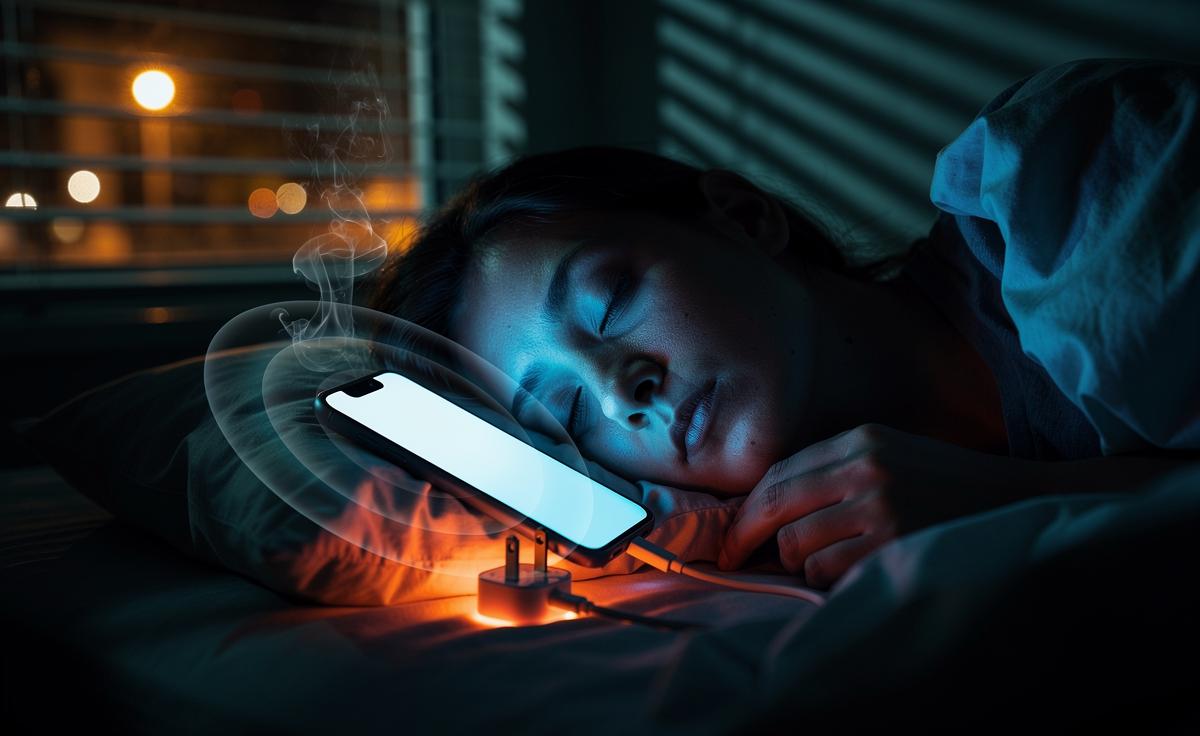
In a nutshell
- 📵 Blue light suppresses melatonin, fragments REM, and late-night alerts create cognitive hypervigilance, degrading sleep quality.
- 🔥 Sleeping with a charging phone raises lithium‑ion heat and thermal runaway risk—avoid under‑pillow charging and use certified UK chargers.
- 📡 Proximity increases near‑field RF exposure (even within ICNIRP limits); keep distance or use Airplane Mode overnight.
- 🔒 Night-time privacy matters: trim lock‑screen previews, use Do Not Disturb/Sleep Focus, and route alarms to wearables to prevent midnight intrusions.
- 🛠️ Safer habits: park the phone across the room, charge on a hard surface with approved kit, enable Optimised Battery Charging, and use true night modes.
Across the UK, phones have crept from our desks to our duvets. They double as alarm clocks, diaries, even sleep trackers. Yet a growing body of expert advice in 2026 urges distance after dark. Sleep physicians, fire investigators and digital‑wellbeing researchers all point to the same conclusion: keeping a handset inches from your face all night is a bad bargain. From disrupted hormones to very physical hazards, the downsides stack up. The fix is not luddite rejection. It is smarter boundaries. A phone can serve your morning without sabotaging your night. Here’s why the warnings are getting louder—and how to act on them.
Sleep Physiology and Night-Time Phone Use
Biology does not negotiate with notifications. Bright screens emit blue light that suppresses melatonin, making it harder to fall asleep and to stay asleep deeply. Even a brief check—“just two minutes”—can reset your internal clock. The effect is stronger when the device hovers near your face on a pillow. Research cited by NHS sleep specialists links pre‑bedtime scrolling to increased sleep latency and more fragmented REM. That sleepy grogginess you feel at 7 a.m. is often the bill for midnight taps. Add vibration alerts, alarms from apps, and background syncs; each micro‑disturbance nudges the brain toward wakefulness. Small nudges add up. Rest becomes shallow.
It’s not just light. Content triggers arousal. Messaging threads, breaking news, a last‑minute work email—all raise heart rate and cortisol. Your brain, primed for threats, scans and rescans. Even “silent” modes can backfire if you’re conditioned to anticipate the buzz. Sleep psychologists describe this as cognitive hypervigilance, a learned loop between the bed and the handset. Breaking the loop means building friction. Park it across the room. Use a simple clock. And if you rely on a sleep app, schedule data sync for the morning and dim the display with true night modes rather than full brightness at arm’s length.
Fire, Battery, and Electrical Hazards You Can’t Ignore
Modern phones are safe within their ratings, but not under a duvet, wedged beneath a head, or paired with a dodgy charger. The chemistry matters. Lithium‑ion cells dislike heat; trapped warmth accelerates degradation and, in rare cases, thermal runaway. UK fire services still attend bedroom blazes started by phones left charging on soft furnishings. Fast‑charging bricks in 2026 push higher wattage; magnetic chargers can warm both coil and case. A phone under a pillow can’t shed heat, and the heat is the hazard. Fake adapters remain a scourge online, lacking proper isolation and over‑current protection. The pattern is grimly familiar: overheating, smoke, then flame.
| Risk | What Happens | Safer Choice |
|---|---|---|
| Under‑pillow charging | Heat buildup, battery stress, fire | Charge on a hard surface, in open air |
| Counterfeit chargers | Electrical faults, shock, ignition | Certified UK‑plug charger (BS 1363/BS EN standards) |
| Overnight fast charge | Prolonged heat at 100% | Optimised charging; unplug after top‑up |
Fire Brigades across Britain regularly warn against device charging on beds and sofas, and those advisories still apply to the latest models. Use manufacturer‑approved cables. Keep the handset off blankets while charging. Enable “Optimised Battery Charging” to reduce time spent at 100%. And if your phone swells, clicks, or gets unusually hot, stop using it and seek service. Convenience should not outrank common sense at 2 a.m.
Radiation, Data, and Digital Boundaries in a 24/7 Network
On radio waves, nuance matters. UK exposure limits based on ICNIRP guidelines keep RF radiation well below harmful thresholds for the general public. Still, proximity changes dose: the nearer the phone, the stronger the near‑field exposure compared with a device on the dresser. In 2026, handsets juggle 5G, Wi‑Fi 7, Bluetooth, and ultra‑wideband; each runs periodic beacons overnight for updates, pings, and backups. If the device doubles as an alarm, consider Airplane Mode before sleep to silence radios while keeping the clock. Distance is a low‑effort, high‑impact precaution, even when overall exposure is within guidelines.
There’s also privacy. Always‑on assistants, background location checks, and push alerts create a “micro‑surveillance” feel that gnaws at rest. People don’t relax with a glowing inbox by their cheek. Harden your boundaries: set Do Not Disturb or Sleep Focus to allow only true emergencies. Trim lock‑screen previews so headlines and messages don’t ambush you at 1 a.m. If you wear a smartwatch, route the alarm there and leave the phone outside the room. For legitimate sleep tracking, pick devices with local processing and deferred uploads. The goal is simple: your bed should be for sleep and intimacy, not for server calls and system nudges.
Experts aren’t demanding a digital purge. They’re advocating risk‑aware routines that protect sleep, safety, and privacy. Keep the handset at least an arm’s length away—ideally across the room. Charge on a hard surface, with certified kit. Use blue‑light reduction in the evening, then park the screen. When you must be reachable, whitelist contacts via Do Not Disturb and switch the radios off. Small shifts pay out in clearer mornings and calmer nights. If you try it for a week, what changes first for you: fewer night‑time wake‑ups, steadier energy by noon, or simply the relief of waking without your phone as the very first thought?
Did you like it?4.4/5 (21)