In a nutshell
- 🧪 Why vinegar works: Mild acetic acid (pH ≈ 2.4–3.0) breaks down mineral salts, hydrates carbonised food, and reduces surface tension so burnt-on residues lift without abrasion to glass-ceramic.
- 🧼 Surface-safe method: Start with a cool hob, brush off grit, soak spills with undiluted white vinegar for 10–15 minutes, then use a microfibre cloth and a fresh-blade glass scraper at 30–40°; finish with a dry buff.
- 🛡️ Key cautions: Avoid steel wool, scouring powders, oven cleaners, ammonia, and bleach; don’t let acid sit on aluminium trims; rely on dwell time over force to prevent scratches and haze.
- 🔄 Alternatives and combos: For greasy films, follow with a drop of washing-up liquid before a vinegar rinse; for stubborn rings, repeat the cycle; use bicarbonate of soda only sequentially (not mixed) as a gentle polish.
- 📏 Handy parameters: Contact time: 3–5 minutes for light soil, 10–20 for heavy; keep the scraper low and push in one direction; choose lint-free microfibre for a clean, streak-free shine.
That glossy, jet-black glass stovetop looks stunning until a pasta boil-over or caramelised spill bakes itself on. You scrub, it smears. You push harder, and risk micro-scratches that dull the sheen. There’s a simpler route. Plain white vinegar, powered by mild acetic acid, loosens the chemistry binding those stubborn spots so they wipe away with minimal effort. It’s inexpensive, widely available, and kinder to the surface than gritty powders. Used correctly, vinegar dissolves residues without the abrasion that damages ceramic glass. Here’s how its acidity works, the safest method to deploy it, and the situations where you should switch tactics for best results.
Why Vinegar Works on Glass Stovetops
Burnt-on food isn’t just dirt; it’s a blend of dehydrated sugars, denatured proteins, fats, and mineral salts fused by heat into a tenacious film. Acetic acid in vinegar (typically 5%) disrupts several of these bonds. It lightly acidifies and hydrates carbonised layers, helps dissolve alkaline mineral deposits, and lowers surface tension so the liquid creeps under the residue. That creeping action is crucial. Once the layer is undermined, even a gentle wipe or a careful pass with a razor scraper lifts it cleanly.
Glass-ceramic cooktops are tough yet vulnerable to scratching by hard particles. Vinegar is non-abrasive, so it softens without scouring. It also helps deglaze sugary spills, which otherwise smear into a sticky glaze. Letting vinegar dwell is more effective than forceful scrubbing. Time does the heavy lifting; you simply finish the job. Compared with alkaline cleaners, mild acidity is less likely to haze the surface or attack surrounding silicone trims. Keep it off bare aluminium edges for prolonged periods, though, as acids can mark soft metals.
A Step-by-Step Method That Protects the Surface
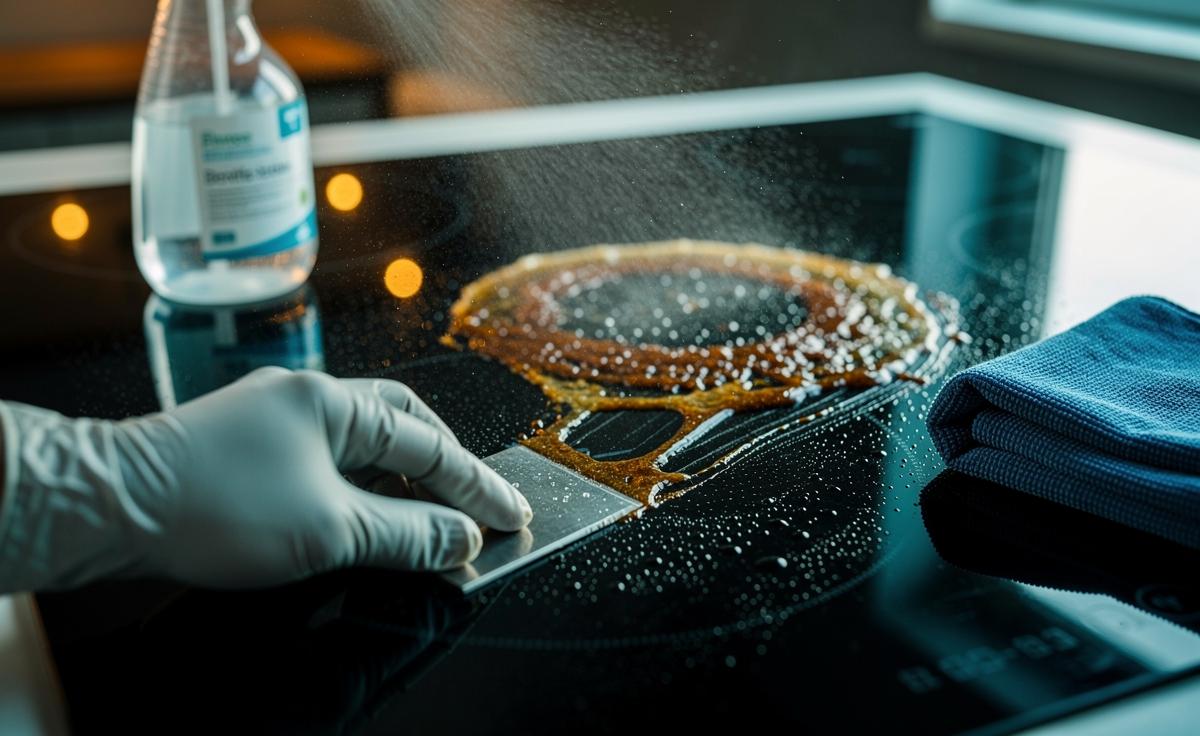
Start cold. Switch the hob off and allow the glass stovetop to cool fully to avoid streaking and flashes of evaporated vinegar. Brush away gritty crumbs with a dry microfibre cloth. For light smears, spritz undiluted white vinegar across the zone. For heavy, caramelised rings, lay a vinegar-soaked, warm microfibre cloth over the patch for 10–15 minutes. That dwell time softens edges and seeps under the crust.
Next, hold a dedicated glass scraper at a shallow 30–40° angle and push gently in one direction, replacing blades as soon as they nick. Wipe, re-spritz vinegar, and repeat if needed. Finally, buff with a clean, dry cloth for a smear-free shine. If a greasy film lingers, a quick pass with diluted washing-up liquid breaks the oil, followed by a vinegar rinse to restore clarity. Never use steel wool, scouring powders, or circular scrubbing that can haze the surface. And do not combine vinegar with bleach or chlorine-based products; keep your toolkit simple and safe.
Science Corner: Acidity, pH, and Burnt-On Residues
The punch in white vinegar comes from its pH of roughly 2.4–3.0. At this acidity, it chelates trace minerals from water spots and weakens the Maillard-browned matrix that glues spills in place. That doesn’t “dissolve” carbon like a lab reagent, but it makes residues water-wettable and mechanically fragile. Heat drives dehydration and crosslinking in food; acid plus moisture reverses that trend just enough for safe removal. Think of vinegar as a softener and undercutter rather than a corrosive stripper. Pairing it with controlled scraping multiplies the effect without grinding grit across the glass.
| Item | Typical Value/Tip | Why It Matters |
|---|---|---|
| White vinegar pH | ≈ 2.4–3.0 | Effective at loosening mineral-rich, burnt residues. |
| Contact time | 3–5 min light soil; 10–20 min heavy | Allows acid and moisture to penetrate and lift. |
| Scraper angle | 30–40°; fresh blade | Shears residue without scratching glass-ceramic. |
| Cloth choice | Lint-free microfibre | Prevents new micro-scratches and streaks. |
Test on a small corner and use patience; dwell time beats brute force. With that approach, vinegar does the chemistry while you do a careful, minimal clean-up.
When to Use Alternatives and What to Avoid
Vinegar delivers on most day-to-day messes. Yet some spills need a tweak. Thick, sugary overspills can carbonise into glassy shells; use the vinegar soak, then a cautious scrape, and, if necessary, a second cycle. Grease-heavy smears respond well to a tiny drop of washing-up liquid after the vinegar stage, then a rinse and buff. If odour bothers you, choose clear white vinegar; malt versions can leave a faint scent and tint. For cloudy water marks, vinegar is ideal; for silicone sealant haze, a specialised ceramic hob cleaner may be quicker.
A word on the famous “bicarbonate and vinegar” combo: mixing them creates fizz, but the reaction neutralises both, blunting cleaning power. Use them sequentially if desired—vinegar soak first, wipe dry, then a light sprinkle of bicarbonate of soda as a gentle polish, followed by a clean rinse. Avoid oven cleaners, ammonia, or powdered abrasives; they can etch, haze, or stain. Keep blades flat, never gouging. And always remove sugary spills promptly after cooking—they harden fast and fight back later.
Used with a light hand and a little patience, vinegar turns a fraught scrubbing session into a calm, methodical reset for your glass stovetop. Its mild acidity weakens the chemistry of burnt-on food, while non-abrasive tools protect the surface you want to show off. The result is a safer, shinier hob and fewer minutes spent cleaning. Will you try a timed vinegar soak and gentle scrape on your toughest spot this week, or is there another kitchen trick you swear by for bringing ceramic glass back to a flawless shine?
Did you like it?4.4/5 (22)