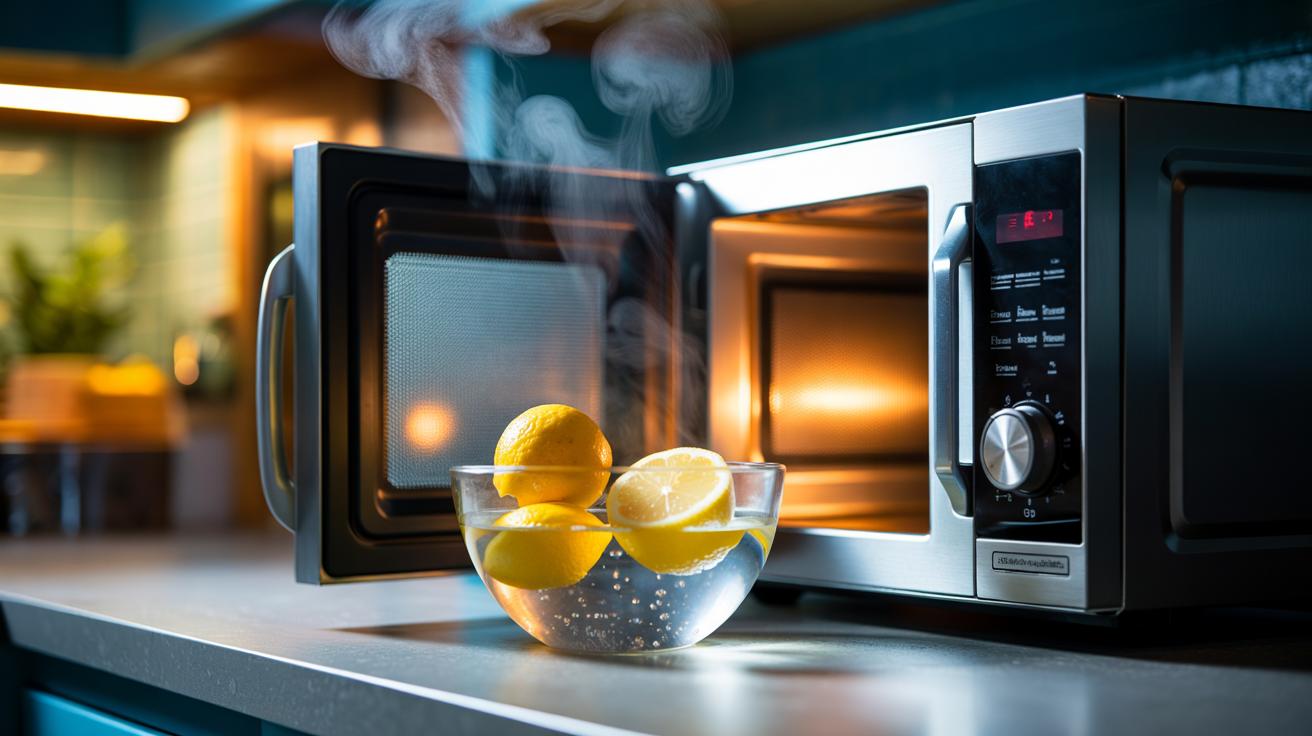
In a nutshell
- 🍋 Use the three-minute lemon steam: 250–300 ml water in a microwave-safe bowl with lemon juice and halves; heat 2–3 minutes, then wipe after a 1-minute closed-door soak.
- 🧪 Why it works: citric acid breaks down greasy films and d‑limonene binds odour molecules while steam lifts grime into hard-to-reach areas.
- ⏱️ Timing by power: 700–800 W = 3:00, 900 W = 2:30, 1000 W+ = 2:00; always include a 1-minute rest with the door closed for maximum deodorising.
- 🧼 For stubborn odours: add bicarbonate of soda, repeat the cycle, or use a pinch of salt for gentle abrasion; avoid bleach and metal scourers to protect the interior.
- 🛡️ Prevention made easy: cover food, wipe splashes while warm, clean door gaskets and vents monthly, and run a weekly lemon steam to keep odours at bay.
Your microwave tells stories: last night’s fish pie, yesterday’s curry, that slightly tragic popcorn. The odour lingers, settles, and steals the joy from your next reheat. Here’s the surprisingly elegant fix. A lemon, water, and three honest minutes. No sprays. No scrub frenzy. Just science in your kitchen. Steam carries citrus oils into every nook, loosening grime and neutralising stubborn smells. It works because lemons are more than aromatic; they’re naturally acidic and antimicrobial. In other words, they clean while they perfume. If you’re time-poor and scent-sensitive, the method below is the fastest, most reliable reset for a tired microwave.
Why Lemon Neutralises Microwave Odours
At the heart of the trick is citric acid. It breaks down greasy films that trap odours on the cavity walls and ceiling. Then there’s d‑limonene, the lemon peel’s aromatic compound, which binds to volatile stink molecules and helps strip them away. Heat turns water into steam, lifting grime. The lemon’s chemistry does the rest. No harsh chemicals, no lingering synthetic fragrance, just clean. For households sensitive to cleaners or fragrances, it’s a gentle, food-safe option that still delivers newsroom‑tight results.
There’s also a practical edge. When you heat a bowl of lemon water, the vapour penetrates vents, door seals, and the turntable’s underside—spots people forget. That’s where yesterday’s splatters ferment into tomorrow’s odours. The steam loosens them, so a soft cloth can finish the job without scouring. It’s efficient, cheap, and repeatable. Use it after pungent meals, after burnt mishaps, or as a weekly reset. Consistency prevents build‑up, which is where most odour problems begin.
Three-Minute Lemon Steam: Step-by-Step
Cut a fresh lemon in half. Squeeze the juice into a microwave‑safe bowl, then drop both halves in. Add 250–300 ml of water. That ratio matters: enough liquid to make generous steam, enough lemon to deliver punch. Place the bowl on the turntable. Heat on high until vigorous steaming—typically 2 to 3 minutes depending on wattage. Let the door stay shut for one full minute. This is your secret extra: trapped vapour saturates every surface, melting odours where they cling.
Open the door carefully; it will be steamy. Remove the bowl with an oven glove. Wipe the ceiling, sides, glass, and door seals with a soft cloth, rinsing as needed. Stubborn spots? Dip the cloth in the hot lemon water and hold it against them for 10–15 seconds, then wipe. Finish with the turntable and roller ring. That’s it: three minutes to erase smells, plus a minute’s patient pause that makes the difference between “fresh” and “flawless”.
| Microwave Power | Heat Time | Rest (Door Closed) |
|---|---|---|
| 700–800 W | 3:00 minutes | 1:00 minute |
| 900 W | 2:30 minutes | 1:00 minute |
| 1000 W+ | 2:00 minutes | 1:00 minute |
Stubborn Smells, Stains, and Prevention
Fishy reek won’t quit? Add a teaspoon of bicarbonate of soda to the lemon water before heating; it boosts deodorising power without harshness. Heavy splatter or smoky residue from burnt snacks may need a second cycle. If stains persist, wipe with a cloth dipped in warm lemon water plus a tiny pinch of salt for mild abrasion, then rinse. Never use metal scouring pads or bleach inside a microwave; they can damage coatings and seals. For plastic interiors with absorbed odours, repeat the steam clean across two days and leave a small bowl of dry bicarbonate inside overnight (microwave off).
Prevention is almost effortless. Cover food with a vented lid or kitchen towel. Wipe fresh splashes while the cavity is still warm, when residues are soft. Pop a thin lemon slice in a cup of water during pungent reheats to minimise smell transfer. Clean the door gasket and vents monthly; they trap the worst. Once a week, run the lemon steam routine for a minute or two as a maintenance quickie. Little and often beats heroic scrubbing, and it keeps your appliance genuinely neutral between meals.
Three minutes, one lemon, and a bowl of water—this is the kind of domestic hack that holds up under scrutiny. It’s cheap, green, and fast. You get chemistry doing the lifting, steam doing the loosening, and a cloth doing the last 5%. The payoff is instant: no cloying cover‑up, just the clean scent of citrus that fades to nothing. Your microwave is reset, ready for porridge, leftovers, or a late‑night mug cake. Will you make the lemon steam a weekly ritual, or keep it as your rapid‑response fix after the next pungent dinner?
Did you like it?4.4/5 (23)