In a nutshell
- 🔬 The fizzing reaction between baking soda (alkaline) and vinegar (acid) releases CO₂ bubbles that agitate and lift grime, while hot water softens grease and carries debris away.
- 🧪 Step-by-step: 120–150g baking soda, 120–240ml vinegar, cover 15–30 minutes, then 1–2L hot water; finish with brief plunging if safe.
- 🛡️ Safety first: never mix with commercial caustics, ventilate, protect eyes and finishes, and match water temperature to pipe material (near-boiling for metal, very hot for PVC).
- 🧰 When fizz fails: multiple fixtures backing up signals a main-line issue; use a drain snake or call a pro for solid obstructions or persistent blockages.
- 🌿 Benefits: eco-friendly, low-cost maintenance that slows residue build-up; monthly treatments keep drains clear and reduce reliance on harsh chemicals.
Clogged sink, sluggish shower, and a heady whiff of drain odour — the domestic trifecta no one invites. Yet the antidote often sits in your cupboard: baking soda. When paired smartly with hot water, a splash of vinegar, and time, it can lift greasy films, disturb hair mats, and free everyday blockages without harsh chemicals. Think of it as a gentle but insistent nudge. Tiny bubbles, big effect. For routine slow drains, this low-cost method can be startlingly effective and kinder to pipes than caustic cleaners. Here’s how the chemistry works, the exact steps to follow, and when to call in heavier artillery.
The Science Behind the Fizz: Why Baking Soda Works
Baking soda (sodium bicarbonate) is mildly alkaline. In a drain, that matters. Many clogs are a sticky composite of fats, soap scum, toothpaste binders, and hair — all of which benefit from a lift in pH that helps loosen and disperse residues. Introduce vinegar (acetic acid), and the two react, releasing carbon dioxide gas. Those fizzing bubbles jostle debris, pushing the alkaline solution deeper into the tangle. This is a contact-and-agitation game, not brute force.
The fizz is only half the story. Heat is the quiet partner. A hot-water flush softens congealed grease, while the dissolved bicarbonate and acetate salts help break surface tension. This permits the mixture to creep under grime and lift it from pipe walls. On smooth PVC or metal, the effect is amplified because there’s less texture for muck to cling to.
Physics helps too. In narrow U-bends, the reaction’s gas expansion creates microcurrents that disturb settled sludge. It won’t pulverise a solid obstruction, but for layered films and semi-soft plugs, it’s ideal. Think of it as gentle mechanical scrubbing delivered by bubbles. Used regularly, it can slow the re-accumulation of residue and keep the trap flowing.
Step-by-Step Method for Bubble-Powered Unclogging
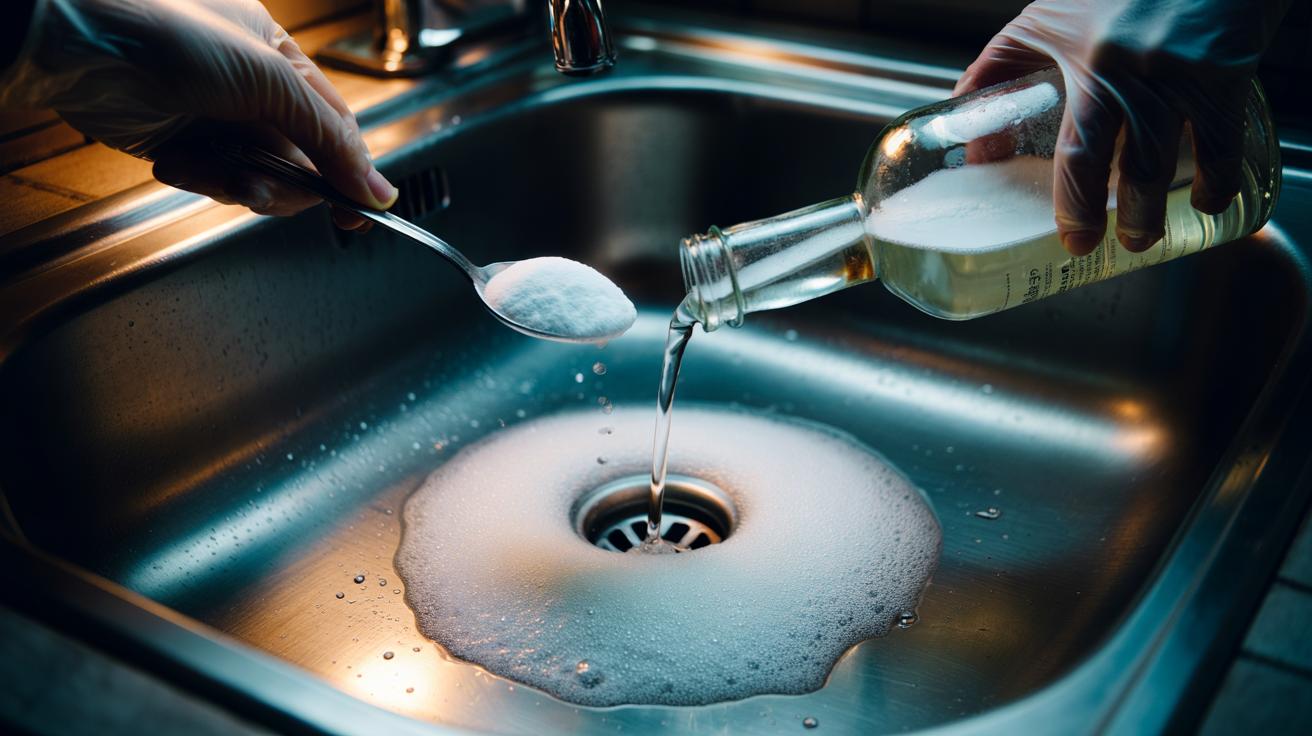
First, clear the standing water if possible; give the mixture a clean shot at the obstruction. Tip in 120–150g of baking soda (about half a cup), nudging it past the strainer or plughole. Follow with 120–240ml of warm vinegar — malt or white both work, though white is neater. Cap the opening with a stopper or a damp cloth to keep the reaction in the pipe, not your face. A 15–30 minute wait is not optional; it’s where the fizz does its work.
While you wait, heat water. For metal pipes, near-boiling is fine; for PVC, aim for very hot, not rolling boil. Remove the cover and pour in 1–2 litres steadily. If water still lingers, repeat once. Then, if safe for your fixture, use a few brisk plunges to take advantage of the loosened debris. The sequence matters: soak, heat, then mechanical nudge.
Do not mix this with commercial caustic or acid cleaners. If you recently used one, flush thoroughly first. For smelly but free-flowing drains, a maintenance dose (60g bicarbonate, 120ml vinegar, hot-water rinse) every few weeks keeps films from returning. Consistency beats heroics with household plumbing.
| Item | Quantity | Purpose | Notes |
|---|---|---|---|
| Baking soda | 120–150g | Alkaline lift | Push past strainer |
| Vinegar | 120–240ml | Fizzing agitation | Cover drain during reaction |
| Hot water | 1–2 litres | Grease softening | Near-boiling for metal; very hot for PVC |
Safety, Materials, and Timing That Matter
Household plumbing is tougher than you think, but not indestructible. If you’ve used a caustic drain cleaner in the past 24 hours, do not add vinegar. Flush with plenty of water first to avoid unpredictable reactions. Wear gloves, mind your eyes, and open a window — vinegar isn’t toxic, but confined fumes plus hot water can be irritating. For chrome finishes, wipe any spills quickly to prevent cosmetic dulling.
Pipe material dictates your heat strategy. Older soldered copper and modern stainless can tolerate kettle-hot water; plastic traps prefer very hot from the tap. If you’re unsure, test with smaller hot pours. Strainers, pop-up stoppers, and hair catchers are the first line of defence. Remove them and clean mechanically before chemical-ish methods — a simple pull can halve the problem.
Time is the invisible ingredient. Let the bicarbonate sit in a damp drain for five minutes before adding vinegar; it helps adhesion. Give the reaction a full half-hour for stubborn clogs. Then pour hot water slowly, not as a single dump. Slow flow often beats a sudden torrent, preventing splashback and helping heat permeate the blockage. Finish with a quick plunge if safe for your basin.
When It Won’t Work and Smarter Next Steps
Not all clogs are created equal. If multiple fixtures back up at once, you likely have a main-line issue that fizz can’t touch. Gurgling loos, floor drain overflows, or sewage smells point to a deeper obstruction: collapsed pipes, fatbergs, or root intrusion. In such cases, stop pouring things down and call a professional. Likewise, a solid foreign object — a bottle cap, a child’s toy — will resist bubbles and demand retrieval or snaking.
For hair-heavy bathroom drains, a plastic barbed strip or proper drain snake is brutally effective. Feed, twist, extract; then deploy the bicarbonate–vinegar–hot-water sequence to scrub residue the snake leaves behind. For kitchens plagued by grease, consider an enzyme-based cleaner as a monthly alternative; these digest fats slowly without heat. A wet/dry vacuum can also pull stubborn plugs if you can seal the overflow and create suction.
The eco and cost case is strong. A box of bicarbonate of soda costs pennies per treatment and avoids harsh discharge into waterways. Pipes benefit too, because you’re not hammering them with caustics that can attack seals over time. Use the fizzy method as maintenance, escalate to mechanical tools for surly clogs, and reserve professionals for structural or widespread blockages. Right tool, right moment, clear drain.
Baking soda isn’t magic, but it is method: a measured dose of chemistry, heat, and patience that coaxes everyday clogs to move on. It keeps costs low, spares your pipes, and trims your household’s chemical footprint while tackling the grime we all produce. Used monthly, it’s preventative; used promptly, it’s curative. And when it’s not enough, it points you toward smarter next steps rather than false hope. How will you fold this fizz-first approach into your own home routine — as a rescue tactic, a maintenance ritual, or a little of both?
Did you like it?4.5/5 (21)