In a nutshell
- 🔬 The science: acetic acid in vinegar reacts with calcium/magnesium carbonates, forming soluble acetates, CO₂, and water—visibly fizzing as stains loosen.
- ⚡ Fast results: A simple, two-minute contact time lifts light limescale on glass, chrome, and ceramic; repeat cycles tackle thicker deposits without abrasion.
- 🛡️ Safety first: Never mix vinegar with bleach, avoid prolonged contact on natural stone, ventilate spaces, and test unfamiliar finishes before full application.
- 📊 Practical use: Adjust ratios and contact times by surface (neat on glass/tiles, diluted on stainless); use wraps or cling film to prevent drying and boost effectiveness.
- 🌱 Prevention & eco: Regular squeegeeing, drying taps, and optional water softening cut buildup; vinegar is biodegradable, with citric acid as a mild alternative.
Hard water leaves a stubborn calling card: cloudy spots on glass, chalky rings around taps, and that gritty film on shower screens. You don’t need harsh chemicals to fight back. A kitchen staple will do. Ordinary white vinegar, powered by acetic acid, can loosen and dissolve these mineral residues fast. In many cases, light stains lift in about two minutes, saving both time and elbow grease. It’s cheap, low-odour, and widely available. It’s also kinder to the environment than many descalers sold in brightly labelled bottles. Used correctly, vinegar is a precise, targeted cleaner that turns crusty deposits into rinseable water in moments.
The Chemistry: Why Vinegar Melts Mineral Scale
Hard water stains are mainly calcium carbonate and magnesium carbonate. These alkaline minerals cling to surfaces when water evaporates, leaving behind a crystalline crust. Acetic acid in vinegar (typically 5–8% by volume) reacts with those carbonates, forming soluble acetate salts, carbon dioxide bubbles, and water. The fizz you see is the reaction at work, a visible sign that the bond between the deposit and the surface is breaking. It’s simple acid–base chemistry with practical punch. The mild acidity also helps by lowering the local pH, preventing the minerals from re-forming while you wipe.
Because vinegar is a weak acid, it works selectively on the mineral layer rather than attacking most common household surfaces. Glass, chrome, and ceramic tolerate it well. That balance—effective on scale, gentle on substrates—is what makes vinegar a dependable first-line cleaner. For thick, long-standing scale, the reaction needs more time, fresh vinegar, or multiple passes. But for everyday haze on shower doors and taps, two focused minutes is often enough to shift the lot.
Two-Minute Method: Step-By-Step for Taps, Glass, and Tiles
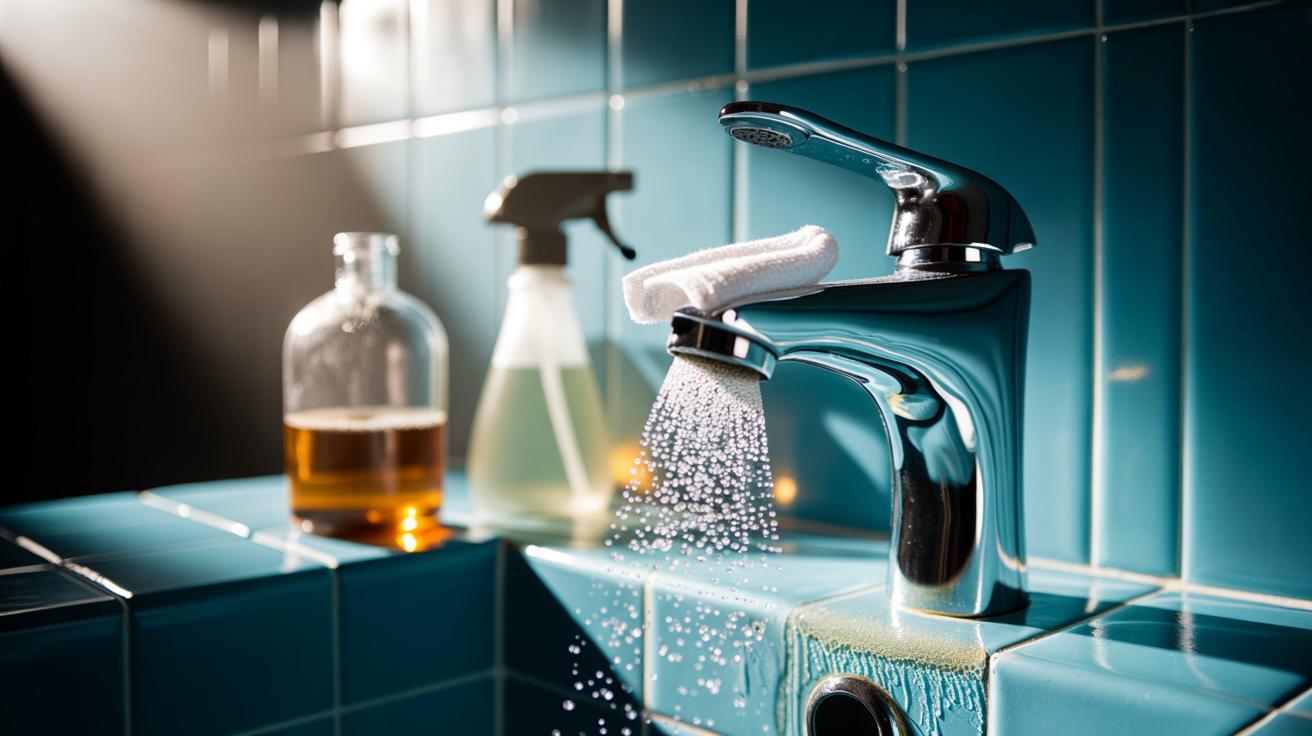
Start with a fresh bottle of plain white vinegar. No balsamic, no flavoured blends. For light staining on glass or ceramic tiles, dampen a microfibre cloth with undiluted vinegar and press it onto the deposit. Wait about two minutes. You should see faint fizzing or a softening sheen. Wipe firmly, then rinse with warm water and buff dry. On chrome taps, soak a cotton pad or paper towel in vinegar, wrap it around the fitting, and let it sit for two to five minutes. Remove and wipe. Streaks? Rinse and polish with a dry, clean cloth.
For vertical shower screens, pour vinegar into a spray bottle and saturate the area. To stop drips, press cling film over the sprayed section like a temporary poultice. Two minutes often does the trick for fresh haze. For older scale, leave it 10–15 minutes, refreshing the spray if it dries. Never mix vinegar with bleach or bleach-containing cleaners—combining acids and hypochlorite can release dangerous gases. Ventilate well, wear gloves if you have sensitive skin, and always test discreetly on unknown finishes. Avoid prolonged contact with natural stone like marble or limestone; acids can etch them.
What to Use Where: Ratios, Contact Time, and Risks
Different surfaces call for small adjustments. Glass and glazed ceramic handle neat vinegar well. Stainless steel appreciates moderation and quick rinsing. Rubber seals and some plated finishes prefer diluted solutions. Use the guide below to keep things safe and effective. The aim is enough acetic acid at the surface for long enough to dissolve the mineral crust, but not so long that it bothers the substrate. If you see dulling, stop, rinse, and switch to a milder dilution or shorter contact time.
| Surface | Vinegar Ratio | Contact Time | Notes |
|---|---|---|---|
| Glass shower screen | Neat (100%) | 2–5 minutes | Spray and cover to prevent drying; rinse and squeegee. |
| Chrome taps | Neat or 1:1 with water | 2–10 minutes | Wrap with soaked pad; polish after rinsing. |
| Ceramic tiles | Neat | 2–8 minutes | Agitate with soft brush; avoid grout saturation. |
| Stainless steel | 1:1 with water | 2–3 minutes | Test first; rinse promptly and dry to prevent streaks. |
| Natural stone (marble/limestone) | Not recommended | — | Use pH-neutral stone cleaner; acids can etch. |
When deposits are thick, work in cycles: apply, wait, wipe, rinse, then repeat. Each pass removes another layer without resorting to scratchy pads. Patience beats abrasion. And remember, warm vinegar (not hot) accelerates the reaction slightly. Heat gently by standing the bottle in a bowl of warm water, never a microwave.
Beyond the Sink: Prevention and Eco Credentials
Stopping scale is easier than dissolving it. After each shower, a 10-second squeegee pass denies minerals the chance to crystallise. Wipe taps dry with a soft cloth. Use a water softener or a small inline filter if you live in a hard-water postcode; even partial softening cuts maintenance dramatically. A weekly spritz-and-wipe with diluted vinegar keeps glass bright without heroic scrubbing. Switch to rinse aids in dishwashers and keep the salt topped up to minimise spots on glassware. Small habits, big payoff.
Vinegar’s eco profile is compelling. It’s biodegradable, low in volatile organic compounds, and comes in recyclable bottles. It spares you from heavy-duty descalers that often rely on stronger acids and more packaging. Choose the mildest effective chemistry first; escalate only when needed. If the smell isn’t your favourite, add a few drops of essential oil to a spray bottle, or follow with a quick rinse and open window. Prefer an alternative? Citric acid (from lemon) is another gentle descaler; mix a teaspoon in warm water for similar effect on glass and taps.
Vinegar won’t fix everything, but for everyday hard water haze it’s fast, frugal, and strikingly effective. The secret is contact time, not brute force. Two minutes, a wipe, a rinse, and a dry—job done. If you’ve been fighting chalky stains with endless scrubbing, this quiet chemical shortcut will feel transformative. Ready to trial the two-minute method on your toughest tap or glass door, and what surface will you test first?
Did you like it?4.6/5 (29)