In a nutshell
- 🧪 Citric acid dissolves limescale (calcium carbonate) via acid reaction and chelation, breaking deposits into soluble forms overnight.
- 🛁 Simple overnight soak: detach or bag the head, immerse in lemon juice or 5–10% citric solution, then rinse and brush to clear clogged nozzles.
- ⚠️ Safety smart: gentle on chrome/plastic but avoid prolonged contact with natural stone and raw brass; test finishes and stop when fizzing ceases.
- 🍋 Comparison: Lemon/citric offers low odour and strong chelation; vinegar works but smells; commercial descalers act fast yet risk finish damage.
- 💧 For clear showerheads, results are visible—restored transparency, improved spray performance, and a small sustainability win through water and energy savings.
Hard water leaves a stubborn, chalky film on transparent showerheads that seems to laugh at standard soaps. Yet a squeezed lemon, or a cup of bottled lemon juice, can make the cloudiness vanish by morning. The secret is not folklore; it’s chemistry. Inside that citrus is citric acid, a mild, food-safe acid that dissolves limescale and loosens grit hiding in spray nozzles. It’s cheap. It’s quick. It smells clean. And for most chrome-plated and plastic fixtures, it’s gentle enough to use regularly without damage. Leave it to work overnight, rinse, and your showerhead can look factory-clear again—with spray patterns restored and pressure lifted.
The Science: How Citric Acid Dissolves Limescale
Limescale is mostly calcium carbonate (CaCO3). Citric acid tackles it on two fronts. First, as an acid, it donates protons (H+) that react with carbonate: CaCO3 + 2H+ → Ca2+ + CO2 + H2O. That visible fizzing? Carbon dioxide gas escaping as the solid breaks down. Second, citric acid is a superb chelating agent. It binds freed calcium ions to form soluble complexes (often described as calcium citrate), stopping them from reattaching to surfaces. That dual action—acid plus chelation—explains why it keeps working steadily while you sleep.
Citric acid solutions have a pH around 2–3, strong enough to defeat scale yet far kinder than hydrochloric-based descalers. Because limescale layers are porous, the solution seeps in, reacts, and carries away loosened material. Given several hours, diffusion and chelation clear even tight jets deep inside a showerhead. Transparent housings show this most dramatically: the milky veil thins, edges sharpen, and the head looks truly clear. Unlike abrasives, there’s no scratching; unlike bleach, there’s no dangerous chlorine off-gassing. It’s simple surface chemistry working at a human pace—overnight.
A Quick, Overnight Method for Clear Showerheads
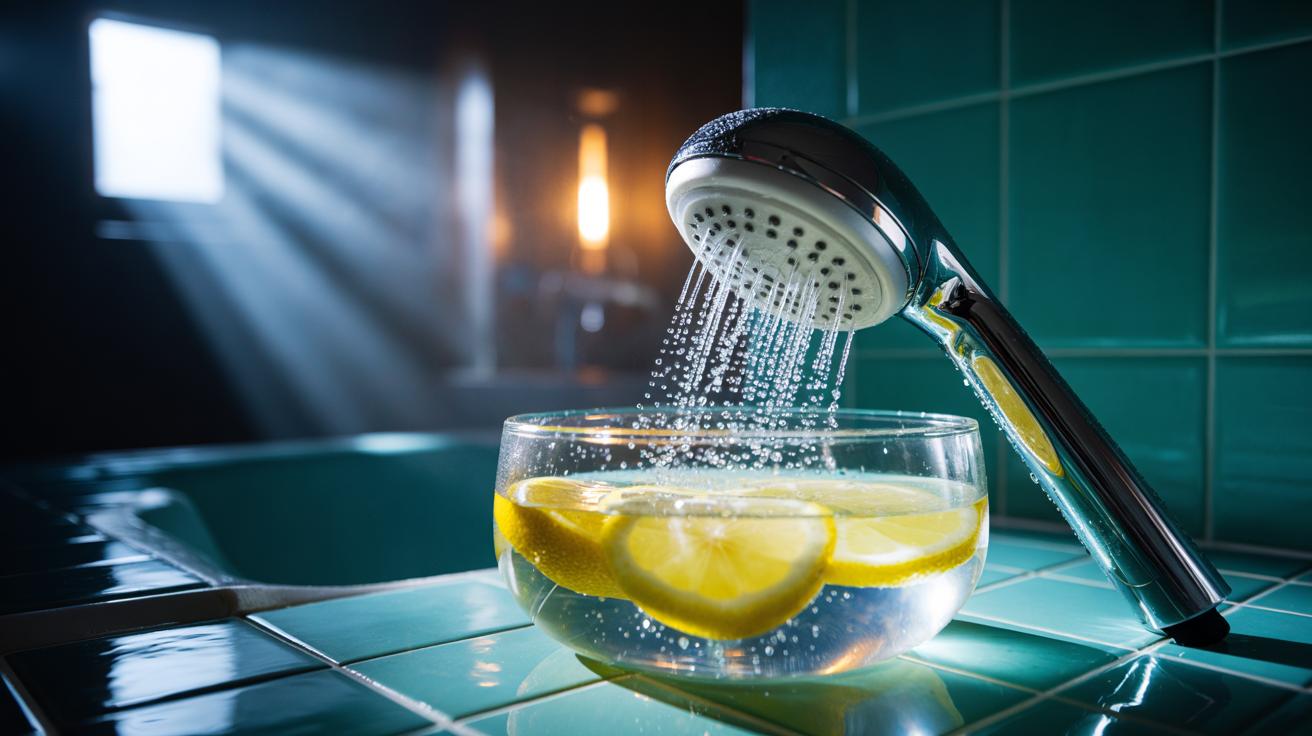
For detachable heads, twist off the faceplate or the entire head following the manufacturer’s guidance. Soak it in freshly squeezed lemon juice or a 5–10% citric acid solution (1–2 tablespoons citric acid powder per cup of warm water). Submerge completely. Leave for 6–12 hours. Rinse thoroughly, brush with a soft toothbrush, then run hot water to flush the jets. For fixed heads, fill a food bag with lemon juice, slip it over the head, and secure with an elastic band so the nozzles are immersed. Simple. Mess-free. It works while you sleep.
Take care with finishes. Chrome and most plastics are fine for overnight soaks; test first if you’re unsure. Avoid prolonged contact on unlacquered brass or decorative nickel, and never drip acid onto natural stone tiles, which can etch. If any stone might be exposed, wrap the area with a damp cloth before bagging. Stop as soon as bubbling stops and surfaces look clear—there’s no benefit to marathon soaks. After rinsing, pinch silicone nozzles to eject grit, then dry to minimise new deposits. Repeat every one to three months depending on water hardness, or sooner if the spray pattern deteriorates.
Lemon, Vinegar, or Harsh Descalers: What’s Best?
Households often rotate between lemons, vinegar, and commercial descalers. Here’s how they compare at the nozzle. Lemon’s citric acid chelates calcium brilliantly, leaving a low-odour result and a low environmental footprint. Vinegar (acetic acid) dissolves scale too, but its smell lingers and its chelating strength is weaker. Commercial descalers, especially those with hydrochloric or sulfamic acids, act faster on severe scale but can attack metal finishes and rubber if used carelessly. For routine maintenance and clear plastics, citric acid is the sweet spot: effective, gentle, and economical. When deposits turn rock-hard or turn brown from iron content, a short, supervised application of a stronger specialist product may be justified—then return to lemon for upkeep.
| Cleaner | Active Acid | Typical pH | Strengths | Cautions | Overnight Effect |
|---|---|---|---|---|---|
| Lemon/Citric | Citric acid | ~2–3 | Great chelation, low odour, gentle on chrome/plastic | Avoid on natural stone; limit on raw brass | Excellent for routine limescale |
| Vinegar | Acetic acid | ~2–3 | Widely available, inexpensive | Strong smell; weaker on heavy scale | Good, sometimes slower |
| Commercial Descaler | Hydrochloric/sulfamic etc. | <2 | Very fast on thick deposits | May etch finishes; stricter safety | Rapid, but monitor closely |
Why Clear Showerheads Benefit Most
Clear housings showcase every whitish vein of limescale, turning a sleek fitting into a foggy dome. It’s not just an eyesore. Those mineral crusts choke micro-jets, distort spray fans, and push water where it shouldn’t go, so showers feel weaker even when pressure is fine. Scale also traps biofilm and soap residues that dull the plastic over time. By dissolving calcium salts and lifting embedded grit, citric acid restores not only transparency but also the engineered geometry that makes sprays feel even and soft.
Design details matter. Many transparent heads use removable flow restrictors and flexible silicone nipples; both clog in hard-water areas. After an overnight lemon soak, a quick pinch of each nozzle and a rinse reopens them. The payoff is visible: glass-clear shells, sharper edges on internal turbines, and spray holes that finally look like circles again. There’s a sustainability dividend too. Keeping jets clear reduces the urge to crank up flow, saving water and energy. And regular, gentle descaling prolongs seals and O-rings, delaying the day you replace the head altogether.
From kitchen staple to bathroom saviour, the chemistry of citric acid makes lemon a quietly powerful tool against limescale. It’s safe for most fixtures, simple to deploy, and kind to both budgets and noses. If your clear showerhead has turned cloudy, an overnight citrus bath can return its shine and its bite, restoring the spray you paid for without harsh fumes. That’s the beauty of mild acids used well: they win by patience, not brute force. When you next see the first white halo forming, will you reach for a lemon, a bottle of vinegar, or a stronger descaler—and why?
Did you like it?4.6/5 (26)