In a nutshell
- 🔬 Chemistry that works: acetic acid in vinegar reacts with limescale (calcium carbonate), forming soluble calcium acetate and CO₂; heat speeds the dissolve dramatically.
- ⚙️ Fast method: fill with 1:1 vinegar:water, bring to the boil, stand 20–30 minutes, gently brush, rinse, then do a plain-water boil and discard; repeat for heavy build-up and avoid abrasives.
- 🧪 Practical settings: prefer white vinegar to avoid tint/odour; stainless and glass tolerate brief hot soaks, while plastic-lined kettles need warm—not boiling—treatments.
- 🧼 Troubleshooting: for lingering rings run a second cycle; to clear odour, boil water with a teaspoon of bicarbonate of soda, discard, then a final boil-off with plain water.
- ♻️ Ongoing care: schedule light maintenance soaks (fortnightly in hard water areas), empty after use, air-dry lid, and consider a jug filter to slow future scale and save energy.
Hard white crust in your kettle isn’t just unsightly. It slows boiling, wastes energy, and can taint your brew. The quickest household fix? Descale kettle with vinegar. Behind this humble remedy sits smart chemistry: acetic acid meeting mineral deposits head-on. Heat helps, patience helps more, and the results are immediate. In a single cycle you can strip months of build-up, recover speed, and protect the element. Below, we unpack how this mild acid beats stubborn limescale, step-by-step instructions that won’t void a warranty, and a concise reference for times, ratios, and materials. Expect fewer kettles destined for landfill and tastier tea.
Why Vinegar Dissolves Limescale So Quickly
Britain’s hard water leaves limescale—chiefly calcium carbonate—on kettle walls and heating elements. Acetic acid in household vinegar is weak on paper, but perfectly matched for this mineral. When it touches the chalky deposit, a neat swap occurs: calcium carbonate reacts with acetic acid to form calcium acetate (which is water‑soluble), plus water and fizzing carbon dioxide. That fizz is your cue the reaction is biting into the crust. Heat the vinegar solution and the reaction speeds dramatically, because warm molecules move faster and expose fresh surfaces as the scale softens.
There’s more happening than a simple dissolve. Vinegar’s low pH breaks bonds in the porous scale, allowing liquid to creep into crevices and lift flakes from the metal. As outer layers loosen, fresh carbonate is exposed, accelerating progress in waves. The acid is mild enough not to etch stainless steel or glass during short soaks, but potent enough to clear stubborn rings. That balance—effective yet gentle—explains vinegar’s enduring appeal over harsh commercial blends packed with perfumes and dyes.
Step-by-Step: Safe Descaling Method for Any Kettle
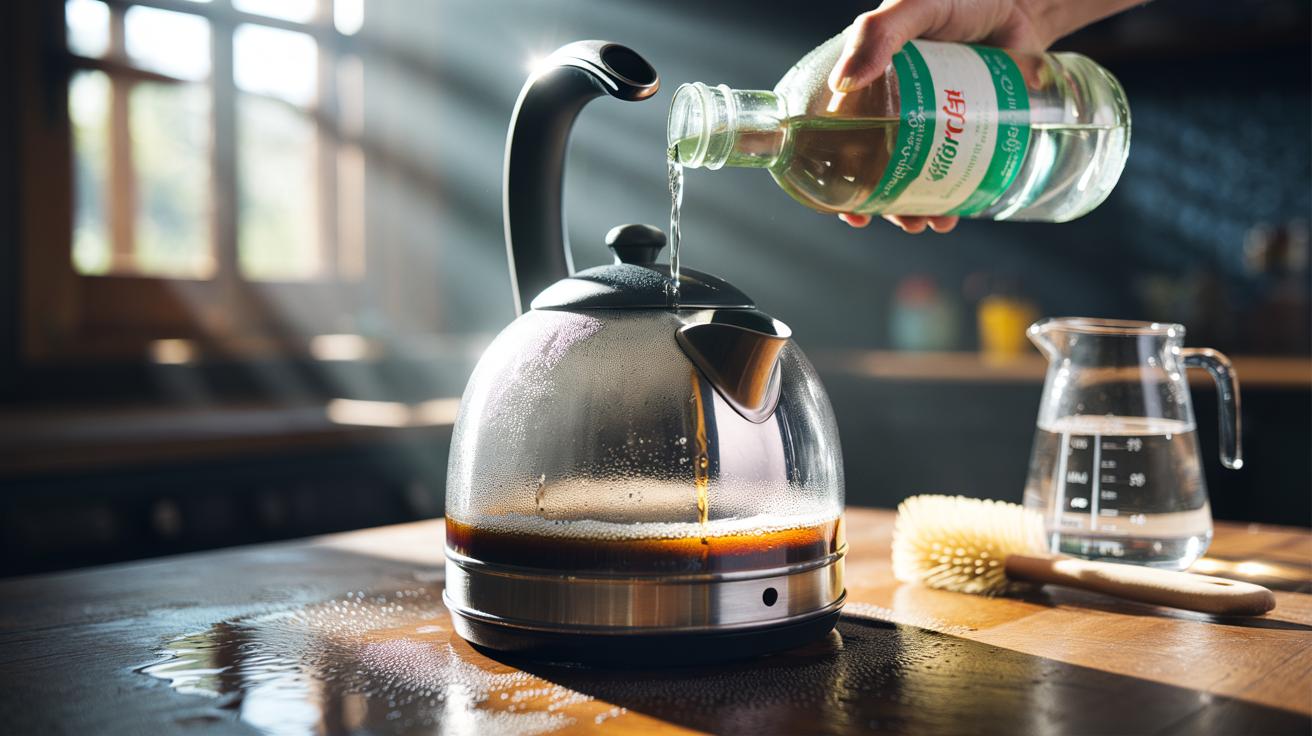
Empty the kettle and remove any detachable limescale filter. Fill to cover the crust with a 1:1 mix of white vinegar and cold water. For heavy build-up, push to 2:1 vinegar to water. Switch on and bring to the boil; then turn off. Leave the hot solution to work for 20–30 minutes. If the fizzing stops quickly yet scale remains, give the kettle a gentle swirl and wait longer. Use a soft bottle brush on exposed walls, avoiding abrasive pads that scratch and harbour residue.
Pour away the solution and inspect. Persistent plaques? Repeat with a shorter second soak rather than forcing it with scraping. Rinse thoroughly, then boil a full kettle of fresh water and discard to clear any lingering odour. Clean the spout and lid with a cloth dipped in diluted vinegar. Refit the filter after a brief soak in the same solution and a clear-water rinse. Finally, dry the exterior. Do not immerse an electric base or cable. Never mix vinegar with bleach or proprietary cleaners; dangerous gases can form.
Quick Reference: Ratios, Times, and Materials
Different kettles and water hardness levels demand small tweaks. The table below distils practical settings for speed without risk. These are field-tested ranges for common UK conditions, with allowances for stubborn deposits. When in doubt, use cooler liquid and longer time—gentle always beats aggressive scrubbing. Note that apple cider vinegar works, but clear white vinegar avoids tint and residual aroma. Warmth is a force multiplier; even a brief bring-to-boil and stand makes a dramatic difference in contact efficiency.
| Kettle Type | Vinegar:Water | Soak/Stand Time | Notes |
|---|---|---|---|
| Stainless steel (electric) | 1:1 (heavy scale 2:1) | 20–30 mins after boiling | Safe on element; avoid abrasive pads |
| Glass | 1:1 | 15–25 mins | Wipe with soft cloth to prevent streaks |
| Plastic-lined | 1:1, warm not boiling | 20–30 mins | Test odour; extend rinse/boil-off cycle |
| Very heavy limescale | 2:1 | 30–45 mins, repeat once | Multiple gentle passes beat force |
If your local water is aggressively hard, schedule maintenance little and often: a 10-minute warm 1:1 soak every fortnight prevents thick lamination. This cuts energy waste and preserves thermostat accuracy. For kettles with decorative coatings or enamel, check the manual; short, diluted soaks are typically fine, but paint chips can trap odour. Always finish with one or two plain-water boils and a full drain to restore a neutral taste before your next brew.
Troubleshooting, Odour Removal, and Care Tips
If a chalky ring persists around the waterline, it’s often due to mineral “shadowing,” where concentric layers protect inner deposits. Run a second cycle with fresh 1:1 solution and a slower cool. Target edges with a soft nylon brush. Don’t gouge; scratches invite faster re-scaling. Vinegar smell lingering? Add a teaspoon of bicarbonate of soda to a full kettle of water, boil, and discard—this neutralises stray acid and quells odour. Follow with a plain-water rinse and final boil-off.
Watch for rubber seals. Brief contact is fine, but avoid overnight soaks that can fatigue elastomers. Keep the exterior dry; only descale the interior vessel. If your kettle has a removable metal filter, soak it separately in warm vinegar for 10 minutes and rinse. Between deep cleans, reduce new deposits by emptying leftover water after use and leaving the lid ajar to dry. Consider a jug filter if you live in a hard-water postcode. It won’t eliminate limescale, but it slows it, stretches intervals, and makes each descale lightning fast.
Vinegar transforms a furring kettle in under an hour, using pennies’ worth of a safe, everyday acid. You restore boil speed, protect the element, and improve the taste of tea and coffee—all while avoiding harsh chemicals. The secret is heat-assisted contact, patient soaking, and gentle finishing. Make it routine and limescale never gets a foothold. Ready to try a timed vinegar soak this week—and perhaps compare the results against your usual cleaner to see which brew tastes better?
Did you like it?4.5/5 (20)