In a nutshell
- 🔬 Citric acid lowers pH, chelates minerals, and lemon’s volatile oils lift grease—reducing everyday microbes quickly, but it’s not a registered disinfectant.
- ⚡ Rapid routine: spray fresh lemon solution, wait 30–60 seconds of crucial contact time, wipe with a clean microfibre cloth; use a pinch of salt for scuffs; never mix with bleach.
- 🧱 Surface safety: avoid natural stone and limit contact on aluminium; generally safe on stainless steel and sealed laminates; rinse food-contact areas and remake refrigerated solutions weekly.
- 🛡️ Know the limits: for raw meat spills or vulnerable households, clean thoroughly and use certified disinfectants meeting EN 1276/EN 13697 for assured performance.
- 🧽 Smart habits: swap cloths daily, launder hot, dry well; finish with a rinse and dry for streak-free results—lemon excels at odour control and quick refreshes.
Forget harsh sprays. A cut lemon can lift grease and knock back germs on kitchen worktops, often within seconds. In homes chasing low‑waste habits, this bright fruit pulls double duty: cleaner, deodoriser, and a dash of cheer. Its secret is chemistry—acids and aromatic oils—working quickly where water struggles. Used well, it’s fast. Used badly, it can mark stone or leave sticky residue. Here is how the citric power works, what it can and can’t do, and the quickest, safest routine to keep counters fresh between bigger cleans. Small effort. Noticeable results. Speed is achievable, but technique and contact time still matter.
The Science Behind Lemon’s Citric Power
The engine under the rind is citric acid, a weak organic acid that drives the surface pH down to roughly 2–3. Many household microbes prefer neutral conditions. Drop the pH and their proteins misfold; cell membranes become leaky; crucial enzymes falter. There’s more. Citric acid is a chelating agent, so it binds calcium and magnesium that help toughen water films or stabilise biofilms. Break those bonds and grime loses its grip. That’s why a swipe with lemon appears to work “in seconds”—it destabilises the mess fast. Add the fruit’s natural volatile oils and you gain light solvent power that moves oily residues without the heavy scent cloud of synthetic cleaners.
But chemistry has boundaries. Lemon’s acids and oils reduce microbial counts; they do not equal a registered, standard-tested disinfectant. Speed depends on three things: soil load (how dirty the surface is), temperature, and contact time. Warm juice glides faster. A wiped, already clean worktop sanitises more readily than a cutting board streaked with raw chicken juices. Lemon is a rapid freshen-up for everyday splashes, not a cure-all for heavy contamination. Think of it as a nimble cleaner with a sanitising edge. For high-risk messes, you’ll still want products proven to EN standards or the old standby of hot, soapy water followed by heat.
Rapid Routine: Disinfect Counters in Seconds
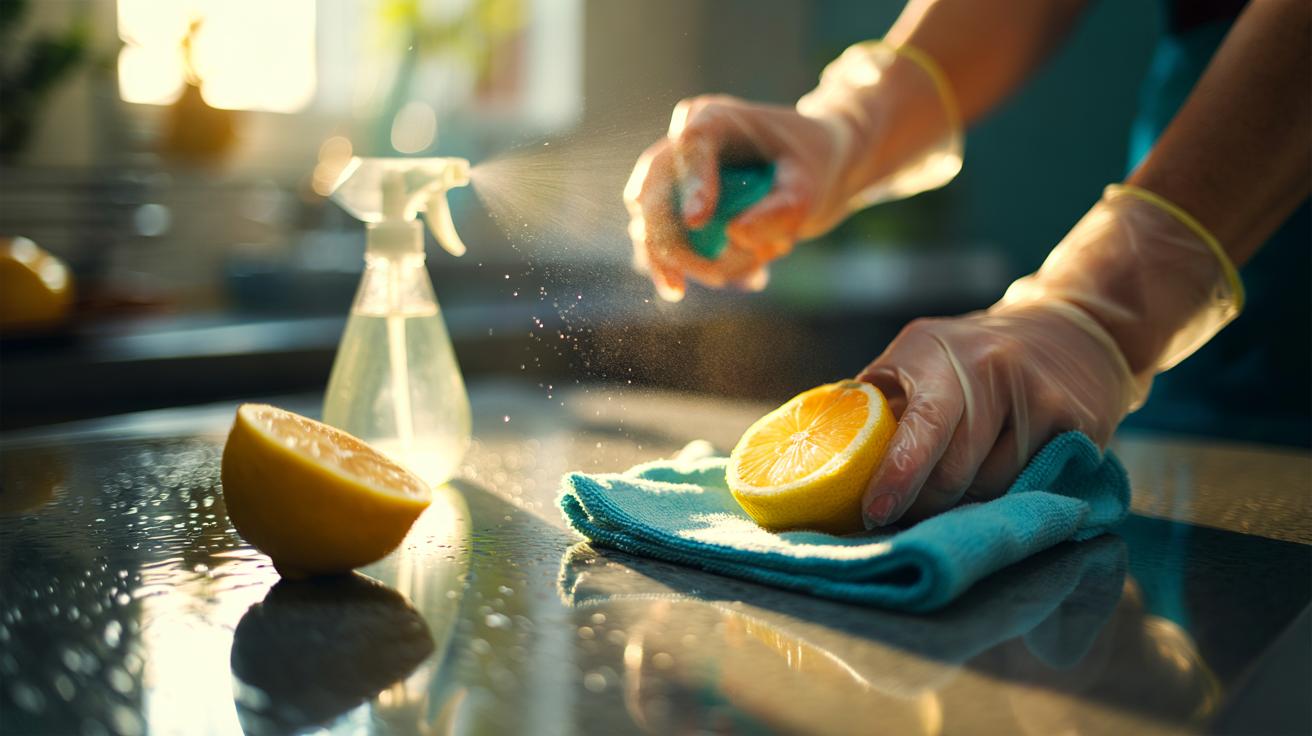
Start simple. Halve a fresh lemon. For a quick spritz, combine 60 ml fresh lemon juice with 60 ml cooled boiled water in a clean spray bottle; shake. For greasy patches, use juice neat. Clear crumbs, then spray a light film across the worktop. Wait 30–60 seconds. That brief pause is critical: contact time lets the acid do the work. Wipe with a clean microfibre cloth in overlapping passes, turning the cloth as it loads. Stubborn rings around kettles or jars? Sprinkle a pinch of fine salt on the cloth and buff, then re-spray and wipe again. Never pair acids with bleach, ever. The mix releases chlorine gas.
To keep the finish streak-free, finish with a damp cloth rinse on food-contact and glossy surfaces, then dry. For chopping boards, scrub with lemon and salt, leave for two minutes, rinse hot, and air-dry upright. If you’ve handled raw meat, pre-wash with hot detergent first, then apply lemon as a deodorising extra step. A weekly reset helps: wash the spray bottle, remix fresh, and label it with the date. Lemon works quickly, but cleanliness of the cloth is just as important as the juice itself. Swap cloths daily, launder on a hot cycle, and let them dry fully to avoid musty odours.
Safety, Surfaces, and Real-World Limits
Acid is powerful. Direct that power wisely. Avoid unsealed or acid-sensitive materials: natural stone such as marble, limestone, and some granites can etch, leaving dull spots. Aluminium can pit. Rubber seals may degrade with regular acid contact. Stainless steel is generally fine, as are most sealed laminates and ceramic tiles; always patch-test an inconspicuous spot first. If the surface is porous or valuable, don’t risk it—use a pH‑neutral cleaner instead. For food safety, rinse any area that touches ready-to-eat foods, especially if you used salt as a mild abrasive. Store lemon solutions refrigerated and remake weekly; fresh juice ferments and loses bite over time.
Then there’s efficacy. Lemon helps reduce everyday bacterial loads, particularly in light soil conditions, but it is not a substitute for products validated under EN 1276 or EN 13697 when you need guaranteed performance. Think toddlers, immunocompromised family members, or raw meat spills. In those instances, clean thoroughly with hot detergent, then use a certified disinfectant as directed. Use lemon for speed and freshness; use standards-tested products for certainty. If smell is the goal, lemon excels—its oils mask lingering kitchen odours while acids loosen the film that holds them in place.
| Surface | Use Lemon? | Notes |
|---|---|---|
| Stainless steel | Yes | Wipe, then rinse and dry to prevent smears. |
| Sealed laminate | Yes | Patch-test; avoid pooling at joins. |
| Natural stone (marble, limestone) | No | Acid etches and dulls the finish. |
| Wood (sealed) | With care | Wipe lightly, rinse, and dry immediately. |
| Aluminium | With care | Short contact only; rinse well. |
Lemon is fast, fragrant, and surprisingly capable when you understand what it’s for—and what it isn’t. Use its citric power to refresh everyday spills, de-stick greasy patches, and neutralise odours on robust, sealed surfaces. Keep certified disinfectants for jobs where proof matters. Respect the surface, time the contact, clean the cloth. That’s the entire trick. As you tune the routine to your kitchen—your pans, your worktops, your appetite for natural solutions—what balance will you strike between speed, shine, and certainty in your next clean?
Did you like it?4.4/5 (21)