In a nutshell
- 🥚 Eggshells act as a gentle micro-abrasive made of calcium carbonate, with mild alkalinity that lifts coffee tannins fast without scratching glazed mugs.
- 🧪 Method: Rinse and sterilise shells (boil 5 min or bake 120°C for 10 min), dry, crush to coarse sand, sprinkle ~1 tsp in a damp mug with warm water and a drop of washing-up liquid, swirl 30–60 seconds, then rinse.
- ♻️ Sustainability: An upcycled, plastic-free cleaner that costs ~£0 per use, is biodegradable, and easy to keep in a small jar of sterilised grit by the sink.
- ⚠️ Safety and fit: Avoid delicate antique glazes or soft coatings; spot-test first. Use oxygen bleach soaks for deep, set stains, and switch to bicarbonate of soda or a bottle brush for stainless steel.
- 📊 Smart choice: The article contrasts eggshells with bicarbonate of soda, salt, and oxygen bleach so you can match method to stain severity and surface.
A stained mug can make even the best brew look a little sad. Here’s a kitchen hack hiding in plain sight: eggshells. Crushed into a fine grit, they cut through the brown film left by coffee tannins without scratching ceramic glaze. The trick lies in their texture and chemistry: a gentle, naturally alkaline abrasive that buffs and lifts residue with minimal effort. In under a minute, a simple scrub can reveal a brighter, cleaner cup, saving you from harsh products and needless plastic. Below, I unpack why this works, how to do it safely, and when to pick a different method.
Why Eggshells Work on Coffee Stains
Eggshells are largely calcium carbonate, a mineral with a Mohs hardness under that of ceramic glaze, which makes them an ideal micro-abrasive. Crushed into sand-like particles, they skim across the surface, loosening the brown film formed by polyphenolic tannins and coffee oils. That film often clings to tiny imperfections in the glaze; the angular edges of shell fragments dislodge it without gouging. Because the abrasive is gentle and biodegradable, it acts where scouring powders can be too aggressive, yet it still delivers visible results.
Chemistry lends a second push. Eggshells are slightly alkaline, which helps counter the mild acidity of coffee residues, and they work especially well with warm water and a drop of washing-up liquid to emulsify oils. Some shells retain traces of the inner protein membrane, which adds a subtle, tacky drag that boosts pickup. The combined effect is a fast, low-pressure polish. The appeal is simple: real cleaning power without scratching, fumes, or fuss.
How to Use Crushed Eggshells for Mug Rescue
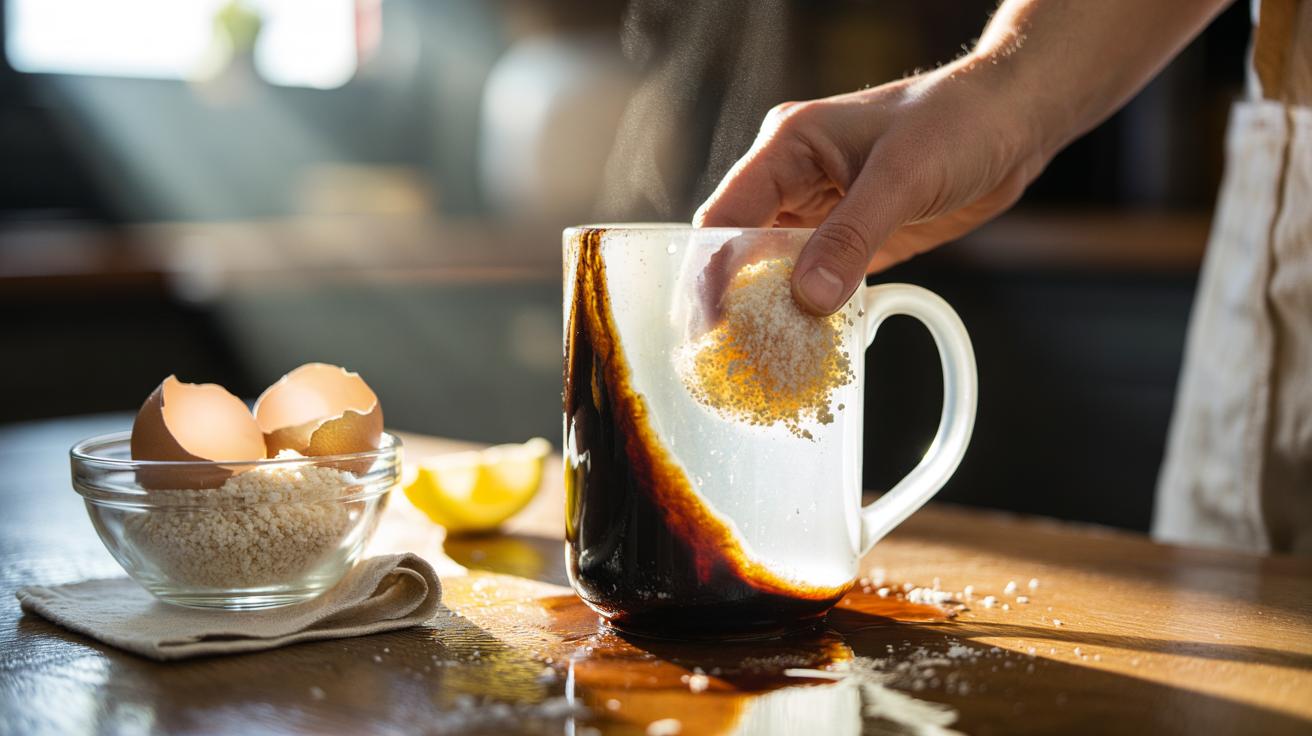
Start clean. Rinse shells, then sterilise: boil for 5 minutes or bake at 120°C for 10 minutes to reduce bacterial risk. Dry thoroughly. Crush to a coarse sand using a rolling pin or mortar—avoid powder-fine dust. Dampen the mug, sprinkle a teaspoon of shells inside, add a few drops of warm water, and swirl with a soft cloth or your fingers for 30–60 seconds. Rinse and check. For stubborn rings, repeat or add a squeeze of lemon or a pinch of bicarbonate of soda. Use light pressure; let the grit do the work. Do not use on soft plastics or non-stick coatings.
If you prefer to compare options, here’s a quick guide to common gentle abrasives and when to choose them.
| Method | Primary Action | Abrasiveness | Approx. Cost per Use | Best For | Notes |
|---|---|---|---|---|---|
| Crushed Eggshells | Micro-abrasive + mild alkalinity | Low–Medium | £0 (upcycled) | Glazed mugs, ceramic stains | Sterilise shells before use |
| Bicarbonate of Soda | Mild alkali + soft grit | Low | Pennies | Light staining, odours | Good for routine upkeep |
| Table Salt | Coarse mechanical scrub | Medium | Pennies | Heavier rings | Rinse well to avoid residue |
| Oxygen Bleach Soak | Oxidises tannins | N/A (chemical) | Low–Moderate | Deep, set-in stains | Needs time; no scrubbing |
Sustainability, Safety, and When to Choose Another Method
There’s a green dividend to this hack. You divert a kitchen scrap into a plastic-free cleaning aid and avoid harsher scouring agents. The shells break down harmlessly, and you only need a teaspoon per mug. For households cutting waste and cost, eggshells tick both boxes. They’re also quiet performers: no heavy scents, no dyes, and minimal wastewater impact. Keep a small jar of sterilised shell grit by the sink and you’re set for tea and coffee rings whenever they appear.
Good hygiene matters. Although UK British Lion eggs carry low risk, always sterilise shells and store them dry in a sealed container. Avoid this method on delicate antique glazes, decorated lustreware, or soft resin-coated items—test on a hidden spot first. If stains are ingrained after years of use, try a warm soak with oxygen bleach before a light shell polish. For stainless steel travel mugs, switch to bicarbonate or a bottle brush to protect finishes. Choose the method that respects the surface as much as the shine.
In a world of sprays and specialist powders, crushed eggshells are a refreshingly simple fix: a gentle abrasive that lifts coffee tannins, restores glaze lustre, and keeps costs close to zero. The science is sound, the routine is quick, and the results are visible in seconds. Handled hygienically, it’s a smart, sustainable habit for everyday stains. If a humble by-product can revive your favourite mug so effectively, what other overlooked kitchen scraps might be waiting to take the place of pricier, plastic-packed cleaners in your home?
Did you like it?4.6/5 (27)