In a nutshell
- 🍋 Citric acid in lemon reacts with alkaline calcium carbonate limescale, dissolving deposits gently; safe on chrome and stainless when rinsed, but avoid natural stone and test finishes first.
- 🚿 For taps, showerheads and aerators: soak with lemon juice 20–60 minutes, brush softly, rinse and dry; schedule light treatments every 2–4 weeks in hard-water areas to prevent heavy buildup.
- 🫖 Kettles: use 1 part lemon to 2–3 parts water, boil, then soak 20–30 minutes; rinse thoroughly and reboil clean water; be cautious with aluminium, and never immerse electric bases.
- ⚖️ Choose the mildest effective acid: lemon (gentle, fragrant), vinegar (stronger, odour), or citric acid powder (odourless, consistent) — ideal for routine kettle descaling.
- ⚠️ Safety and prevention: Never mix acids with bleach; wipe and dry fixtures after use to deter new deposits, and maintain with quick, regular cleans for lasting shine.
Hard water leaves its calling card everywhere: a chalky crust on taps, a fog on showerheads, and that flaky residue at the bottom of your kettle. The quick, low-cost fix may already be in your fruit bowl. Fresh lemon, rich in citric acid, melts limescale without harsh fumes or scratchy pastes. It’s gentle on most finishes, biodegradable, and smells like a clean kitchen rather than a chemical lab. Used properly, it shifts stubborn deposits and restores shine. Acid versus alkaline—this is chemistry doing the heavy lifting. Here’s how to harness lemons to dissolve buildup on taps and kettles naturally, safely, and with satisfying results.
Why Lemon Works on Limescale
Limescale is primarily calcium carbonate, an alkaline mineral left behind as hard water evaporates. Lemon juice contains citric acid (typically 5–7%), which reacts with the scale to form soluble calcium citrate, helping deposits break away. You’ll sometimes see fizzing as trapped carbon dioxide is released. Fresh juice also brings natural oils that help loosen grime around the deposit’s edges, which often improves how the surface looks once the scale has dissolved. Acid dissolves alkaline limescale: simple, effective, and eco-friendly.
On surfaces, lemon is considered a mild acid. That’s a benefit: it’s forgiving on chrome and stainless steel when used briefly and rinsed thoroughly. Still, caution is smart. Avoid lemon on natural stone (marble, limestone, terrazzo) and take care with plated or aged finishes where pitting or lacquer damage is possible. Test a hidden spot first. Bottled lemon juice is consistent and convenient; a sliced lemon is fast and tactile for tap spouts; powdered citric acid dissolved in warm water gives predictable strength for kettles. Never mix acids with bleach—dangerous gases can form.
Step-by-Step: Taps, Showerheads, and Aerators
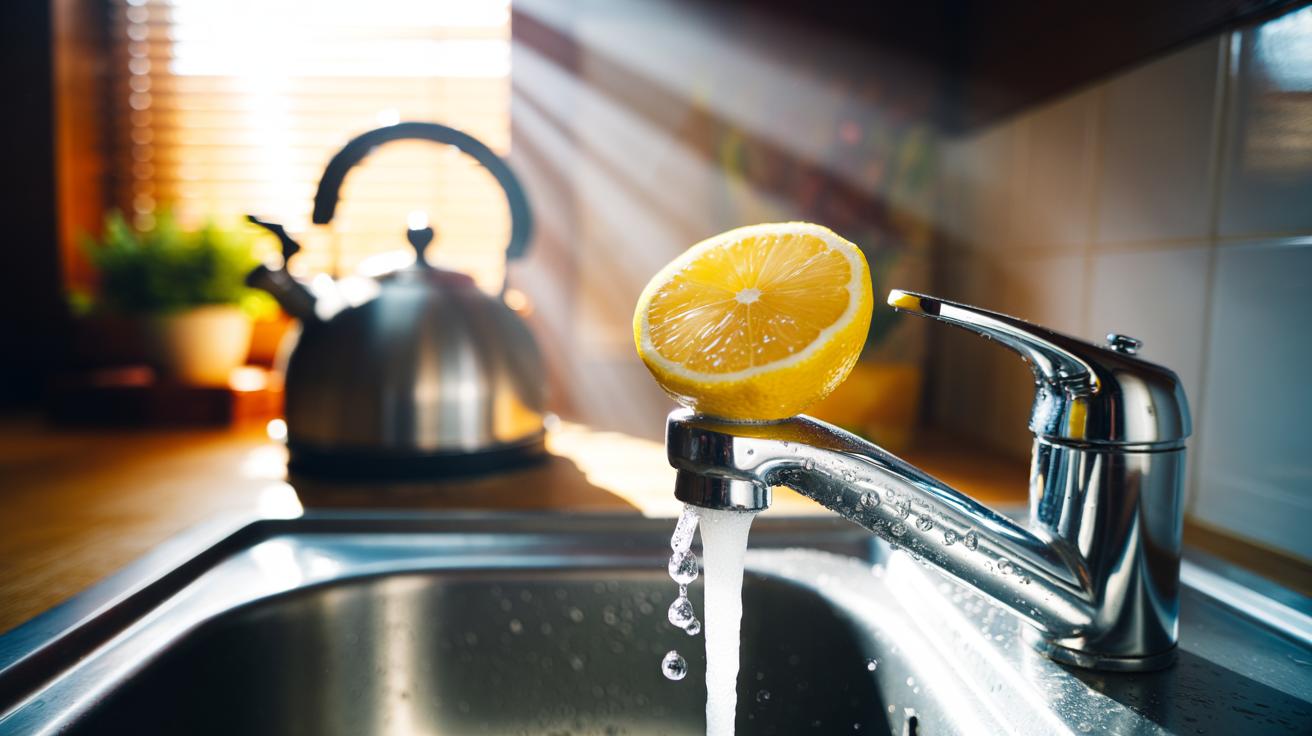
For taps, halve a lemon and twist the cut face over the spout so the juice wets the crust. Wrap the head with a soaked cloth or a small bag filled with lemon juice, securing it with an elastic band. Leave for 20–40 minutes (badly scaled areas may need up to an hour). Remove the wrap, then scrub gently with a soft toothbrush. Rinse well and dry with a microfibre cloth to avoid water spots. Do not use abrasive pads on chrome or brushed nickel. A final buff with a drop of olive oil can help repel splashes.
Showerheads respond well to a targeted soak. Unscrew the head if possible. Submerge in warm diluted lemon juice (1 part juice to 2 parts water) for 30–60 minutes. For fixed heads, hang a small bag of solution around the face, ensuring jets are covered. Rinse, then press each nozzle to dislodge loosened scale. For aerators, unscrew the tiny fitting at the tap tip, note the order of parts, and soak the insert. A pin clears stubborn holes. Rinse thoroughly and reassemble. Frequency: in hard-water areas, schedule a quick lemon treatment every 2–4 weeks to prevent heavy buildup.
Descaling Kettles and Appliances Safely
Empty the kettle. Add a solution of 1 part lemon juice to 2–3 parts water (enough to cover the element and the limescale line). Bring to the boil, then switch off. Let the acid work for 20–30 minutes; heavy deposits may need up to an hour. If scale remains, repeat with a slightly stronger ratio. Pour out the solution and gently wipe the interior with a soft, non-scratch sponge. Rinse thoroughly. Boil a full kettle of clean water once or twice and discard to remove any lingering taste. Do not immerse an electric base in liquid.
For stainless-steel kettles, lemon is ideal. Enamel-lined kettles are generally fine with brief soaks. Be more cautious with aluminium interiors, which can react with acids; use a weaker solution and shorter contact time. Coffee machines vary—check the manual, as some recommend citric acid or proprietary descalers for internal tubing. Steam irons can be refreshed with a very mild mix in the reservoir, then flushed per the manufacturer’s guidance. Never mix lemon with bleach or alkaline descalers. Finish by drying exterior surfaces to deter new deposits from forming where drips collect.
Lemon vs Vinegar vs Citric Acid: What to Choose and When
Different acids suit different jobs. Lemon is gentle, effective, and fragrant. White vinegar is stronger and cheaper, but the smell lingers, which can be off-putting in small kitchens. Pure citric acid powder is odourless, consistent, and often best value by the kilo—ideal for routine kettle maintenance. Use the mildest option that clears the scale within a reasonable time, then lock in the gain with regular light treatments to prevent a thick crust returning.
| Option | Acid Strength | Odour | Typical Use | Notes |
|---|---|---|---|---|
| Lemon juice | Mild–moderate | Fresh, citrus | Taps, light kettle scale | Gentle on finishes; readily available |
| White vinegar | Moderate | Sharp | Heavier deposits | Rinse thoroughly to avoid smell |
| Citric acid powder | Adjustable | None | Kettles, appliances | Mix 1–2 tbsp per litre warm water |
Choose the mildest acid that does the job efficiently. Store-bought bottled lemon juice is handy for consistency; fresh lemons excel for on-the-spot tap wraps. If stubborn scale resists, step up strength gradually rather than lengthening contact time indefinitely. Always rinse and dry surfaces to slow the next buildup. A quick weekly wipe with a microfibre cloth after showers and an occasional kettle flush will keep things gleaming with minimal effort.
Limescale thrives in UK hard-water postcodes, but a lemon turns the tables—cheap, safe, and effective. By understanding the chemistry and applying short, controlled soaks, you’ll protect finishes and restore performance without harsh cleaners. Keep an eye on the usual suspects: tap spouts, aerators, shower nozzles, and the kettle’s waterline. Schedule light, regular maintenance and you’ll rarely need a big descale again. Ready to try the lemon method this week, or will you test citric acid for your kettle and save the lemons for the taps?
Did you like it?4.4/5 (30)