In a nutshell
- 🧪 Why it works: acetic acid in white vinegar dissolves alkaline residues and mineral haze, drying clean for streak-free glass without waxy films.
- 🪟 Method that delivers: Dust frames first, mist a vinegar–water mix, wipe top to bottom with a folded microfibre, then finish with a sharp squeegee; work in shade and swap cloths as they load.
- ⚗️ Smart mixes: Routine clean 1:4 (vinegar:water); for grease add a drop of dish soap or isopropyl alcohol; for hard water spots use ~40% vinegar and let it dwell 2–3 minutes.
- 🧼 Tricky cases: Pre-rinse dusty panes, lay a vinegar-soaked towel on stubborn deposits, tackle fingerprints with a degreasing boost, and detail dry edges last for a pristine finish.
- ⚠️ Safety and tools: Avoid unsealed stone, specialty coatings, and screens; dilute with distilled water in hard-water areas; rely on quality tools and consistency—small, frequent cleans.
There’s a reason your gran swore by a bottle of white vinegar for sparkling panes. This humble staple cuts through grime, lifts mineral haze, and dries fast, leaving glass genuinely clear rather than merely perfumed. Forget the heavy fragrance of commercial detergents and that tell-tale film they sometimes leave behind. Vinegar’s light acidity gets straight to work. Used correctly, it offers a reliable, low-cost route to streak-free windows. In an age of complex products and confusing claims, the appeal is plain: a simple mix, a soft cloth, and a little technique. Your view—indoors or out—deserves nothing less.
Why Vinegar Works on Glass
At the heart of vinegar’s effectiveness is acetic acid, a gentle acid powerful enough to dissolve alkaline residues from rain, tap water, and airborne pollutants. Glass looks dull when contaminants cling to microscopic pits on the surface; acetic acid loosens those bonds so they wipe clean. Unlike many detergents, vinegar contains no heavy surfactants or waxes that can dry into smeary films. That’s why, when diluted correctly, it evaporates quickly and cleanly. Less residue means fewer streaks. It’s also biodegradable and inexpensive, making it a practical tool for routine maintenance rather than a once-a-year blitz.
There’s a science-backed side benefit. Hard water deposits—chiefly calcium and magnesium salts—respond to lower pH. Vinegar shifts that pH just enough to soften and lift deposits without etching sound glass. Odours? They disperse as it dries, and a drop of essential oil can tame the tang if you’re sensitive. Note one important caveat: vinegar is not universal. Avoid unsealed natural stone, some window tints, and certain electronic coatings. On standard glass, however, it’s remarkably consistent, delivering clarity you can see as the daylight changes across the pane.
The Step-by-Step Method for Streak-Free Shine
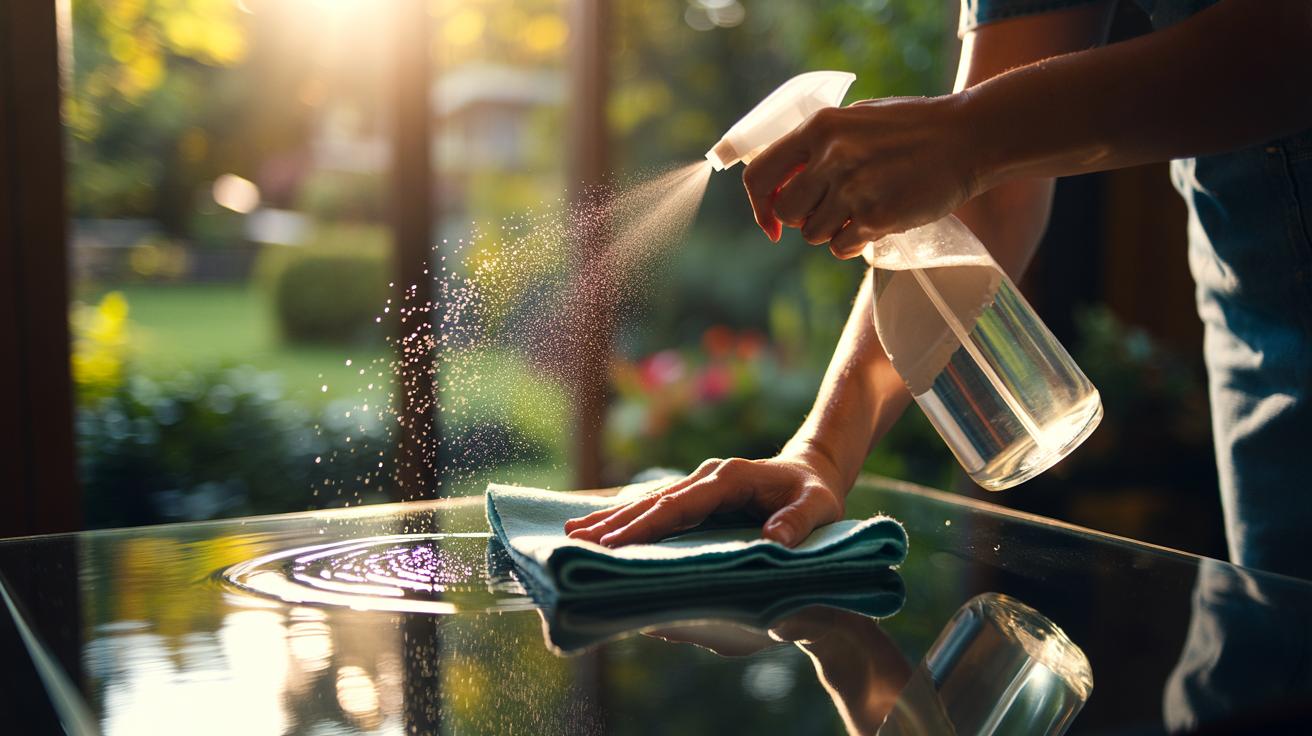
Start with the frame and sill. Dust, cobwebs, and loose grit cause smears if you skip this stage. Use a soft brush or dry microfibre, then vacuum the track if needed. Mix your cleaner next: for routine dirt, blend distilled white vinegar with clean water in a spray bottle. Distilled water helps if your tap is hard. Lightly mist the glass; don’t soak it. Wipe top to bottom with a flat-folded microfibre cloth, flipping to a clean face as it loads. For larger panes, a squeegee speeds drying: pull in smooth vertical passes, overlapping slightly, and detail the edges with a dry corner of cloth.
Pressure is not the secret; contact and clean cloth are. Replace cloths as soon as they feel damp or grabby. Work in the shade if you can—direct sun accelerates evaporation, making streaks more likely. Indoors, crack a window for ventilation. Outdoors, pre-rinse with water if the glass is dusty to avoid dragging grit. The method below suits most home windows and mirrors, and it scales: a little more vinegar for greasy fingerprints, a little less for maintenance cleans.
| Purpose | White Vinegar (ml) | Water (ml) | Optional Additions | Notes |
|---|---|---|---|---|
| Routine clean | 100 | 400 | 2 drops dish soap | Streak-free mix for weekly use |
| Grease/fingerprints | 150 | 350 | Isopropyl alcohol 50 ml | Cut through oily films fast |
| Hard water spots | 200 | 300 | Warm solution | Let sit 2–3 minutes before wiping |
Tackling Tricky Cases: Hard Water Spots and Greasy Fingerprints
Hard water haze looks like ghostly arcs that reappear after drying. Soften them first. Spray a stronger mix (about 40% vinegar), then let it dwell for two to three minutes. Reapply if it dries. Wipe with a tight-weave microfibre, buffing in small circles. Stubborn rings? Lay a vinegar-soaked paper towel over the mark to keep it wet, then scrub gently with a non-scratch pad. Patience beats pressure. If mineral build-up is chronic, switch to distilled rinse water or fit a cheap inline hose filter for exterior glasswork.
Fingerprints demand degreasing. Add a tiny drop of dish soap or 10% isopropyl alcohol to the mix. Work in light passes, refreshing your cloth often—once saturated, a cloth simply redistributes oil. For kitchen splashbacks or patio doors visited by pets, pre-wash with warm, soapy water, rinse, then finish with the vinegar solution for the final polish. On mirrors, spray the cloth rather than the surface to stop liquid wicking behind the glass. Clean edges last with a dry cloth to prevent creeping streaks. That final detail transforms a good result into a pristine one.
Safety, Surfaces, and Smart Substitutions
Vinegar is safe on standard glass and most frames, but it’s not for every surface. Avoid contact with unsealed marble, limestone, travertine, and concrete; acids can etch them. Keep away from LCD/LED screens and specialty anti-glare coatings. Test on aftermarket window tints and acrylic panes in conservatories. If you catch a whiff you dislike, add a few drops of lemon or eucalyptus oil to the bottle. The odour dissipates as it dries, but scenting can make the task feel fresher. Store your mix clearly labelled and out of reach of children.
Live in a hard-water region? Use distilled or deionised water to dilute for a cleaner finish. Winter cleaning is easier on a bright, cool day when glass doesn’t flash-dry; summer requires shade and smaller sections. Lacking vinegar? Temporary substitutes include diluted isopropyl alcohol for speed, or a drop of washing-up liquid in warm water followed by a distilled-water rinse. The constant remains your tools: lint-free microfibre, a sharp squeegee, and a dry detailing cloth. Combined with a simple vinegar mix, they deliver repeatable, streak-free clarity with little effort.
For households seeking low-cost, low-chemical upkeep, vinegar hits the sweet spot: effective, accessible, and quietly professional in its results. It doesn’t mask dirt; it removes it. With the right dilution, a disciplined wipe pattern, and clean tools, your windows will catch the light rather than show every swipe. Consistency is the secret—small cleans, done often, keep glass brilliant. Ready to trade pricey sprays for a pantry solution and a sharper view—what will your first test pane be, and how will you tweak the mix for your home’s quirks?
Did you like it?4.7/5 (24)