In a nutshell
- ⚗️ Chemistry in action: acetic acid in white vinegar reacts with kettle limescale (calcium carbonate) to form soluble calcium acetate and CO₂, with fizzing that starts in seconds and works faster when warm.
- 🧼 Fast method: Mix vinegar and water (light scale 1:2, heavy 1:1), swirl after a minute, briefly boil for heavy deposits, then soak 10–20 minutes; rinse well, double‑boil fresh water, and optionally neutralise with bicarbonate.
- 🛡️ Safety first: Unplug, never immerse the base, avoid painted trims and seals, and use only clear white vinegar; if the interior is aluminium, switch to citric acid; clean and refit the anti‑scale filter separately.
- 🌍 UK hard‑water reality: Hotspots include the South East, London, and East Anglia; prevent build‑up by emptying after use, airing the lid, wiping interiors, using a filter jug, and scheduling descaling weekly to monthly.
- ⚡ Better performance: Removing limescale restores heat transfer for quicker boils, improved flavour, and energy efficiency—a low‑cost, food‑safe alternative to proprietary descalers.
In kitchens across the UK, kettles face constant assaults from hard water, leaving a stubborn crust of limescale that dulls performance and taints tea. The simplest fix sits in your cupboard: white vinegar. The chemistry kicks in within seconds, which is why the method feels near-instant — that fizz you see is the scale dissolving on contact. For thicker deposits, give it minutes, not hours. Below, we unpack how acetic acid breaks down the chalky buildup, the fastest way to descale without damaging your appliance, and the smart habits that keep scale from returning. Expect a cleaner boil, quicker heat-up times, and better flavour.
Why Vinegar Dissolves Limescale So Quickly
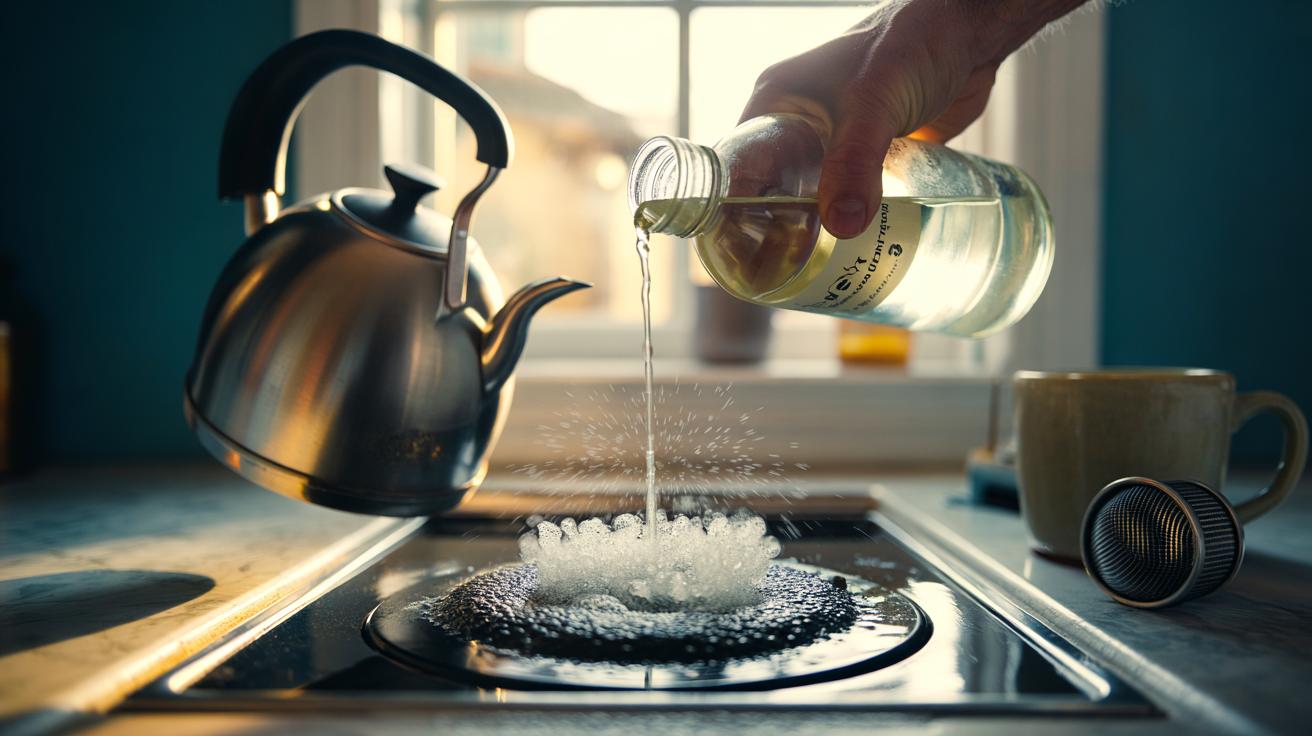
Vinegar’s bite comes from acetic acid (about 5% in standard white vinegar), which reacts with limescale’s calcium carbonate. As the liquid touches the deposits, acid molecules swap with carbonate, forming soluble calcium acetate, water, and carbon dioxide bubbles — the telltale fizz. This visible reaction starts within seconds, stripping away thin films rapidly and loosening thicker scale so it flakes off with minimal effort. Because calcium acetate is water‑soluble, the residue rinses clean, leaving the metal brighter and the heating element exposed for efficient heat transfer.
Heat accelerates diffusion, so a warm kettle descaled with vinegar works faster than a cold one. That said, patience matters. The “seconds” claim is about initiation and speed of the surface reaction; heavy, layered deposits still need a short soak to fully dissolve. Vinegar’s advantage is practical: it’s inexpensive, widely available, food-safe, and effective without harsh fumes or dyes found in some proprietary descalers.
Step-by-Step: Fast Descale Method for Any Kettle
Start by unplugging the kettle and removing any detachable filter. Add a mix of white vinegar and cold water to just cover the limescale. For light build-up, use 1 part vinegar to 2 parts water; for stubborn scale, go 1:1. Within seconds, fizzing will begin as the acid breaks down deposits. Swirl gently after 30–60 seconds to dislodge loosened flakes. For heavy scale, bring the solution just to the boil, switch off, and leave it to act for 10–20 minutes. Avoid submerging the exterior or any electrical base.
Once the deposits lift, pour out the solution and wipe with a soft cloth or non-scratch sponge. Rinse thoroughly several times, then boil fresh water twice and discard to clear any odour. If a hint of vinegar remains, dissolve a teaspoon of bicarbonate of soda in water, boil, discard, and rinse again. Clean the mesh filter separately in warm, soapy water, brushing away scale, and refit once dry.
| Build-Up Level | Vinegar:Water | Contact Time | Heat Needed? |
|---|---|---|---|
| Light film | 1:2 | 1–3 minutes | No |
| Moderate | 1:1 | 5–10 minutes | Optional (warm) |
| Heavy crust | 1:1 | 10–20 minutes | Yes (brief boil, then soak) |
Safety, Materials, and Aftercare
Most modern kettles — stainless steel, glass, and BPA‑free plastic interiors — tolerate white vinegar well, provided you avoid prolonged soaking beyond what’s needed. Always check the manufacturer’s guidance. Never immerse an electric base or cable, and don’t allow vinegar to sit on painted exteriors, silicone seals, or decorative trims where it could dull finishes. If your kettle has an aluminium interior (uncommon in the UK), opt for citric acid instead to avoid potential pitting over repeated soaks.
Post-descaling, thorough rinsing is key to banishing odour and taste transfer. Open the lid to air-dry, and wipe the spout to stop mineral streaks. Remove and wash the anti-scale filter regularly; these mesh inserts clog quickly and can reintroduce flakes into your cup. For a neutral finish, some households add a quick bicarbonate boil after vinegar use. Use only clear white vinegar — malt or balsamic varieties can stain and leave persistent aromas.
Hard-Water Reality in the UK: Prevention That Saves Energy
Hardness peaks across the South East, London, and East Anglia, where dissolved minerals concentrate rapidly in kettles. Left alone, limescale insulates the heating element, making the kettle work harder and lengthening boil times. While the reaction with vinegar is speedy, prevention pays off: empty leftover water after use, leave the lid ajar to reduce condensation, and wipe the interior when it’s cool and just damp. Small, regular interventions deter the thick crusts that demand longer soaks and keep tea tasting clean.
A countertop filter jug can reduce carbonate minerals at the point of fill, while monthly descaling becomes weekly in ultra-hard areas or heavy-use households. Some prefer citric acid (1–2 tablespoons dissolved per litre) for a scent-free result; others keep a spray bottle of 1:1 vinegar solution to spot-treat and rinse after each day’s final boil. Either way, consistent care safeguards speed, flavour, and energy efficiency across every brew.
Vinegar doesn’t just promise speed; it delivers visible results the moment it touches limescale, then clears the rest with a short, safe soak and a thorough rinse. Embrace the chemistry, adopt a light-touch routine, and your kettle will heat faster, use less energy, and pour a cleaner cup. The simplest household acid can outpace fancy cleaners at a fraction of the cost, provided you use the right ratios and respect your kettle’s materials. What will your new descaling rhythm look like — a weekly quick fizz or a monthly deep refresh that resets your kettle to like-new?
Did you like it?4.4/5 (23)