In a nutshell
- ✨ Quick chemistry: baking soda + aluminum foil + hot water create a galvanic reaction that moves sulfur from tarnished silver (silver sulfide) onto aluminum, restoring shine without abrasion.
- 🧪 Step-by-step: line a heatproof bowl with foil, place silver touching the foil, add 2–3 tbsp baking soda per litre, pour boiling water, wait 2–5 minutes, then rinse and dry; repeat short cycles for heavy tarnish.
- 🚫 When not to use: avoid on pieces with oxidised patina, porous gemstones (pearls, opal, turquoise), enamelled or glued settings, and fragile silver-plated items; test discreetly or spot-clean.
- 🛠️ Troubleshooting: ensure direct contact with foil, use fresh boiling water, rotate awkward shapes; remove residue by rinsing and buffing, and dry thoroughly to prevent flash tarnish.
- 📦 Aftercare: store silver in airtight bags/boxes with anti-tarnish strips or silica gel, keep away from sulfur sources (rubber, wool, eggs), and wear/polish lightly between occasional bicarbonate baths.
It looks like alchemy, but it’s chemistry hiding in plain sight. With a kettle, a tear of baking soda, and a sheet of aluminum foil, dull silver wakes up in minutes. Blackened forks brighten. A locket regains its story. The trick doesn’t grind the metal away like old-fashioned polishes; it swaps the tarnish off the surface. Quick. Quiet. In a washing-up bowl on your counter. This is a household fix that earns a place between the tea bags and the vinegar. Let’s explore how the reaction works, when to use it, when not to—and how to keep that new shine.
The Science Behind the Sparkle
Tarnish is not dirt. It’s chemistry. Silver reacts with sulfur in the air, forming silver sulfide, the grey-to-black film that dulls jewellery and cutlery. Traditional pastes remove that film by abrasion, which also removes a whisper of precious metal. The baking soda and aluminum foil method does something smarter: a galvanic reaction transfers sulfur off the silver and onto the aluminum. The silver doesn’t get scrubbed thinner; its surface is chemically restored.
Here’s the gist. Hot water plus sodium bicarbonate makes a conductive solution. When silver touches aluminum in that warm alkaline bath, electrons flow. Aluminum is more reactive. It sacrifices itself, reducing silver sulfide back to metallic silver while forming aluminum sulfide. Heat accelerates it. Contact matters. So does a decent sprinkle of bicarbonate to carry the charge. You may catch a faint whiff reminiscent of eggs—that’s a trace of sulfur compounds being displaced. Crucially, this is not electrolysis with a battery. The metals themselves create the potential difference, letting chemistry do the polishing.
Step-by-Step Method for a Safe, Fast Polish
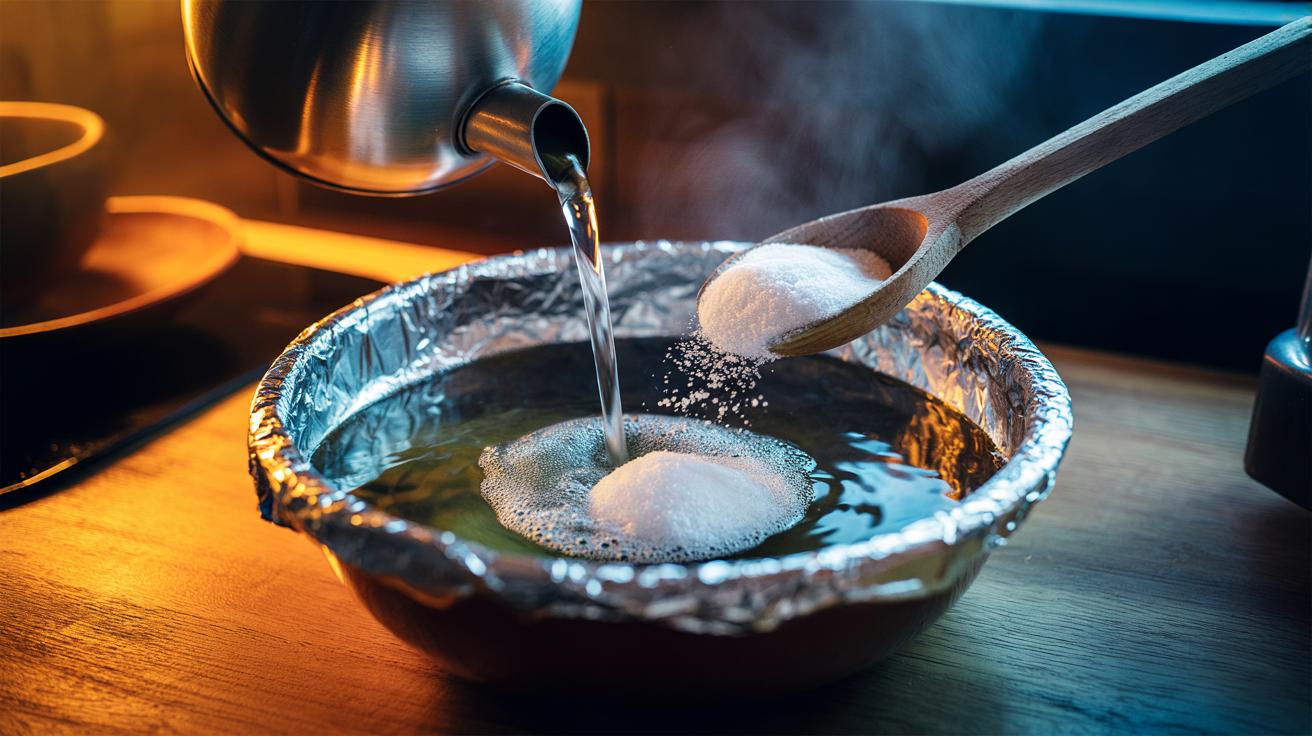
Line a heatproof, non-metal bowl with aluminum foil, shiny side up. Add your tarnished silver, making sure pieces can touch the foil. Boil a kettle. Sprinkle in baking soda—roughly one tablespoon per half litre. Pour in the just-boiled water to submerge the items. Bubbles will appear; that’s normal. Wait 2–5 minutes, turn pieces if needed, then lift them out carefully. Rinse under warm water and dry with a soft, lint-free cloth. Ensure direct contact between silver and foil to complete the circuit and speed the reaction.
Use a gentle touch. No scouring pads, no harsh chemicals. If residue remains in crevices, dab with a soft brush. For heavy tarnish, repeat the bath in short sessions rather than blasting in one long soak. Keep gemstones above water if they’re porous or delicate. And remember: fresh, boiling water gives dramatically better results. The table below offers handy proportions and timing.
| Item | Quantity/Time | Notes |
|---|---|---|
| Boiling water | 1 litre | Hotter water accelerates the reaction |
| Baking soda | 2–3 tbsp per litre | Acts as electrolyte; do not substitute with washing soda on soft stones |
| Aluminum foil | Enough to line bowl | Silver must touch foil to work best |
| Contact time | 2–5 minutes | Repeat in short cycles for heavy tarnish |
When Not to Use This Trick
Some silver should stay out of the bath. If your piece has an intentional oxidised patina—those inky recesses that give depth to a design—this method can lighten them unpredictably. Sentimental heirlooms with artistic patina deserve caution and, ideally, professional advice. Avoid soaking items with porous gemstones such as turquoise, pearls, opal, or malachite; heat and alkalinity can cloud or crack them. Keep enamelled or glued settings clear of boiling water. Lacquered silver? If it’s sealed, the reaction won’t touch the metal, and heat may damage the coating.
Take special care with silver-plated pieces. The chemical transfer is gentle, but if plating is thin or worn through to base metal, the result can be blotchy. Test a discreet area first. For mixed-metal jewellery where silver sits alongside steel or copper, the galvanic effect becomes unpredictable. In those cases, use mild soap, warm water, and a soft cloth, then dry thoroughly. A microfiber cloth lightly embedded with a non-abrasive silver polish can finish the job safely on robust pieces—sparingly, once a season. When in doubt, don’t dunk; spot-clean instead.
Troubleshooting and Care After Cleaning
Still seeing shadows after the bath? That may be deep sulfide in crevices, or a film of lacquer blocking the reaction. Try a second short cycle with fresh boiling water, ensuring every surface touches the foil. Rotate awkward shapes. If the piece feels gritty, that’s residue; rinse and buff with a soft cloth until it squeaks. Drying is not optional—it prevents flash tarnish and water marks. A hairdryer on cool can help reach clasps and chains.
To slow tarnish’s return, target the culprits. Sulfur lives in rubber bands, wool, some foams, felt-lined boxes, and even eggs in the fridge. Store silver dry in airtight bags or boxes with anti-tarnish strips or silica gel. Wear jewellery regularly—the gentle friction keeps surfaces bright. For tableware, wash soon after contact with eggs, mustard, or onions, then dry immediately. Build a simple rhythm: a quick bicarbonate bath once or twice a year, light cloth buffs in between, and consistent storage. Prevention, more than rescue, keeps silver dazzling with minimal effort.
A humble pantry staple can feel like a magician, but understanding the reaction turns a party trick into a reliable routine. With baking soda, aluminum foil, and heat, tarnish transfers away rather than being scraped off, preserving detail, hallmarks, and memories embedded in metal. Respect the exceptions, store pieces smartly, and you’ll polish less and admire more. Next time your spoons sulk or a bracelet dulls overnight, will you reach for a tube of abrasive paste—or let chemistry, quietly and cleanly, do the heavy lifting?
Did you like it?4.5/5 (25)