In a nutshell
- ⚡ Science-backed clean: An electrochemical reaction between aluminium foil, baking soda, and hot water reduces silver sulphide back to bright metal without abrasive polishing.
- 🕔 Rapid results: In 3–5 minutes, tarnish lifts if pieces maintain contact with foil; expect a mild sulphur smell, then rinse and buff dry for a mirror finish.
- 🧰 Simple setup: Line a heatproof dish with foil, add 2–3 tbsp baking soda per litre, pour near‑boiling water, place silver on the foil—avoid salt and metal sinks to protect surfaces.
- 🔒 Safe use, real limits: Works well for sterling silver and most plated items; skip oxidised details, glued components, stones, or enamel, keep sessions short, and replace foil between heavy batches.
- 🧼 Smarter aftercare: Dry immediately, finish with a silver polishing cloth, store with anti‑tarnish aids, use pieces regularly, and rinse after eggs or onions to slow future tarnish.
There’s a quick, oddly satisfying way to rescue dull knives, forks, and antique teacups from the gloomy film of tarnish: a kitchen-table reaction that uses baking soda, hot water, and aluminium foil. In less than five minutes, the dark cast of silver sulphide lifts, brightness returns, and the piece looks newly polished without a single stroke of abrasive paste. It’s science, not magic. And it spares delicate detail from wear. For most everyday silverware, this method is faster and gentler than rubbing compounds. Below, we unpack the chemistry, lay out a step-by-step routine, and set out the fine print to keep precious heirlooms safe while still getting brilliant results.
How the Foil-and-Baking-Soda Reaction Works
Tarnish on silver is mainly silver sulphide (Ag2S), formed as silver reacts with sulphur-containing gases in air and foods like eggs. When a tarnished spoon touches aluminium foil in an alkaline bath of baking soda and hot water, an electrochemical reaction begins. The two metals create a tiny galvanic cell. Electrons flow from aluminium to the silver surface, chemically reducing the black sulphide back to metallic silver, while aluminium is oxidised to harmless compounds such as aluminium hydroxide. No grinding. No loss of crisp engraving.
The hot, mildly alkaline solution—sodium bicarbonate in near-boiling water—acts as an electrolyte, ferrying ions and accelerating the transfer. You may catch a faint whiff of sulphur as the sulphur leaves the silver, often forming aluminium sulphide or reacting within the bath. The crucial point is contact: silver must touch the foil for the reaction to run at full speed. Use a glass or ceramic dish lined snugly with foil, and ensure each piece sits against it. The result is a clean, non-abrasive reversal of tarnish that respects patina and detail.
Step-by-Step: Restore Silverware in Five Minutes
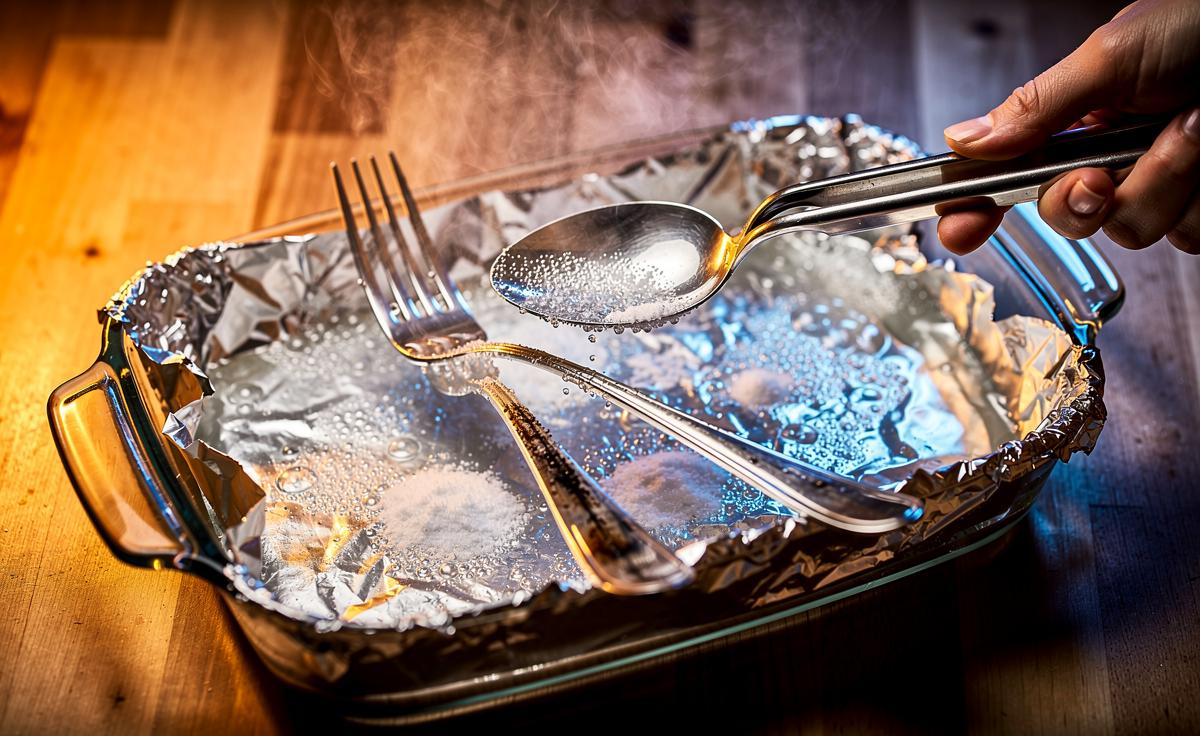
Line a heatproof glass or ceramic tray with aluminium foil, shiny side up. Boil a kettle. Sprinkle 2–3 tablespoons of baking soda across the foil. Lay the tarnished pieces directly on the foil, making sure they touch it at several points. Pour in enough freshly boiled water to submerge the silverware. The fizz and faint sulphur smell signal the foil reaction is working. In three to five minutes, tarnish fades. Lift items with tongs, rinse under warm water, then buff dry with a soft cotton cloth. Do not add salt—chloride ions can encourage pitting on aluminium and aren’t needed for success.
For best results, work in batches and keep the water hot; adding a little more kettle water maintains temperature. On stubborn patches, gently reposition the piece so fresh areas contact the foil, then wait another minute. Avoid steel sinks as a vessel; they interfere with the galvanic pair. Five minutes is typically enough for everyday tarnish, so resist leaving delicate pieces in longer than necessary.
| Item | Quantity/Setting | Why It Matters |
|---|---|---|
| Aluminium foil | Single layer, shiny side up | Provides electron source and essential contact surface |
| Baking soda | 2–3 tbsp per litre | Creates alkaline electrolyte; speeds the reaction |
| Water temperature | Near boiling (80–95°C) | Boosts ion movement and efficiency |
| Time | 3–5 minutes | Removes tarnish without overexposure |
| Drying cloth | Soft cotton or microfibre | Prevents water spots and scratches |
Safety, Limitations, and Pro Tips
Most sterling silver cutlery and hollowware respond beautifully to this process. That said, caution pays. Avoid treating pieces with intentionally darkened (oxidised) details, as the reaction may lift decorative patina you want to keep. Don’t immerse items with glued-in components—heat can loosen old adhesives—or silver pieces with porous stones, enamel, or lacquer. For silver-plated items, the method is generally safe, but keep durations short and use only baking soda, never bleach or ammonia. If in doubt, test on a hidden area first.
Work clean. Replace foil between heavy batches; once the foil surface is coated with reaction products, efficiency drops. Keep the water hot but not violently boiling in the dish, which can warp thin foils or splash. After rinsing, dry immediately, then finish with a brief wipe using a dedicated silver polishing cloth to add anti-tarnish agents without abrasive action. Store silver in low-sulphur conditions—anti-tarnish strips, airtight pouches, or flannel rolls. Touch marks from skin oils can seed new tarnish, so handle by the stems and edges where possible.
Regular care starts with prevention. Use silver weekly; frequent washing discourages the build-up of sulphur films that become tarnish. Rinse pieces after contact with eggs, onions, or wool felt. Dry thoroughly—standing water spots can telegraph into uneven toning. For heirlooms, rotate between the gentle baking-soda-and-foil bath and a light cream polish no more than a few times a year, preserving patina while keeping service-ready shine. The right routine is the one that protects craftsmanship as much as sparkle. Will you try the five-minute foil reaction on everyday cutlery first, or start with a single, cautiously chosen showpiece to see the transformation up close?
Did you like it?4.5/5 (22)