In a nutshell
- 🧪 The science: ketchup cleans tarnished brass via weak acids (acetic, citric) dissolving oxides, with salt as a mild abrasive and sauce viscosity ensuring even, minimal rubbing.
- 🛠️ Step-by-step: identify solid brass vs plating or lacquer, degrease, apply a thin coat for 5–12 minutes, guide with a soft brush, rinse thoroughly, dry to prevent flash tarnish, and seal with microcrystalline wax.
- 🛡️ Preservation first: respect patina, keep dwell times short on plating, test and address lacquer to avoid blotches, and treat verdigris in threads/joins with brief contacts and fast drying.
- ⏱️ Troubleshooting: fix blotches by reapplying an even film, avoid steel wool, tune contact time to tarnish level, and remember—repetition, light pressure, and moisture control keep results even.
- 🍋 Alternatives: lemon + salt, brown sauce, cola, or flour–salt–vinegar work too; choose the mildest acid that clings for eco-friendly shine with minimal effort.
It sounds like a prank from a student kitchen, yet this humble trick endures: use ketchup to polish tarnished brass. The appeal is obvious. No chemical fumes, no blackened fingers, and—crucially—very little elbow grease. In many homes, the red stuff is already to hand. But there’s more going on than a quirky hack. A gentle, food-safe acid blend lifts oxides while the sauce’s thickness keeps the reaction where you want it. The result is a surprising, photogenic gleam with minimal rubbing. For tired door handles, candlesticks, and instrument fittings, this is a repair you can do between making tea and reading the headlines.
Why Ketchup Works on Brass: The Chemistry Behind the Trick
Brass is a copper–zinc alloy. When air and moisture meet time, they form a dull layer of copper oxides and carbonates—the tarnish you see. Ketchup brings two quiet agents to the party: acetic acid from vinegar and often a whisper of citric acid from tomatoes. These weak acids dissolve surface oxides without biting deeply into the underlying metal. The sauce’s viscosity keeps contact uniform across curves and crevices, so the clean emerges evenly rather than patchy. In short, you’re letting chemistry loosen the grime so your cloth doesn’t have to. Acid does the heavy lifting, not elbow grease.
There’s also a mechanical assist. Fine crystals of salt act as a mild abrasive, just enough to nudge away loosened oxides when you swipe, but not enough to gouge soft metal. Sugar thickens the mix, helping it cling and slowing evaporation, which buys time for the reaction. The balance is gentle: effective on fresh tarnish, careful with delicate engraving. This is why five to ten minutes of contact often outperforms furious scrubbing with a harsh polish. Patience, not pressure, delivers the shine. Just steer clear of porous stones or adjacent unfinished wood, which don’t enjoy acidity or stickiness.
Step-by-Step: Restoring Tarnished Brass With Minimal Rubbing
Start with identification. Is the piece solid brass, brass-plated steel, or lacquered? A small magnet reveals steel beneath plating; a cotton bud with acetone will soften lacquer. If lacquer is present, strip professionally first or skip the ketchup entirely. Wash the item in warm, soapy water to remove oil that can block the acid. Dry fully. A clean surface makes every minute of contact count. Lay down newspaper or a tray; this is tidy work, but still sticky. Keep a soft cloth, a microfibre towel, and a soft-bristle brush handy.
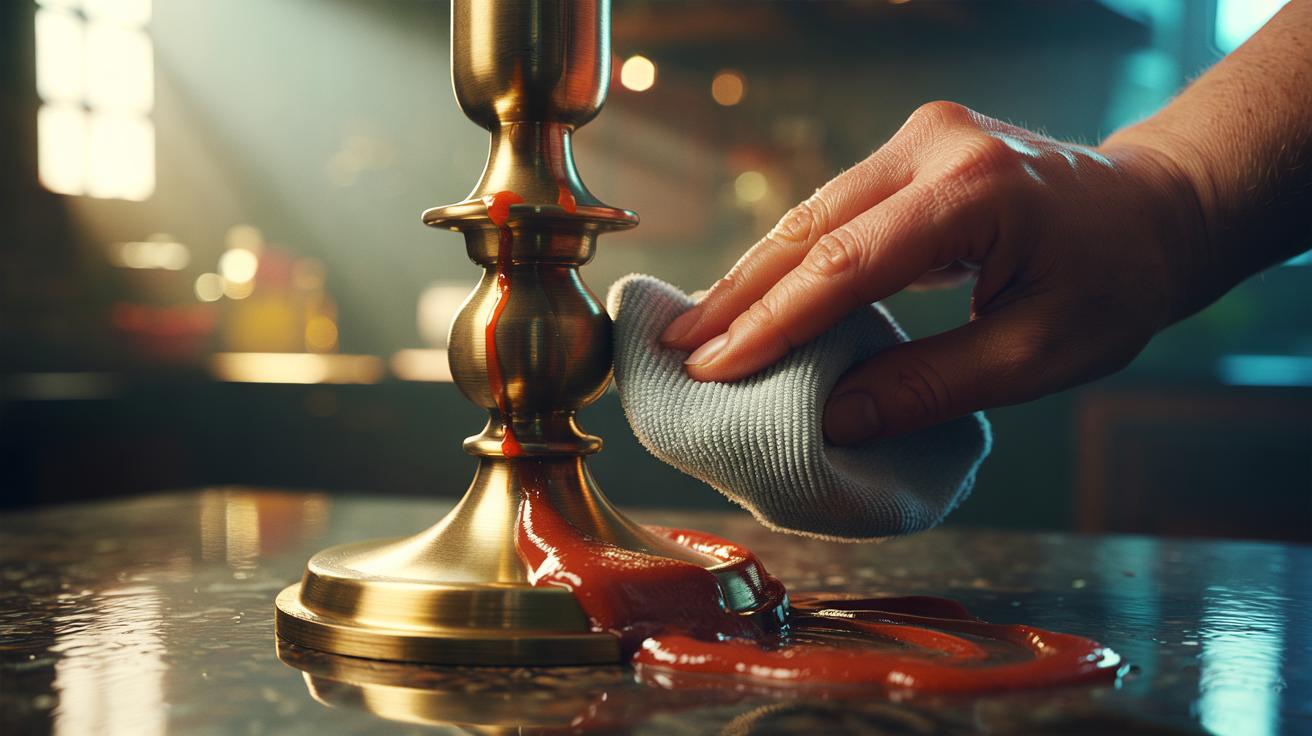
Now the application. Smear a thin, even coat of ketchup across the tarnish. Don’t drown it; coverage matters more than depth. Let it sit for 5–12 minutes. Watch the colour shift from brown to a brassy glow peeking through. If it dries, mist lightly with water or add a touch more sauce—dry ketchup stops working. For crevices, nudge gently with the brush. Minimal rubbing is the rule; think guiding, not grinding. When the surface brightens, you’re ready.
Rinse under warm water, massaging with your fingers to release residue. Any faint pink tint means ketchup remains; keep rinsing. Follow with a mild soapy wash, then rinse again. Dry thoroughly—heat from a hairdryer on low helps prevent flash tarnish. Buff with a clean microfibre cloth to lift the final haze and reveal that satisfying, mellow gleam. Optionally, finish with a thin coat of microcrystalline wax to slow the next bout of dullness. Dry metal, sealed pores, longer shine.
What to Clean and What to Leave: Patina, Plating, and Lacquer
Not every dark tone is dirt. Collectors value patina—the subtle browns that give depth to old brass—because it records age and handling. Strip it all away and the piece can look oddly new, even cheap. Aim for balance: brighten high points, keep shadows in recesses. On engraved or chased work, a complete reset may flatten character. Let the metal breathe its history while you restore its lustre. That judgment, more than any product, defines a sensitive clean.
Plating demands caution. Brass-plated steel or nickel-plated brass carries only a thin surface layer. Long acid contact or vigorous rubbing can punch through to a different-coloured substrate. Keep dwell times short and use the lightest touch. For lacquered brass, ketchup won’t penetrate evenly; you’ll get blotches where the varnish has failed. If acetone lifts a clear film on a hidden spot, you’re dealing with lacquer. Either repair the coating or strip and refinish, then polish. Uneven protection guarantees uneven results.
There’s the green problem: verdigris, a waxy, powdery copper salt that creeps into joins and threads. Ketchup softens it, but don’t flood hinges or clockworks; trapped acidity invites corrosion later. Work with cotton buds, shorter contacts, and fast rinsing. Dry with compressed air or a hairdryer set to cool. If corrosion persists, step up to a targeted metal cleaner, then return to gentle household methods for maintenance. The guiding principle is simple. Preserve substance; remove only what obscures.
Troubleshooting, Timings, and Alternatives From the Larder
Blotchy outcome? You likely had patchy contact or drying. Reapply a thinner, even film and reduce time. Stubborn corners? Warm the piece slightly (not hot) to nudge reaction speed, or massage with a fingertip wrapped in a soft cloth. Don’t escalate to steel wool; you’ll score the surface and invite rapid re-tarnish. If the finish flashes dull within hours, oils are missing—buff in a whisper of wax. Control moisture, control oxygen, control dulling. And remember: minimal rubbing is still the aim; repetition beats force.
Use this quick-reference guide to tune contact time and effort without guesswork.
| Tarnish level | Contact time (ketchup) | Rub pressure | Notes |
|---|---|---|---|
| Light film | 3–5 minutes | Featherlight wipe | One pass usually enough |
| Moderate brown | 6–10 minutes | Soft cloth, gentle circles | Brush crevices briefly |
| Heavy, spotty | 10–15 minutes | Two short cycles | Rinse between cycles |
| Verdigris patches | 2–4 minutes per pass | Cotton bud only | Frequent rinse and dry |
No ketchup? The larder still delivers. Lemon juice with a pinch of salt is brisk and bright, though it runs on vertical surfaces. Brown sauce, beloved in Britain, also contains vinegar and tamarind acids; it clings well and smells less tomatoey. Cola’s phosphoric acid cleans, but it’s messy and too runny. The old paste of flour, salt, and vinegar remains a classic for larger items. Choose the mildest acid that stays where you put it. The victory is the same: clean metal, preserved character, and hands unblistered by effort.
There’s a quiet satisfaction in seeing a sullen doorknob bloom into a warm, golden welcome thanks to nothing fancier than ketchup and patience. It’s thrifty, low-risk, and oddly cheering. You protect the material, skip harsh polishes, and keep the planet out of the bargain. Let chemistry work while your shoulders rest. As you look around your home—lamp bases, cabinet pulls, old instruments—what piece would you revive first, and what patina would you choose to keep rather than erase?
Did you like it?4.6/5 (27)