In a nutshell
- ⚡ Harness electrochemical reduction: aluminium foil acts as a sacrificial anode, donating electrons that convert silver sulphide (Ag2S) back to metallic silver—no abrasion, just reversed tarnish.
- 🛠️ Method at a glance: line a glass/ceramic basin with foil, add hot water at 60–70°C, dissolve sodium bicarbonate/carbonate, ensure direct contact between silver and foil, then rinse, dry, and buff with a microfibre cloth.
- 🧪 Choose smart ingredients: washing soda (faster) or bicarbonate (gentler), soft nylon brush for crevices, non-reactive container; avoid chlorides that can pit or stain.
- 🚫 Common pitfalls: skip salt, don’t boil, limit soak time; protect mixed-material pieces (e.g., hollow-handled knives) and be wary of overcleaning, especially on thin plate or intentionally oxidised finishes.
- 🧼 Conservation and care: store silver dry, use anti-tarnish strips, and use pieces regularly; for high-value or complex items, consult a professional conservator before deep cleaning.
Blackened forks and splotchy teapots make even a well-laid table look tired. There’s a faster remedy than hours with a paste and cloth: a kitchen-counter trick that harnesses a quiet current. With nothing more than aluminium foil, warm water, and a pinch of alkali, tarnish drops away in minutes, revealing crisp, clean shine. It isn’t magic; it’s chemistry you can watch. This method reverses tarnish rather than grinding it off, which helps preserve crisp hallmarks and fine chasing. Done properly, it’s safe, thrifty, and oddly satisfying. Here’s how the reaction works, how to do it right, and when to reach for a gentler touch.
The Science Behind Foil-Assisted Silver Cleaning
Silver darkens because it reacts with airborne sulphur compounds, forming silver sulphide (Ag2S). That tarnish layer is stable and stubborn. Place the silver in contact with aluminium, add warm water and a mild alkali, and you create a tiny battery. Electrons flow from aluminium, the more reactive metal, to the silver sulphide. In plain terms, the aluminium acts as a sacrificial anode, giving up electrons that convert Ag2S back to metallic silver while the aluminium itself oxidises to aluminium hydroxide. The tarnish is chemically reduced, not polished away.
Heat speeds the process by boosting ion mobility, which is why warm—not boiling—water helps. Bicarbonate or washing soda increases the solution’s conductivity, encouraging the galvanic couple to do its work. You may notice a faint sulphurous smell as sulphide ions are displaced; that’s normal in small amounts. If you listen closely, you’ll sometimes hear a soft fizz. That’s the system proving it’s alive.
Why avoid common table salt? Chloride ions can pit silver under certain conditions and are unhelpful here. A safer electrolyte is sodium bicarbonate (baking soda) or sodium carbonate (washing soda). Both raise pH without being harsh acids. Control matters more than brute force: moderate heat, a few minutes’ soak, and fresh solution make for bright results without risk to the metal.
Step-by-Step Method for a Safe, Speedy Polish
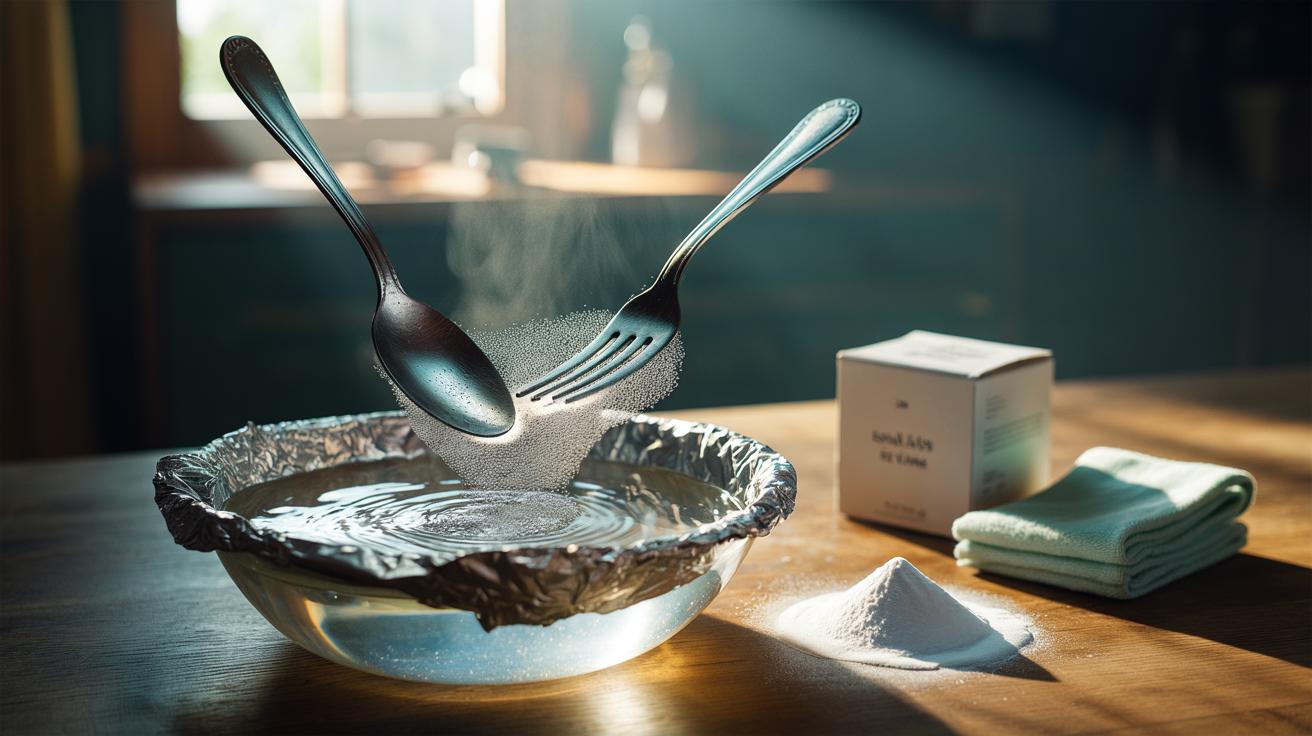
Line a glass or ceramic basin with shiny aluminium foil, crinkled side up, and make sure the foil lies flat so the silver will touch it. Add hot tap water, not boiling—about 60–70°C is plenty. Sprinkle in one to two tablespoons of washing soda or a heaped tablespoon of bicarbonate of soda per litre. Stir to dissolve. The solution should feel silky, not gritty. Direct contact between silver and foil is essential; no contact, no circuit.
Lay in the silverware, pieces spaced so they all touch the foil. Tarnish will lighten within a minute or two, and stubborn patches may take five. Turn items to expose hidden crevices. If the water cools or darkens, refresh it; the reaction slows in tepid solution. Once the silver is bright, remove it promptly. Rinse under warm running water to wash away residues, including any aluminium salts clinging to edges and joints.
Dry thoroughly with a soft cotton towel, then finish with a few light strokes of a clean microfibre cloth. This reveals any missed corners and prevents water spots. For hollow-handled knives with cement fillings, keep immersion brief and warm rather than hot. Less time, more control, better outcomes. Repeat the whole process only when needed; excessive cycles serve no purpose and won’t make silver “whiter.”
Choosing the Right Ingredients and Tools
Not all pantry staples are created equal. For the electrolyte, sodium carbonate is slightly stronger than bicarbonate and excels on heavy tarnish, while bicarbonate is gentle and widely available. Avoid chlorides. Soft water helps, but regular tap water is fine. Use a non-reactive bowl; aluminium trays short-circuit the system unpredictably, and steel can stain. Keep a dedicated, lint-free cloth for final buffing. The aim is to clean without adding micro-scratches, which dull shine over time.
| Component | Purpose | Practical Notes |
|---|---|---|
| Aluminium foil | Sacrificial anode | Ensure direct contact with silver for electron transfer. |
| Warm water (60–70°C) | Increases reaction rate | Too hot risks adhesives in knife handles. |
| Sodium bicarbonate/carbonate | Electrolyte, raises pH | Washing soda works faster; bicarbonate is gentler. |
| Glass/ceramic basin | Non-reactive container | Prevents stray reactions and metal staining. |
| Microfibre cloth | Final buff | Removes moisture without scratching. |
For ornate pieces with deep relief, a soft nylon brush used gently after the bath frees residue from crevices. If a design includes intentional oxidation—those darkened recesses on arts-and-crafts wares—test a small area first. Electrochemical cleaning can lift that patina, so partial immersion or localised contact may be wiser. When in doubt, treat the bath as a precision tool, not a blunt instrument.
Pitfalls, Myths, and Conservation Tips
One myth claims this method “eats” silver. It does not. The aluminium is what dissolves. Another says you must use salt. You shouldn’t. Chloride ions invite pitting, especially on thin plating. A common pitfall is leaving items in for ages. After several minutes, the reaction has largely finished; time beyond that just cools the water and adds no benefit. Overcleaning can be as harmful as neglect, especially for antiques with delicate surface history.
Beware mixed-material knives and teapots with insulating joints. Keep the water warm, not scalding, and the immersion short. For silver plate with copper underlayers peeking through, skip aggressive interventions; re-plating may be the only fix for exposed base metal. If black stains persist in pores or corners, run a second short cycle with fresh solution rather than scrubbing hard with abrasive pastes, which remove metal and soften crisp engraving.
For long-term brightness, store silver dry, use anti-tarnish strips, and—best of all—use it frequently. Dining polishes by gentle contact. When pieces carry museum-level value or complex construction, ask a professional conservator for advice. They may recommend targeted chemical reduction or poultices instead. The foil bath remains a superb, reversible option for everyday flatware and service pieces. It’s quick science in the sink—and kinder than a harsh polish.
In a few careful minutes, aluminium foil and an alkaline bath can lift years of tarnish without abrading the precious surface beneath. The trick lies in good contact, moderate heat, and restraint. Choose the right electrolyte, avoid chlorides, rinse and dry well, and your silver rewards you with a clean, enduring shine that’s ready for supper or display. Now that you understand the chemistry and the craft, which piece will you revive first—and what story might it tell once it gleams again?
Did you like it?4.5/5 (21)