In a nutshell
- 🧪 Citric acid in lemon reacts with limescale (calcium carbonate), releasing CO₂ and forming soluble calcium citrate; citrate also chelates minerals to stop re-deposition, and warmth speeds the process.
- ⚡ Practical methods: press a halved lemon on taps, soak or bag showerheads in a 1:1 lemon-water mix, and briefly simmer kettles with juice; on glass/tiles, spray, dwell, wipe; add salt for gentle abrasion, then rinse and dry.
- ⏱️ Contact time is critical—keep surfaces wet with juice, wrap or re-wet to prevent drying, then lift softened scale with a nylon brush or microfibre cloth.
- 🚫 Safety first: avoid use on acid-sensitive stone (marble, limestone, terrazzo), limit contact on aluminium and plated finishes, protect gaskets, and do not mix with bleach; rinse metals thoroughly.
- 🌍 Benefits: lemon is low-cost, effective, and biodegradable, offering a cleaner smell and fewer harsh chemicals while restoring shine and reducing future build-up by drying surfaces after rinsing.
Hard water leaves a chalky badge of honour on taps, shower doors, kettles and tiles. It’s called limescale, and it steals shine, encourages drips, and can even muffle heating efficiency. Reach for a lemon. The fruit’s citric acid cuts through calcium carbonate and magnesium deposits with surprising speed, turning a tedious chore into a quick win. There’s science, yes. There’s also simplicity. Slice, press, wait, rinse. Lemon can dissolve stubborn limescale in minutes when contact time and coverage are right. It’s low-cost, biodegradable, and it smells like a clean kitchen should. Here’s how it works—and how to make it work for you.
The Science: Why Lemon Dissolves Limescale
Limescale is mainly calcium carbonate (often with magnesium carbonate), a residue left by hard water. Lemon juice is rich in citric acid (pH roughly 2), a weak organic acid that’s deceptively powerful on alkaline deposits. When citric acid meets calcium carbonate, it delivers protons that break the carbonate structure, releasing fizzing carbon dioxide and forming soluble calcium citrate. That’s the moment you see bubbles—and the crust dulls, then loosens. What looks like magic is a textbook acid-carbonate reaction doing the heavy lifting for you.
Citric acid brings two advantages. First, acidity: hydrogen ions attack the carbonate lattice. Second, chelation: citrate ions bind to calcium and magnesium, keeping them in solution and preventing re-deposition as you rinse. The combination is ideal for kettles, taps, shower glass, and ceramic sinks. Heat helps, too. Warm solutions speed up reaction rates, shaving minutes off contact times. A cut lemon works because its pulp delivers fresh acid and natural oils that help the juice cling to vertical surfaces.
Contact time matters. Thin films dissolve quickly; thick, chalky rims need longer exposure or repeat treatments. Keep the surface wet, not just damp. Re-wet with a squeeze or use a saturated cloth to prevent premature drying. Acid must stay in contact with limescale to complete the reaction—if it dries, it stalls. Once the fizz fades and the crust softens, a nylon brush or microfibre cloth lifts residues cleanly, ready for a thorough rinse.
Fast Methods for Taps, Kettles, and Showers
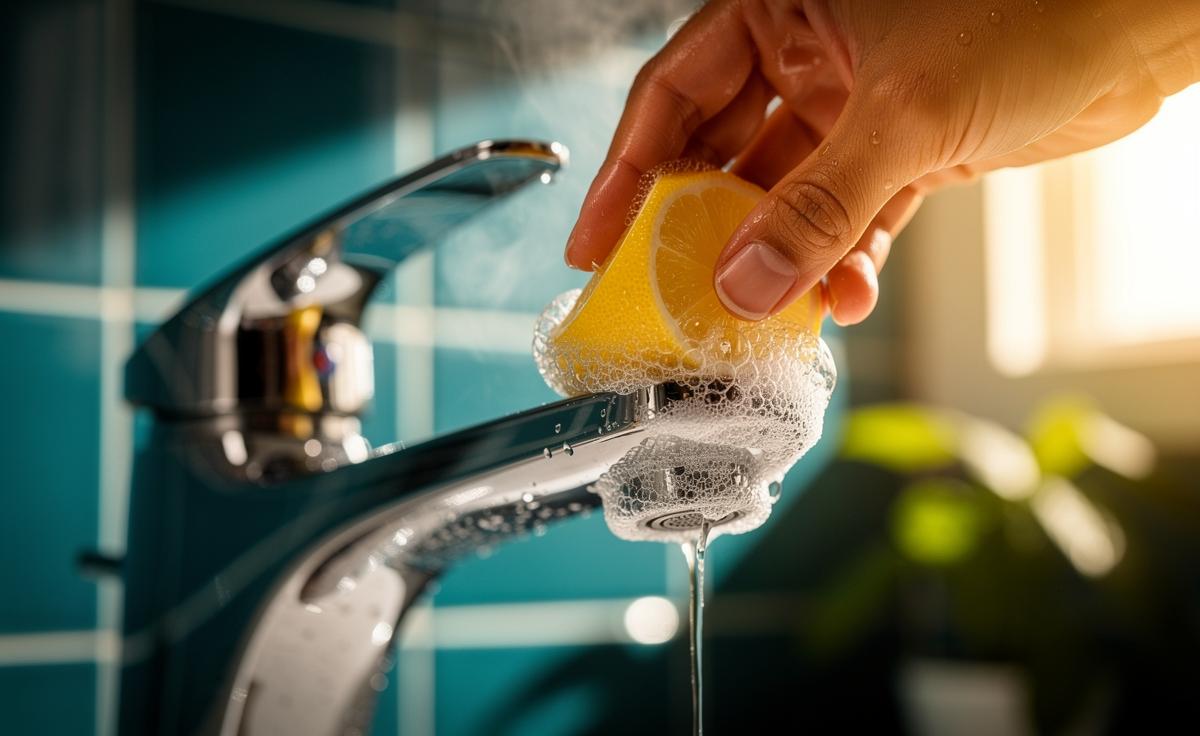
For taps and fittings, halve a lemon and press it directly onto the spout and aerator. Hold it in place with a small elastic band or a reusable cloth for 10–15 minutes. The pulp clings well, bathing the crust. Twist the lemon every few minutes to refresh the juice. Once deposits soften, scrub with a soft toothbrush, then rinse and buff. Shine returns in minutes without reaching for harsh descalers. Stubborn rims? Use fresh juice on a folded paper towel to keep small areas soaked and under control.
For showerheads, remove and soak in warm lemon juice diluted 1:1 with water for 15–30 minutes, then brush the nozzles and flush with clean water. If removal isn’t possible, fill a small bag with the same solution, submerge the head, and secure it upright. For kettles, fill halfway with water, add 60–80 ml of lemon juice, bring to a brief simmer, then switch off and let sit for 15 minutes. Empty, wipe, and rinse twice. Always rinse metal thoroughly to avoid lingering acidity.
On glass and tiles, spray fresh lemon juice, wait 5–10 minutes, then wipe. For scale at the base of taps, make a paste by mixing lemon juice with a little table salt; the grains add gentle abrasion without neutralising acidity. Avoid coarse abrasives that can scar chrome. Rinse well and dry to prevent new mineral spots forming as water evaporates.
| Surface | Lemon Method | Contact Time | Precautions |
|---|---|---|---|
| Chrome taps | Halved lemon held on spout | 10–15 minutes | Use soft brush; no coarse abrasives |
| Showerhead | Soak or bag with 1:1 juice:water | 15–30 minutes | Rinse thoroughly; dry afterwards |
| Kettle (steel) | Simmer brief, sit with juice | 15 minutes rest | Rinse twice; avoid aluminium |
| Glass screen | Spray, dwell, wipe | 5–10 minutes | Dry to prevent spotting |
Safety, Surfaces, and What to Avoid
Never use lemon juice on marble, limestone, or other acid-sensitive stone. The same warning applies to terrazzo and some concrete composites: acids etch the surface, leaving dull, permanent marks. If in doubt, test on an inconspicuous area first. For stone, stick to pH-neutral cleaners and squeegee dry after showers to slow limescale buildup. On ceramic tiles and glass, lemon is safe. On enamelled steel, it’s fine with brief contact and good rinsing.
Metals vary. Stainless steel fares well; rinse thoroughly. Aluminium can discolour with acids, so avoid soaking. Bare iron and carbon steel may flash-rust after acid contact—dry immediately and oil if necessary. Plated brass and lacquered finishes demand care: keep contact short and gentle. Rubber seals and certain adhesives can degrade with sustained acidity, so limit soaking near gaskets. Acid is effective, but deliberate control prevents collateral damage.
Never mix lemon juice with bleach. The acid can release chlorine gas—dangerous even at low concentrations. Do not mix with bleach is a rule worth repeating. Wear gloves if you have sensitive skin and ventilate small bathrooms. Dispose of used solution down the drain; it’s biodegradable and septic-friendly in typical household quantities. Lemon rinds can be composted or simmered with water for a scented wipe-down solution, stretching value and cutting plastic-encased chemical descalers.
Lemon turns a nagging domestic problem into something almost satisfying. The chemistry is sound, the method is swift, and the results gleam—especially when you manage contact time and keep surfaces wet until the fizzing stops. For many households, it’s the smartest first response to limescale. Save the heavy-duty descaler for the worst, rare cases and keep a couple of lemons on standby. Ready to try it now—what fixture will you revive first, and which technique will you test to maximise contact: a wrapped half-lemon, a soaking bag, or a warm kettle bath?
Did you like it?4.4/5 (22)