In a nutshell
- 🧪 Toothpaste cleans via mild abrasives (hydrated silica/calcium carbonate) plus surfactants, sometimes bicarbonate and gentle peroxide; choose a white, non-gel paste and use minimal pressure.
- ✨ Best targets: trainer soles, tea-stained mugs, chrome/stainless fixtures, and light plastic scuffs; textiles only if washable and thoroughly rinsed; be cautious with jewellery and plated finishes.
- 🚫 Avoid on phone/laptop screens, car paint, high-gloss lacquer, and natural stone; skip dyed or gel pastes; for fabric dyes and delicate coatings, risks include hazing and discoloration.
- 🧰 Method: pea-sized dab on a soft microfibre, small circles for 10–20 seconds, then wipe, rinse, and buff dry; patch-test first and repeat only if needed—less is more.
- 🧭 Use the right tool when toothpaste isn’t ideal: washing-up liquid for grease, oxygen bleach for tannins, citric acid for limescale, and metal polish for metals; think of toothpaste as a quick spot-fix, not a universal cleaner.
It sounds improbable, yet a pea-sized squidge of toothpaste can lift scuffs and stains with startling speed. From tea rings to grubby trainer soles, this minty scrub behaves like a micro-cleaner hiding in your bathroom cabinet. The trick isn’t magic; it’s material science in a tube, harnessed for domestic life. Used judiciously, toothpaste offers mild abrasion, gentle detergency, and a fresh odour that makes clean smell cleaner. Done badly, it can leave haze or scratches. Always test first, go lightly, and stop if you see dulling. Here’s why it works, where it excels, and when to reach for something else.
Why Toothpaste Shifts Stains: The Science Behind the Scrub
Toothpaste succeeds thanks to its mild abrasives, typically hydrated silica or calcium carbonate, ground to a fineness that polishes enamel without gouging it. On household grime, those particles act like an ultra-fine scouring powder. They shear off surface films—tea tannins, oxidised marks, traffic grime—leaving a cleaner, brighter substrate. Crucially, the abrasive load is controlled. That’s why a light rub can be enough. More pressure doesn’t mean faster cleaning; it often means micro-scratches.
Then come the surfactants (often SLS). These reduce water’s surface tension so it can creep beneath oily residues and lift them. A little foam helps you see coverage and traps loosened dirt. Some pastes include bicarbonate of soda (sodium bicarbonate), which buffers pH and gently deodorises, useful on mug stains and musty odours. Whitening variants may carry peroxide that can oxidise organic pigments. It’s subtle, not bleach-grade, but enough to brighten certain marks on ceramics or grout.
Flavour oils, like mint, do more than freshen. They carry volatile compounds that evaporate quickly, leaving surfaces feeling less tacky. Humectants (glycerin, sorbitol) keep the paste workable, extending contact time so gentle chemistry has a chance to act. The result is a compact, ready-made slurry: mild grit plus detergent plus water. That’s why the effect seems instant. The moment the film softens, a few strokes of abrasion finish the job.
One caveat: gels without abrasives clean poorly because they lack that polishing action. Choose a white, non-gel paste for stain removal, ideally without vivid dyes that might transfer colour to porous materials.
Where Toothpaste Shines: Surfaces and Stains You Can Tackle
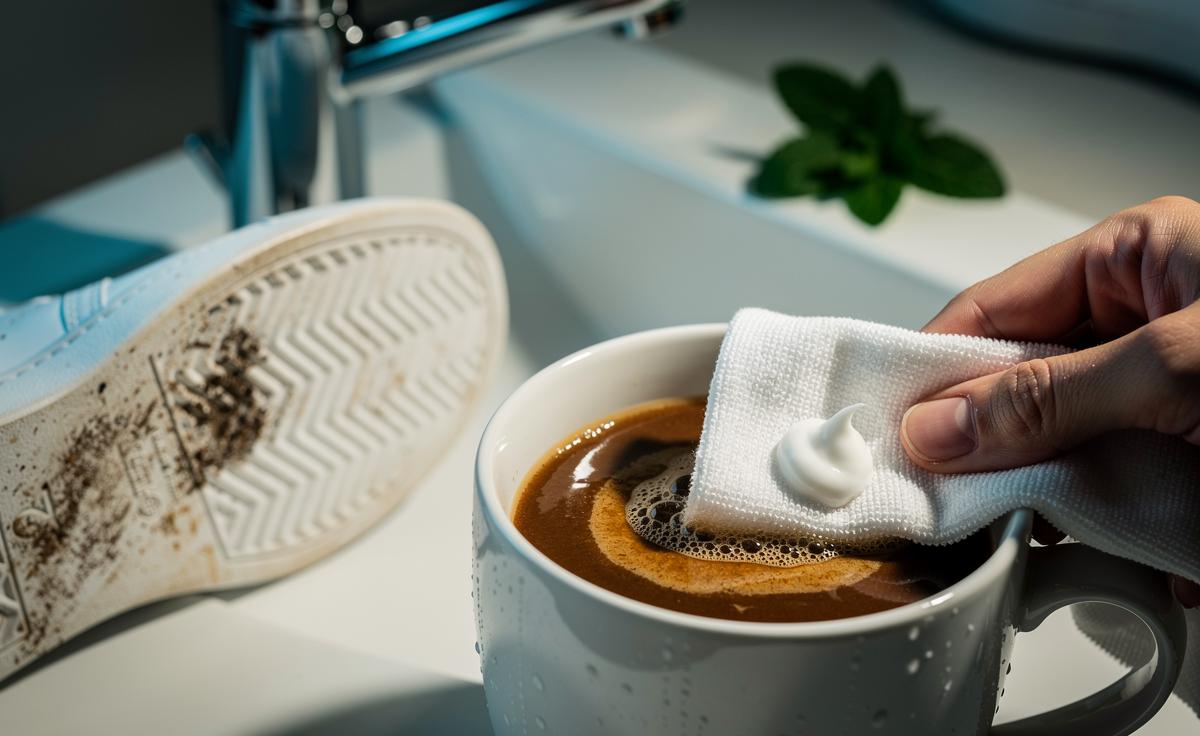
Think hard-wearing, non-porous, and cheap to replace. That’s toothpaste territory. White rubber trainer soles respond beautifully; smear, wait a minute, then wipe and buff for instant brightness. Ceramic sinks and tea-stained mugs also sparkle after a brief massage with a soft cloth. Chrome taps, bathroom fixtures, and stainless steel can regain lustre, provided you use a feather-light touch and polish dry. Use the pad of your finger or a soft microfibre, not a scouring pad.
Plastic items with superficial scuffs—remote controls, bin lids, light switches—benefit from a dab of paste to lift ingrained grime around edges and textures. On walls, a tiny amount can erase rubber scuffs from skirting boards painted with durable emulsions. For jewellery, caution pays: solid metal pieces (plain silver, stainless) may tolerate a delicate toothpaste polish in a pinch. But avoid gemstones and plated finishes; abrasives can cloud or thin them. Patch-test in a hidden spot first.
Textiles are possible but tricky. A diluted, dab-and-blot approach can reduce makeup smudges on washable cottons or brighten white laces before laundering. Rinse thoroughly to prevent residue attracting new dirt. Don’t attempt this on silk, wool, or upholstery you can’t wash. If you can’t rinse fully, don’t use toothpaste. As a rule of thumb: if a surface scratches easily with a fingernail or shows a sheen that matters—high-gloss paint, lacquer, phone screens—reach for a gentler method.
When to Avoid Toothpaste: Limits, Risks, and Smart Alternatives
Abrasives are both the hero and the hazard. Car paint, piano lacquer, high-gloss cabinetry, and modern phone or laptop screens have delicate coatings that haze with friction. Natural stone—marble, limestone—reacts badly not just to abrasion but to misjudged pH; toothpaste can etch or dull a honed finish. Never use toothpaste on coated lenses, touchscreens, or antique finishes. Coloured or gel formulations introduce other risks: dyes may transfer, and gels often just smear without polishing.
Fabric care needs nuance. Peroxide in whitening pastes can lighten dyes, causing uneven patches, while flavour oils may leave rings on synthetics. If odour removal is the goal, a wash with bicarbonate of soda or an oxygen-based stain remover is safer. For metals, switch to a purpose-made metal polish with known particle size and corrosion inhibitors. On plastics prone to scratching (acrylic bath panels, polycarbonate), test gently; a specialist plastic polish is typically kinder.
If you need degreasing rather than polishing, opt for a mild washing-up liquid in warm water. For tannins on crockery, a soak with oxygen bleach works faster and reaches crevices. Limescale on taps? Toothpaste masks it temporarily but won’t dissolve mineral deposits; use a citric acid solution instead. Right tool, right job: toothpaste is a spot-fix, not a universal cleaner. The payoff is speed and convenience when used where it excels—and restraint elsewhere.
How to Use It: A Simple Method and Quick Reference Table
Start small. Dab a pea-sized amount of white, non-gel toothpaste onto a soft, damp microfibre. Work in tight circles with almost no pressure for 10–20 seconds. Pause. Wipe with a clean damp cloth, then buff dry. Assess under good light. Repeat only if needed. Less is more; the polish happens in the first few passes. For mugs and ceramics, a 60-second dwell lets surfactants loosen tannins. For rubber soles, add a final wipe with a slightly soapy cloth to banish any residue. Always rinse away all paste—humectants left behind can feel sticky and attract dust.
| Stain/Surface | Toothpaste Type | Technique | Risk Level |
|---|---|---|---|
| Tea stains on ceramic mug | White non-gel | Light rub, brief dwell, rinse | Low |
| White rubber trainer soles | White non-gel | Small circles, wipe, buff | Low |
| Chrome taps | Non-gel, no dyes | Feather-light polish, dry buff | Medium (hazing if overdone) |
| Painted skirting scuff | White non-gel | Test spot, gentle rub | Medium |
| Phone screen, car paint, lacquer | None | Do not use | High |
Toothpaste is the cheeky shortcut that often works because it blends mild abrasion with simple chemistry, all in a controlled, user-friendly paste. Treat it like a precision tool: quick, light, targeted, then removed without trace. Patch-test, keep pressure minimal, and stop at “good enough”. You’ll save stained mugs, perk up tired trainers, and rescue bathroom chrome between proper cleans. But the smartest cleaners know when to switch tactics. Where will this minty multitasker save your day next—and on which stubborn mark are you tempted to try it first?
Did you like it?4.5/5 (27)