In a nutshell
- 🧂 Salt extends sponge life by lowering water activity and creating osmotic pressure that suppresses odour-causing bacteria, keeping fibres fresher for days.
- 🧼 Practical methods: daily dry-salt rubs, a 10–15 minute brine soak (1 tbsp per 250 ml), and an occasional stronger overnight refresh; always prioritise thorough drying.
- 🧠 Hygiene first: avoid using sponges on raw meat juices, don’t microwave synthetic blends, and never mix bleach with acids; retire damaged or persistently smelly sponges.
- 🌬️ Drying is critical: store upright with airflow to prevent moisture traps; rotate two or three sponges so each gets proper rest and drying time.
- 🌍 Environmental and cost gains: fewer replacements mean less plastic waste and lower household spend, making salt a low-footprint, high-impact kitchen habit.
Britain’s kitchens are full of reusable sponges that do heroic daily work, yet they sour quickly. Odour is the early warning: a sign of microbes thriving in damp fibres. An old-fashioned trick is making a modern comeback. Salt—cheap, safe, and available—can keep a sponge fresher for days, even weeks. It’s not magic. It’s chemistry and good practice. By lowering water activity and creating a hostile environment for bacteria, a saline treatment slows the stink at its source. Used properly, salt extends the working life of a reusable sponge and cuts waste without adding harsh chemicals to your sink.
Why Salt Keeps Sponges Fresher
Odour in sponges largely arises from bacterial metabolism in a moist, food-rich matrix. Salt tackles this on several fronts. First, osmotic pressure: high salinity draws water out of bacterial cells, disrupting their ability to function and reproduce. Second, salt reduces water activity (aw), meaning less free water is available for microbes to use. Lower aw equals slower growth. Third, chloride ions interfere with biofilm formation, making it harder for communities of microbes to anchor within the fibres. The result is fewer smell-producing compounds such as putrescine and cadaverine.
Not every organism is equally sensitive. Some halotolerant bacteria will shrug off mild salinity. That’s why concentration and contact time matter. Short, strong exposures outperform weak, lingering ones. Salt also adds gentle abrasion that helps dislodge food residues—the fuel of stink—during a rinse. The goal isn’t sterilisation but suppression. You keep populations below the threshold where odour blooms. Combine that with rapid drying, and the microbial “day” shortens dramatically, extending the sponge’s usable life without resorting to bleach or fragrances that simply mask smells.
How to Use Salt to Extend a Sponge’s Life
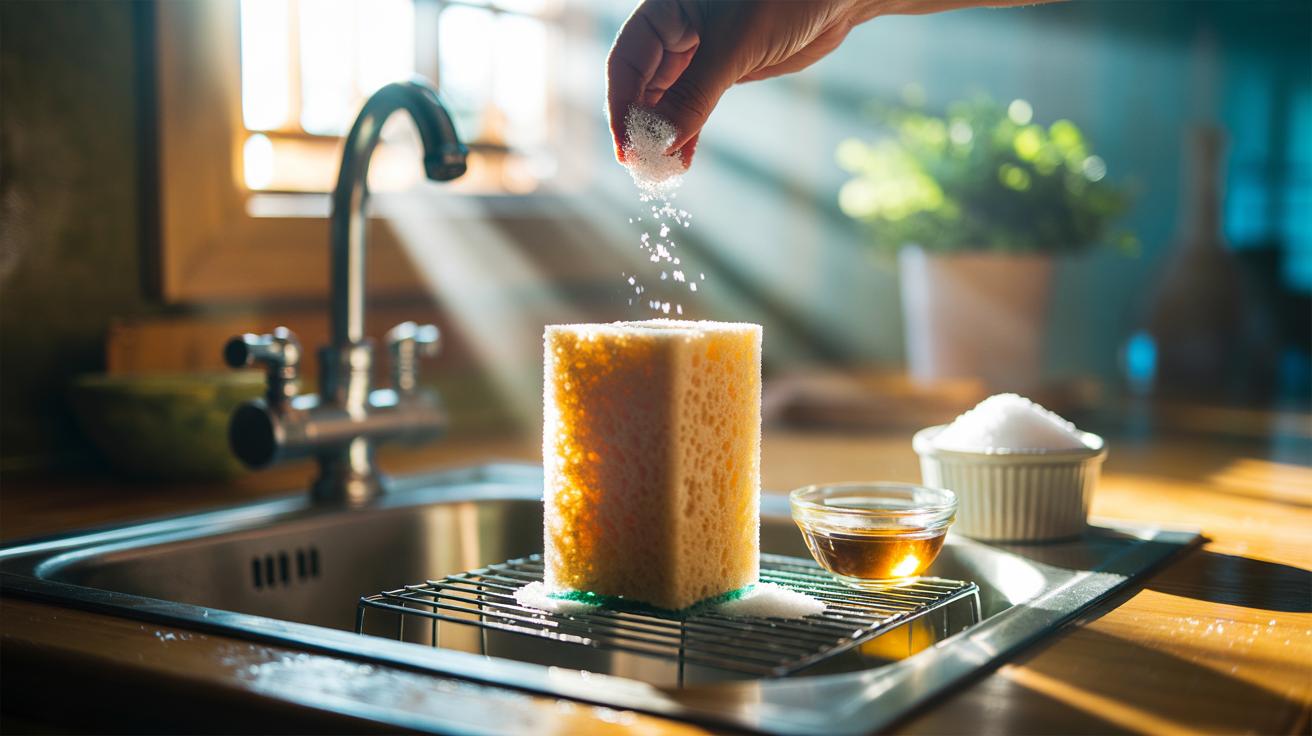
Start simple. After each use, rinse the sponge under hot water, squeeze thoroughly, and rub a teaspoon of fine salt across the surfaces. The grit breaks up residues; the salt lingers as a preservative. For a deeper reset, prepare a brine: 1 tablespoon of salt per 250 ml of warm water. Submerge the sponge for 10–15 minutes, squeeze a few times in the solution, then rinse lightly and air-dry upright. Drying matters more than soaking. Give the sponge airflow, not a dark, humid corner of the sink.
For those who prefer precision, here’s a quick reference you can pin inside a cupboard:
| Method | Salt Ratio | Contact Time | When to Use |
|---|---|---|---|
| Daily rub | 1 tsp dry salt per side | 30–60 seconds | After each washing-up session |
| Brine soak | 1 tbsp per 250 ml water | 10–15 minutes | Every 2–3 days |
| Overnight refresh | 4 tbsp per 500 ml water | 6–8 hours | End of week or stubborn odour |
Use table salt or sea salt; flakes dissolve slower, which is fine for rubs. Avoid adding vinegar to brine if you’ve used bleach recently—the mix can release chlorine gas. Squeeze out fully, store vertically, and rotate sponges so each gets rest and drying time.
Safety, Hygiene, and Common Mistakes
Salt is a helper, not a licence to keep a failing sponge indefinitely. Inspect fibres weekly. If the sponge splits, sheds, or smells even after a brine soak, retire it to non-food tasks or compost if your model is biodegradable. Never use a kitchen sponge on raw meat juices; paper towels or a sanitised cloth are safer. Cross-contamination ruins even the saltiest routine. Remember: salinity suppresses many bacteria, not viruses, and not all fungi. Keep expectations realistic and hygiene layered.
A common misstep is under-drying. Trapped moisture undermines everything salt achieves. Use a rack with airflow or a sunny sill, not a puddled caddy. Another error: weak brines. If it tastes barely salty, it’s not working hard enough. Aim for brine that’s distinctly saline. Skip microwaving sponges—modern blends may contain synthetics or metallic scrub fibres that spark, and the method is inconsistent. If you prefer chemical sanitisers, never mix products; rinse thoroughly between bleach and anything acidic. Gloves can reduce contamination in the first place and make the salt rub more comfortable.
The Environmental and Cost Payoff
Every extra week squeezed from a reusable sponge is less plastic entering the stream and fewer lorry miles shipping new packs. Multiply that by UK households and the carbon savings become tangible, even if individually modest. Salt’s footprint is tiny compared with single-use wipes or fragrance-heavy deodorisers. There’s an economic side too. A 750 g tub of table salt costs pennies per week when used as a preservative. Stretch a sponge’s lifespan from two weeks to four and you halve replacements, freeing a small but steady slice of the household budget.
There’s comfort in the sensory result. A sink that doesn’t smell like yesterday’s lunch improves the whole kitchen rhythm. You’ll clean more often, more quickly, wasting less hot water because residues lift faster under a saline rub. Low-tech isn’t low-impact; it’s often the smartest route. For an even greener routine, pair salt care with cellulose or loofah sponges that biodegrade, and rotate two or three so each dries thoroughly. Small changes, stacked together, build durable habits and cleaner homes without chemical overload.
Salt won’t turn a tired sponge into a miracle, but it reliably buys time, reduces odour, and keeps fibres usable between proper washes and sensible retirements. The method is frugal, evidence-informed, and easy to adopt alongside good drying and cross-contamination rules. In a cost-of-living squeeze, simple wins count. With a ramekin of salt by the sink and a quick daily routine, freshness lasts days longer and bin runs come later. What tweaks—different salts, drying spots, rotation schedules—will you test this week to get the freshest, longest-lasting sponge in your kitchen?
Did you like it?4.6/5 (29)