In a nutshell
- 🧪 Cloudiness is mineral limescale from UK hard water; do a 30-second lemon test to distinguish removable film from permanent etching.
- 🍋 The 30-second lemon method: rub cut lemon over haze, wait 30 seconds, rinse cool, and towel-dry immediately for a spotless shine.
- 🔬 How it works: citric acid protonates carbonates (releasing CO₂) and acts as a chelating agent, keeping calcium and magnesium in solution so residue rinses away.
- ⚖️ Best cleaner choice: citric (lemon or powder) is the fastest and least smelly; vinegar is slower, while rinse aid prevents spots but won’t remove baked-on scale.
- 🛡️ Care and prevention: protect gold rims and stone surfaces, never mix acid with bleach, use dishwasher salt and proper rinse-aid dosing, space glasses, and always dry to stop re-deposits.
Cloudy tumblers and dull wine glasses don’t signal poor washing. They signal chemistry. In the UK’s hard-water zones, calcium and magnesium salts cling to glass and plastic like fog on a window. The cure is sitting in your fruit bowl. A fresh lemon loads the surface with citric acid, which chelates minerals and breaks the limescale film in seconds. Most light haze vanishes in about 30 seconds. No special kit, no harsh fumes. Just cut, rub, rinse, and dry. Here’s the science behind that satisfying gleam, and the quick routine that turns murky into brilliant before the kettle boils.
Why Glasses Go Cloudy in Hard-Water Homes
From Kent to the Midlands, Britain’s hard water leaves its mark. When hot water evaporates on a glass, it abandons microscopic crystals of calcium carbonate and magnesium salts. Detergent can’t dissolve these fully, so a stubborn veil grows wash by wash. Add dishwasher heat, and residues bake on. That’s the milky bloom you notice under downlights. It’s not dirt. It’s geology on your stemware.
Citric acid tackles this haze with two clever moves. First, it donates protons that react with carbonates, releasing CO₂ and converting the crust to soluble salts. Second, it acts as a chelating agent, gripping metal ions to keep them in solution instead of redepositing on the surface. The film doesn’t just lift; it becomes rinseable liquid.
One caution. Sometimes dullness is etching—microscopic corrosion from high-alkaline detergents or excessive heat. Etching feels uniformly matte and won’t improve with acid. Run a simple test: wet a hazy patch with lemon juice for 30 seconds, rinse, and compare. If shine returns, it’s mineral film. If not, blame etching, not limescale.
The 30-Second Lemon Method, Step by Step
Speed is the selling point. You need half a lemon, cool water, a soft cloth, and a drying towel. Work near the sink. Thirty seconds per glass is realistic for everyday film. Heavier build-up may take a minute or two, but rarely more.
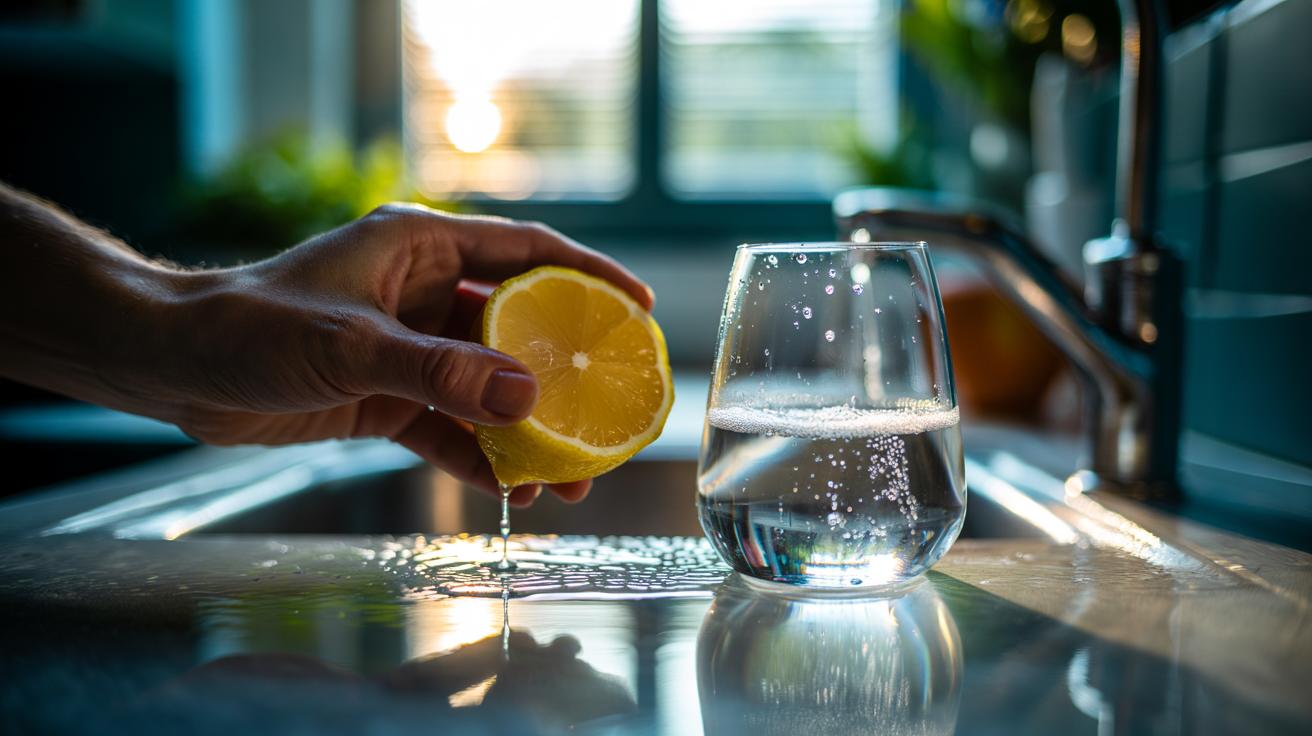
Cut the lemon and squeeze lightly to wet the cut face. Rub the juicy side over the cloudy areas with small, overlapping circles. You’ll feel drag fade as the film dissolves. For inside bowls and bases, twist the lemon like a cork. Leave a thin sheen in place for 20–30 seconds. Rinse under cool running water to carry away loosened minerals and any pulp. Dry immediately with a lint-free towel to prevent new spots. That’s crucial. The sparkle appears as the last droplets vanish.
No lemons? Mix 1 teaspoon of citric acid powder in 200 ml warm water, dip a cloth, and apply as above. For racks of glasses after a party, prepare a basin with 1 litre of water and 1 tablespoon citric acid, dunk each glass for 30 seconds, rinse, then dry. Always tackle residue before it hardens after dishwashing; timing saves effort.
Citric Acid vs Vinegar vs Rinse Aid: What Works Fastest
Kitchen acids aren’t equal. Vinegar’s acetic acid is effective but slower and smellier. Dishwasher rinse aids prevent spots but don’t remove baked-on scale. Food-grade citric acid is fast, neutral-smelling, and gentle on skin compared to stronger acids. For most households, lemon wins for convenience; powder wins for consistency. Here’s a quick comparison to choose your weapon.
| Cleaner | Active Acid | Typical Dilution | Contact Time | Pros | Cons |
|---|---|---|---|---|---|
| Lemon | Citric (~5–7%) | Neat juice | 30–60 sec | Fast, fresh, no mixing | Pulp; variable strength |
| Citric Acid Powder | Citric (solid) | 0.5–1% in water | 30–90 sec | Consistent, low odour, cheap | Needs mixing and storage |
| White Vinegar | Acetic (5–8%) | Neat or 1:1 | 1–3 min | Widely available | Lingering smell; slower |
| Rinse Aid | Surfactants | Machine-dosed | N/A | Prevents spots | Doesn’t remove old scale |
For UK costs, a 500 g tub of citric acid (~£3–£5) makes dozens of litres of cleaner, pennies per treatment. Vinegar is inexpensive but less pleasant to use. For instant results and no odour, citric wins.
Care, Safety, and Troubleshooting for Delicate Glass
Crystal and decorated glass deserve respect. Avoid scrubbing gold rims, lustre finishes, or hand-painted details; dab citric solution with a cotton pad, rinse, and air dry the rim. On lead crystal, limit contact to under two minutes and rinse thoroughly. If you suspect etching, stop. No acid will polish it back to life.
Keep acids away from stone worktops like marble or limestone; use a tray and wipe drips immediately. Wear gloves if you have sensitive skin. Never mix acids with bleach or chlorinated cleaners; harmful gases can form. If a glass smells musty, wash with mild detergent after de-scaling, then rinse again to remove aromas.
Still see haze? Repeat once with slightly stronger citric solution (up to 2%). If minerals persist in tight corners, use a soft bottle brush dipped in solution; avoid abrasive pads that scratch and create future clouding sites. Finally, prevent recurrence: use a dishwasher salt and correct rinse-aid dose in hard-water areas, space glasses so water drains, and always towel-dry if you want that newsreader’s studio gleam every time.
Lemon-led cleaning is not a fad; it’s grounded in chemistry that turns stubborn limescale into rinseable salts fast. It smells clean, costs little, and takes less than a minute per glass. For homes on Britain’s hard-water front line, that’s a practical win. The method scales from one tumbler to a banquet’s worth of stemware, and it slots neatly between dinner and dessert. Shine shouldn’t require an afternoon. Will you keep a lemon by the sink, or will you mix a citric spray and turn de-fogging into a once-a-week ritual?
Did you like it?4.5/5 (29)