In a nutshell
- 🍋 Citric acid in lemon juice chelates minerals, dissolves limescale (CaCO3), loosens soap scum, and with heat restores flow in sluggish kitchen drains.
- 🔧 Step-by-step: preheat pipes with boiling water, pour 250–300 ml lemon juice, plug and wait 10–15 minutes, optionally add baking soda for gentle agitation, then flush hot.
- 🛡️ Safety and suitability: Never mix with bleach or ammonia; wear gloves, avoid marble/limestone and raw metals, but brief contact is fine for uPVC and stainless; use monthly for maintenance.
- 🌍 Cost and eco upside: a low-cost, low-tox DIY that cuts harsh chemicals; pair with enzyme cleaners for odour control and cleaner pipes without risking corrosion.
- 🧰 Know the limits: for solid fat, hair, or multi-fixture backups, use mechanical clearing or seek professional help rather than relying on acids alone.
Before you reach for a caustic drain cleaner, consider the humble lemon. Freshly squeezed lemon juice packs a punch of citric acid that can loosen soap scum, dissolve limescale, and freshen a sluggish kitchen drain. Its low pH disrupts residues that latch onto pipe walls, while the lemon’s natural oils add a light degreasing lift and a clean scent. For slow drains caused by mineral build-up and film, lemon may be all the help you need. It is not a magic wand for a solid blockage, yet it offers a safe, inexpensive first response that often avoids a call-out and reduces chemical load in your home.
How Citric Acid Works on Grease, Scale, and Soap Scum
Lemon juice is rich in citric acid, a weak organic acid that tackles three common culprits of kitchen slow-downs: mineral scale, soap scum, and light grease. As an acid and chelating agent, it binds calcium and magnesium ions that cement residues to pipe walls. In the presence of calcium carbonate (limescale), citric acid forms soluble calcium citrate and releases gentle fizzing, helping detach deposits. By lowering the pH, it also destabilises insoluble calcium soaps (the “scum” formed when hard water meets fats), softening them so hot water can rinse them away.
Heat amplifies this effect by boosting solubility and flow. While citric acid does not truly “dissolve” hardened grease plugs, it can loosen the film that traps crumbs and biofilms, restoring diameter and flow. Think of lemon as a conditioner that frees up adhered grime so water can do the heavy lifting. For thick, waxy fat build-ups or matted fibres, mechanical clearing remains the better tool.
| Clog Type | Citric Acid Action | Typical Dwell Time | Expected Result |
|---|---|---|---|
| Limescale (CaCO3) | Chelation and acid dissolution | 10–20 minutes | Softened, flushed clean |
| Soap scum | pH shift breaks calcium soap bonds | 10–15 minutes | Loosened residue |
| Light grease film | Mild degreasing with heat | 15–30 minutes | Improved flow |
| Hair/solid fat mass | Limited action | — | Use mechanical methods |
Step-by-Step: Clearing a Kitchen Drain With Lemons
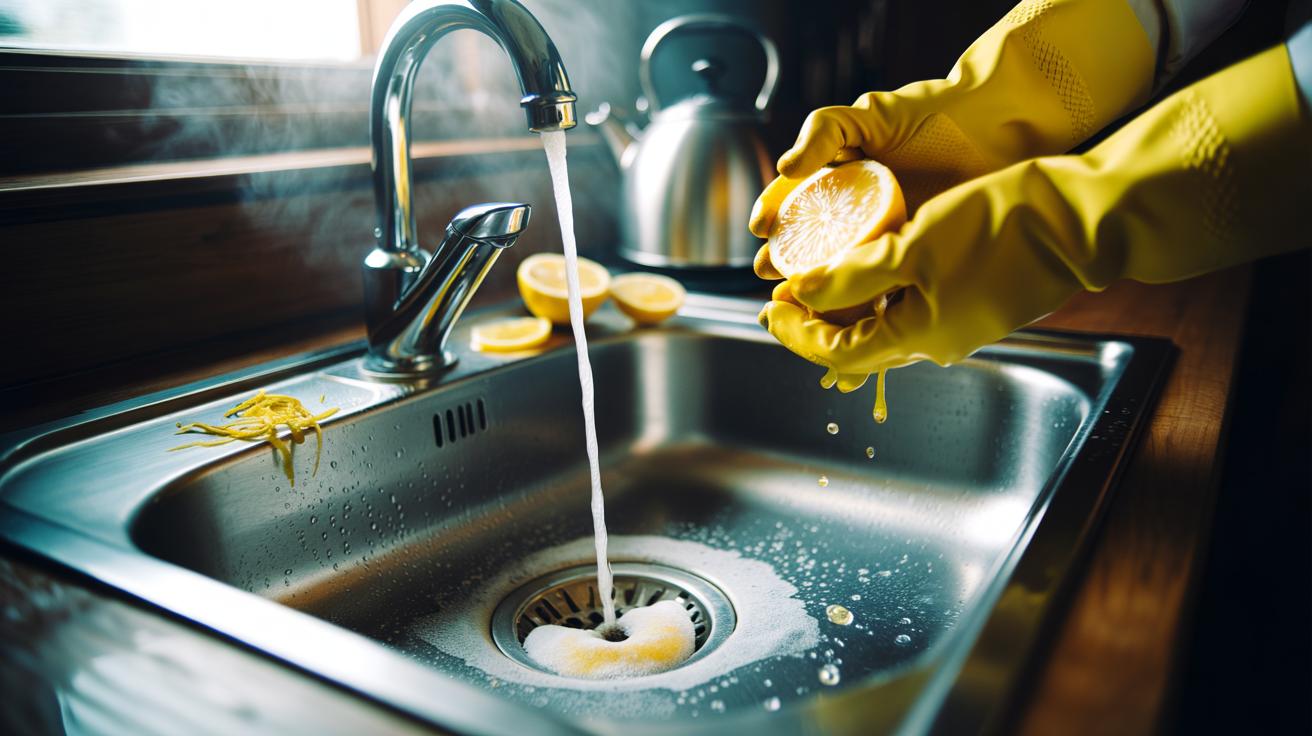
Start by boiling a kettle. Remove the sink strainer and wipe away visible gunk. Squeeze 2–3 large lemons to yield about 250–300 ml of juice (bottled juice with at least 5% citric acid also works). Pour half the boiling water down the drain to heat the pipework. Next, add the lemon juice and fit a plug to trap warmth and vapour. Give it 10–15 minutes of contact time so the acid can chelate minerals and loosen scum. If odours are present, include a teaspoon of lemon zest for a natural fragrance boost.
For added agitation, sprinkle 2–3 tablespoons of bicarbonate of soda (baking soda) into the drain, then slowly pour another 150 ml of lemon juice. The fizz does not increase cleaning strength chemically—it simply foams and nudges loosened particles. Wait 5–10 minutes. Finish with the remaining boiling water to drive residues away. If flow is still sluggish, repeat once or use a cup plunger for 20–30 seconds to shift lingering debris.
Safety, Suitability, and When to Avoid the Lemon Fix
Citric acid is gentle compared with caustics, yet it is still an acid. Wear gloves and keep splashes out of eyes. Never mix lemon juice with bleach or ammonia-based cleaners, as this can release harmful gases. Avoid prolonged contact on sensitive materials: natural stone (marble, limestone), unsealed concrete, raw iron, and some older brass fittings may etch or tarnish. In most modern uPVC and stainless-steel kitchen setups, brief contact is fine, especially when followed by a hot-water flush.
Use common sense on severity. If water stands for hours, the trap may be blocked by a solid mass—reach for a drain snake or remove the U-bend for manual cleaning. Persistent backups in multiple fixtures can indicate a vent or stack problem, which calls for a professional. As a maintenance habit, a monthly hot rinse plus 150 ml of lemon juice helps keep biofilm and mineral film at bay without stressing your plumbing.
Cost, Performance, and Environmental Upside
Lemons are inexpensive, widely available, and kinder to wastewater systems than harsh alkalis or acids. A home treatment typically costs under a pound or two, especially if you use bottled lemon juice. While a concentrated chemical drain opener can seem faster, it often trades speed for risk: pipe corrosion, toxic fumes, and pollution. Citric acid offers a balanced approach—effective on common films, safe for most household pipes, and pleasant to use. For fatbergs or fibrous clogs, combine lemon care with routine strainers and periodic mechanical clearing.
Performance rests on contact time and heat. Hot water plus citric acid often restores a narrowing drain to near-normal flow in under half an hour. If you prefer a greener routine, alternate lemon treatments with an enzyme cleaner to target food residues. This tandem keeps odours low and pipes clear, reducing the likelihood you will ever need an emergency call-out or harsh chemicals.
Used thoughtfully, lemon juice is a credible first-line fix for the most common, non-catastrophic kitchen slow-downs. The citric acid targets scale and scum, the heat enhances movement, and the fresh scent lifts lingering odours—all without risking your plumbing or the environment. As with any home remedy, it has limits: heavy grease plugs, hair masses, and system-wide blockages deserve a snake or a professional. Would you try a lemon-led clean this weekend and track how your drain’s flow and freshness change over a month?
Did you like it?4.4/5 (29)