In a nutshell
- ⚡ The electric kettle is the most efficient for small, on‑demand heating: a 3kW element delivers direct heat with minimal losses, beating a hob and avoiding boiler pipe heat waste.
- 🫖 Boil smarter: only boil what you need; use 80–90°C for many drinks to save ~20–25% energy; avoid “keep warm”; descale monthly to prevent limescale that can add ~10% to usage.
- 💷 Real costs: heating 1 L ≈ 0.11 kWh (~3p), a single brew ≈ 0.03 kWh (~0.8p); stop overfilling by 1 L/day to save ~£11/year, with combined habits yielding about £20–£40/year.
- 🍝 Beyond tea: pre-heat cooking water in the kettle, fill a washing‑up bowl with mixed kettle-hot water instead of running the hot tap, and use a hot water bottle or flask for targeted warmth.
- 🔒 Practical safety: pour slowly, keep cords tidy, replace damaged parts, and stick to the guiding rule—heat what you need, when you need it—for steady winter savings.
As energy prices bite and evenings draw in, a simple hero sits on almost every UK countertop: the electric kettle. Far from being just a tea-maker, it’s a precision heater that can trim the cost of countless daily tasks. By understanding how a kettle converts power into heat with minimal waste, and by changing a few small habits, households can chip away at winter bills without sacrificing comfort. The secret is using the right amount of water, at the right temperature, for the right job. Here’s how the humble kettle can deliver outsized savings, from your morning brew to dinner prep.
Why the Kettle Beats Other Heaters for Quick Jobs
The typical UK kettle is a 3kW workhorse that transfers heat directly to water via a submerged element, keeping losses low. That’s quite different from a pan on a hob, where energy escapes around the sides and into the room. It also outperforms running a combi boiler for a single mug: hot water often travels through long pipes, dumping heat into the walls before it even reaches the tap. For small, on-demand tasks, nothing beats a kettle’s instant, targeted efficiency.
Physics explains the money: heating 1 litre of water from 15°C to boiling needs about 0.11 kWh in a modern kettle. At an average electricity rate of roughly 28p/kWh, that’s just over 3p. A hob may take longer and use more energy; a boiler may fire, circulate, and waste heat in pipe runs. The kettle’s tight design trims these overheads. When you only need a cupful, a cupful is all you should heat.
Boil Smarter: Practical Habits That Save Pounds
Start with the golden rule: only boil what you need. If your mug holds 250ml, fill the kettle for 250–300ml, not a litre. Use the kettle’s level markers, or fill the mug first and pour it in. Every extra minute of unnecessary boiling is money evaporating into thin air. Next, descale monthly in hard-water areas: limescale acts like insulation, slowing heat transfer and pushing up energy use by as much as 10%. A quick citric-acid rinse restores speed and efficiency.
Temperature matters. Many teas and coffees are best below boiling; heating to 80–90°C instead of 100°C can shave roughly 20–25% off the energy per boil. If your kettle lacks a temperature setting, stop it early when steam surges. Batch thoughtfully: fill a vacuum flask in the morning for top-ups all day, reducing repeat boils. And be wary of “keep warm” features, which can sip power for hours. Precision beats convenience when the aim is lower bills.
What It Costs: Real Numbers for UK Homes
Use these indicative figures to see where savings stack up. Calculations assume a modern kettle at roughly 90% efficiency, starting from 15°C, and an electricity unit rate of 28p/kWh. Your tariff and starting water temperature will shift the numbers slightly, but the relative picture holds.
| Task | Water Heated | Approx. Energy Used | Estimated Cost | Tip for Saving |
|---|---|---|---|---|
| Single brew | 250 ml | ~0.03 kWh | ~0.8p | Heat just a mug’s worth |
| Family round | 1.0 litre | ~0.11 kWh | ~3.1p | Don’t fill past the need |
| Pasta pre-heat | 2.0 litres | ~0.22 kWh | ~6.2p | Pour into the pan to cut hob time |
Small changes add up. If a household stops overfilling by 1 litre a day, that’s roughly 0.11 kWh saved daily—about £11 a year at the rates above. Combine that with kettle pre-heating for cooking and a switch to sub-boiling temperatures where suitable, and annual savings of £20–£40 become realistic. Consistency, not heroics, is what trims the bill.
Beyond Tea: Clever Winter Uses for Boiled Water
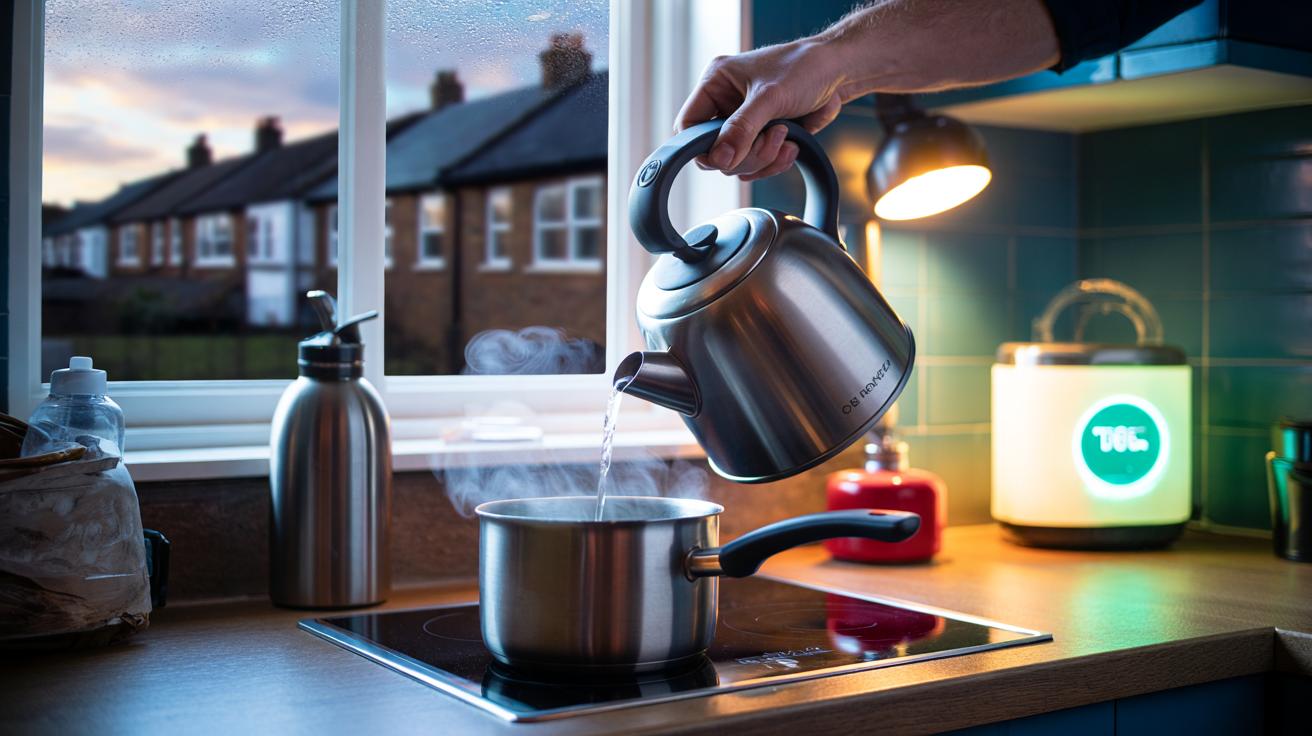
Pre-heating cooking water is a standout: bring pasta or vegetables up to temperature in the kettle, transfer to a pot, then finish on the hob. On electric hobs this often saves minutes and measurable energy; even with induction, faster time-to-boil cuts use. For washing-up, fill a bowl with kettle-hot water mixed with cold, rather than running the hot tap and warming metres of pipework you don’t need. Short, contained jobs favour the kettle every time.
Warmth without waste is the winter mantra. Use boiled-and-cooled water in a hot water bottle for targeted comfort, reducing the urge to crank up the thermostat. Keep a flask of near‑boiling water for hot drinks through the day to avoid repeat boils. Maintain safety: pour slowly, keep cords tidy, and never leave a freshly boiled kettle within reach of children. Descale regularly to retain speed, and replace cracked lids or loose bases. Heat what you need, when you need it—and nothing more.
In a season when every watt counts, the kettle’s precision and speed make it an unlikely champion of thrift. By measuring water, choosing sensible temperatures, pre-heating for cooking, and ditching wasteful habits, households can chip away at costs without losing the comforts that make winter bearable. The gains aren’t flashy, yet they’re steady, reliable, and grounded in simple physics. Small, repeatable savings are the surest route to a lower bill. Which kettle habit will you change first to make your home warmer, cheaper, and smarter this winter?
Did you like it?4.5/5 (28)