In a nutshell
- 🔧 The “magic trick” is hydronic balancing—redistributing radiator flow so every room warms evenly without raising the thermostat, cutting cold spots and bills.
- 🌡️ Engineers trim lockshield valves on quick-to-heat radiators to prioritise lagging rooms, creating even heat and enabling lower flow temperatures for higher efficiency.
- ⚡ Balancing boosts condensing boilers via cooler return temps and lifts heat pumps (COP); steadier flows help TRVs modulate quietly and prevent short cycling.
- 📏 Practical method: bleed radiators, open TRVs, measure delta‑T with clip‑on thermometers, then make tiny lockshield adjustments and log positions until rooms warm together.
- 🏠 Key targets: ~15–20°C delta‑T for boilers, ~3–7°C for heat pumps; add draught‑proofing, reflective panels, and gentle fans to reduce stratification and lock in gains.
British households often assume that comfort demands a higher setpoint, yet the professionals keeping our homes snug swear by a different approach. The quiet “magic trick” is not a gadget but a method: hydronic balancing of radiators. By regulating how hot water flows through each radiator, experts coax warmth into the right rooms, reduce cold spots, and lower heat loss through overheated spaces like hallways. The thermostat stays put, but rooms feel consistently warmer because heat goes where it is needed. Balanced systems unlock latent efficiency that was already paid for in your energy bill. The side benefit is striking: boilers condense more, heat pumps work less hard, and comfort stabilises from breakfast to bedtime without bumping up the dial.
The Magic Trick: Hydronic Balancing That Redistributes Heat
In many UK homes, radiators closest to the boiler roar while distant rooms remain chilly. The culprit is unequal flow. Hydronic balancing corrects this by using the discreet lockshield valve—the capped valve at the opposite end from the TRV—to throttle flow on easy-to-heat radiators and prioritise those starved of warmth. The result is even radiator temperatures, fewer draughty corners, and a house that feels warmer at the same thermostat setting. Balanced radiators stop the hallway sauna and the cold bedroom syndrome in one stroke. Because emitters run more evenly, you can also lower flow temperatures without sacrificing comfort, which is a direct win for efficiency.
Think of it as traffic control for hot water. Instead of letting the first radiators grab all the heat, balancing enforces fair distribution. That means bedrooms and loft conversions get their share, while oversized downstairs panels stop boiling the corridor. The technique is simple, repeatable, and enduring.
Why It Works in UK Homes With Boilers and Heat Pumps
For condensing gas boilers, balancing is an efficiency multiplier. Even heat across the system lets you reduce flow temperature and still meet demand, pushing return temperatures low enough to trigger deeper condensation in the heat exchanger. That chemical reality translates into lower gas use. Cooler returns are money in the bank for condensing boilers. With air-source heat pumps, balancing lifts the COP because the system can maintain lower flow temperatures consistently without one or two rooms dragging the curve. The compressor cycles less, comfort stabilises, and electricity use falls.
It also helps your TRVs do their job. When radiators heat evenly, TRVs modulate gently rather than slamming shut, preventing noisy flows and short-cycling. Balanced circuits reduce the temptation to crank the room thermostat—because the cold room finally catches up. The “warmer at the same setpoint” feeling comes from removing bottlenecks that made the heating plant work against itself.
How to Do It: A Step-by-Step Room Balance
Start with preparation. Bleed all radiators, check system pressure, and clean or replace any filters/strainers. Open every TRV fully so they don’t interfere. Set the thermostat to call for heat and allow the system to stabilise for 30–45 minutes. Clip a pair of inexpensive digital pipe thermometers to the flow and return tails on a representative radiator to understand your starting delta‑T (temperature drop across the radiator).
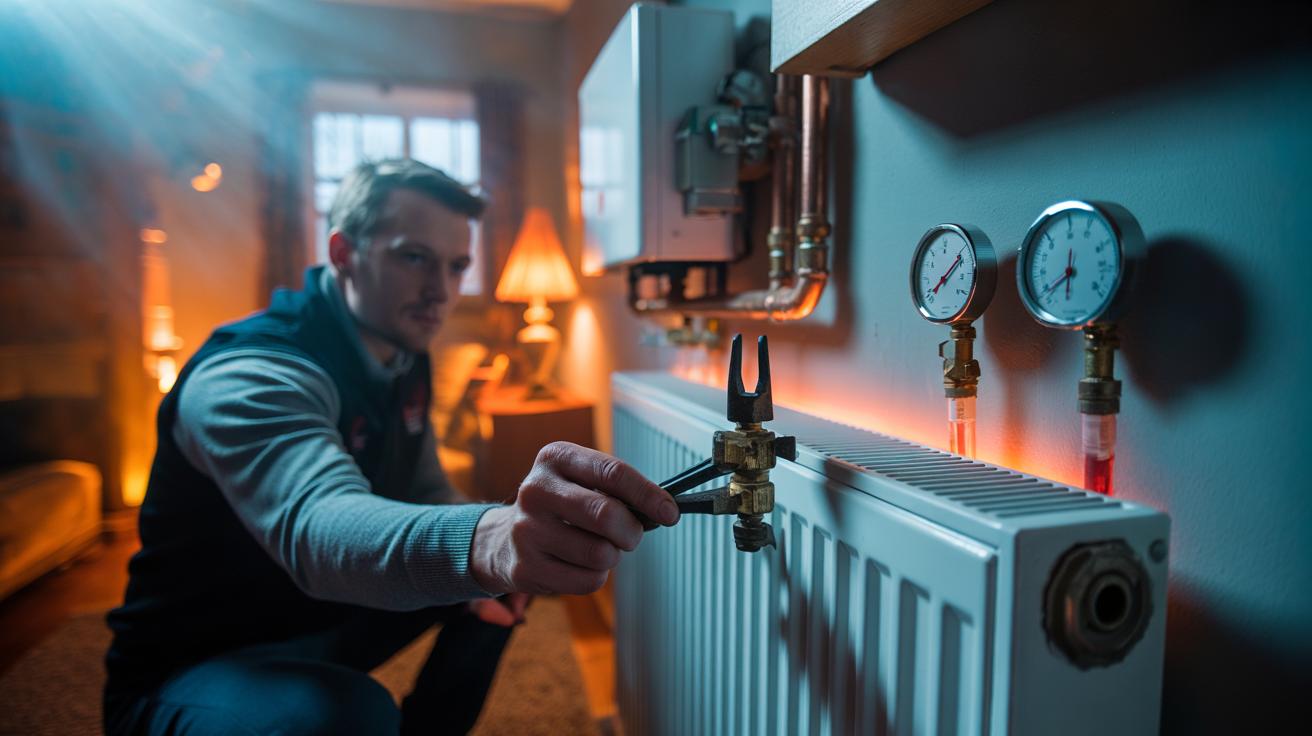
Begin at the radiator that heats fastest, typically nearest the boiler. Remove the lockshield cap and, using an adjustable spanner, close then reopen it to a minimal position—often an eighth to a quarter turn. Move to the next radiator, opening slightly more, and so on, granting progressively freer flow to rooms that lag or sit farthest away. Recheck temperatures after another 20–30 minutes, refining each lockshield by tiny increments until rooms warm together. Small turns make big differences—work patiently and note each adjustment.
Finish by restoring TRVs to normal settings. If a room still trails, open its lockshield a touch; if one races, close slightly. Aim for quiet pipes, steady warmth, and no overheated corridors.
Numbers to Aim For and Tools at a Glance
The targets depend on your heat source and emitters. These guideposts help you balance for comfort without raising the thermostat. Use clip-on thermometers and a simple log to track progress. If flow temperatures are high, consider stepping them down once balance is achieved; the home should feel the same or better.
| System Type | Typical Flow Temp Band | Target Delta‑T Across Radiator | Notes |
|---|---|---|---|
| Condensing Gas Boiler | 55–70°C | ~15–20°C | Lower return temps improve condensing efficiency. |
| Air-Source Heat Pump | 35–50°C | ~3–7°C | Higher flows, gentle drops aid COP and comfort. |
| Mixed Emitters (UFH + Rads) | 30–45°C (UFH), 45–60°C (Rads) | UFH ~3–5°C, Rads as above | Use blending valves and balance each circuit separately. |
Essential tools: two clip-on thermometers, radiator bleed key, adjustable spanner, marker pen for valve positions. Never yank valves fully open; incremental control wins. Once balance is set, consider reflective panels behind external-wall radiators and soft-seal draughts around the loft hatch and skirting to hold onto the heat you’ve finally directed correctly.
Pro Tips That Make the Trick Even Warmer
Balance works best when the building envelope cooperates. Seal letterboxes and keyholes, close unused trickle vents during storms, and fit a thick seal to the loft hatch. If ceilings are high, run a ceiling fan on low, winter-reverse to push warm air down. Keep internal doors ajar to main spaces so heat can migrate; install discrete transfer grilles if doors are tight to the carpet. In rooms with stubborn cold spots, a silent desk fan on low aimed across a radiator boosts convection without touching the thermostat. Air movement at low speed often feels like a temperature increase because it evens out stratification.
Schedule a yearly health check: bleed radiators, verify pressure, and tweak lockshields after any changes to furniture or glazing. If you later upgrade to larger radiators or add a heat pump, rebalance to match the new flow regime and keep the magic alive.
When homeowners experience balanced heating, the idea of turning up the thermostat fades away. Even warmth settles arguments between rooms, and the boiler or heat pump finally runs the way the engineers intended. Hydronic balancing is a one-time craft with long-term rewards: steadier comfort, quieter operation, and lower bills. The trick is simply giving every radiator its fair share—no costly gadgets, no higher setpoint. With a couple of clip-on thermometers and patience, you can transform how your home holds heat. Will you try a careful balance before the next cold snap and see how warm your current thermostat setting can really feel?
Did you like it?4.5/5 (21)