In a nutshell
- 🍃 The core method: Blanch in well-salted rolling water, then shock in ice to lock in vibrant colour and crisp-tender texture.
- 🔬 Pigment science: manage heat and pH—chlorophyll dulls with acid, anthocyanins brighten with slight acidity, and carotenoids are relatively heat-stable.
- 🧂 Practical setup: large pot, 10–15g salt per litre, small batches, uncovered blanch for greens, immediate ice bath, thorough draining, then a quick reheat with butter or oil.
- ⚠️ Mistakes to avoid: overcrowding, covering the pot, skipping the ice bath, holding veg warm, and using baking soda which harms flavour and texture.
- 🍽️ Pro finishes: gloss with beurre monté or olive oil, add lemon/vinegar at the right time (acid after cooking greens; acid to boost reds), and season just before serving.
Restaurant plates arrive with greens that gleam and carrots that seem to glow, while home-cooked vegetables can slip towards khaki or beige. The difference is rarely mystery or magic; it’s a precise, repeatable kitchen habit. Chefs rely on a simple sequence that preserves texture and vibrant colour without sacrificing flavour. It begins with fast cooking in properly salted, rolling water and ends with a dramatic chill. This is not about gimmicks or additives. It’s about controlling heat, time, and acidity so plant pigments stay vivid. Master one straightforward routine and your side dishes will instantly look and taste fresher, whether you’re plating a weeknight supper or a dinner-party centrepiece.
The Chef’s Trick: Blanch, Shock, and Season
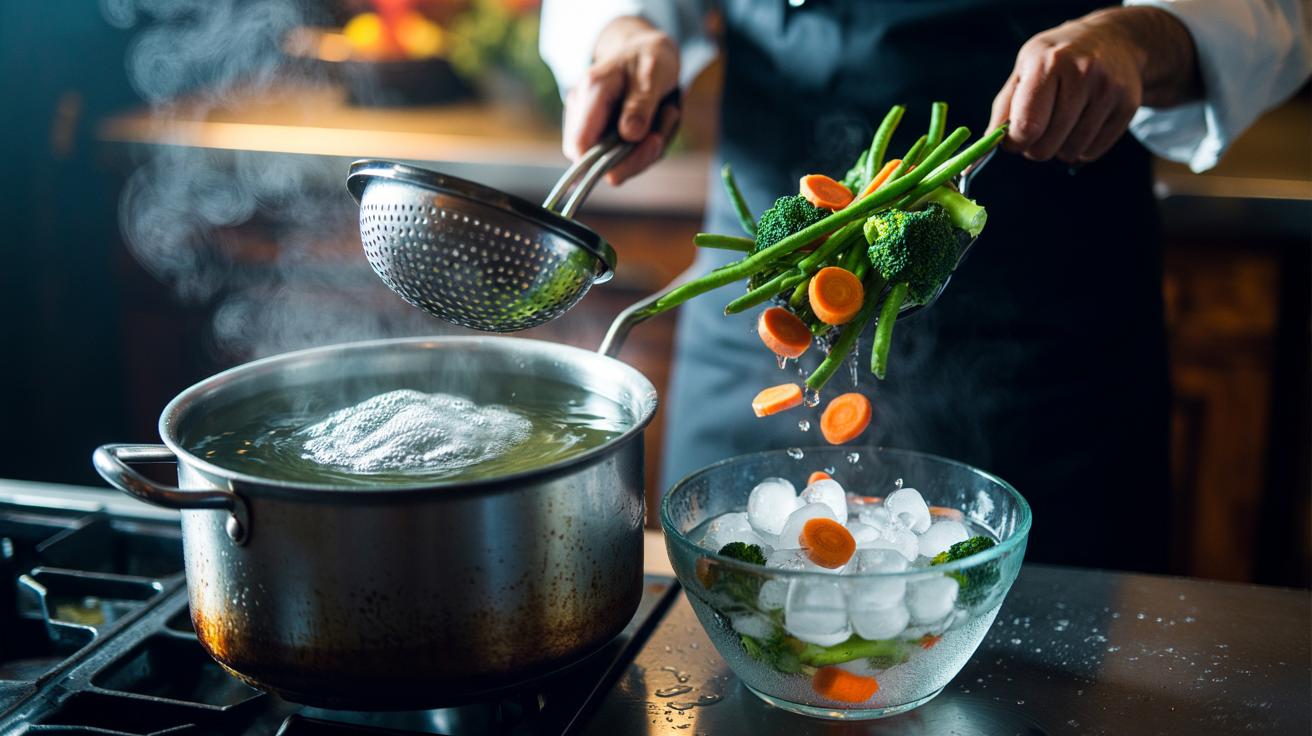
The core method is clean and quick. Prep vegetables evenly, bring a large pot of water to a vigorous boil, then add salt at roughly 10–15g per litre. Use plenty of water and keep it furiously boiling to prevent the temperature from collapsing when the veg go in. Drop in your vegetables and cook just until they turn vivid and tender-crisp—think green beans for 2–3 minutes, broccoli florets for about 90 seconds, and peas for 45–60 seconds. Work in small batches for consistency and colour. Keep the lid off when blanching greens so volatile acids can escape.
Now the indispensable move: plunge the vegetables straight into an ice bath. This “shock” halts carryover cooking, fixes hue, and preserves snap. Drain well and dry; excess water will blunt seasoning and sheen. From here, finish fast: a warm pan, a knob of butter or a splash of olive oil, a pinch of salt, maybe a squeeze of lemon—added at the end for non-green veg—to enliven without dulling. The result is a plate of bright, glossy vegetables that taste as good as they look.
The Science of Colour: Pigments, Heat, and pH
Vegetable colours come from distinct pigment families, each reacting differently to heat and acidity. Chlorophyll makes greens; acids turn it olive. That’s why chefs blanch greens uncovered and avoid acidic ingredients until after cooking. Carotenoids (carrots, squash) are relatively stable, though overcooking still saps brilliance. Anthocyanins (red cabbage, purple sprouting broccoli tips) shift with pH; a touch of acid keeps reds lively, while alkalinity pushes them blue. Betalains (beetroot) are delicate; gentle heat maintains their jewel tones. Salted water seasons and improves texture; it marginally raises boiling temperature but, more importantly, helps the veg cook evenly and taste sweeter. Avoid baking soda: while it may keep greens bright, it wrecks texture and flavour.
The ice bath stops enzymatic browning and locks pigment state by crashing the temperature. Finish with fat for shine and a thin protective coat that slows oxidation. For reds and purples, add acidity at the end to intensify their natural glow; for greens, bring any lemon or vinegar to the party only after reheating in the pan.
| Pigment | Examples | Colour-Saving Condition | Chef’s Tip |
|---|---|---|---|
| Chlorophyll | Spinach, broccoli, beans | Neutral pH, high heat, short time | Blanch uncovered; add acid only after cooking |
| Carotenoids | Carrots, squash | Gentle heat, avoid overcooking | Glaze with butter for sheen |
| Anthocyanins | Red cabbage, purple kale | Slight acidity preserves red | Add vinegar or lemon at the finish |
| Betalains | Beetroot | Moderate heat, minimal time | Roast gently; avoid long boils |
Practical Steps for Home Cooks
Set up a “line” like a pro. Put a big pot on to boil; season the water until it tastes pleasantly salty. Prepare a large bowl with ice and cold water. Trim vegetables to even sizes; for thick-stemmed broccoli, split stems so they cook as quickly as florets. Cook in small batches so the water never stops boiling. Skim and remove each batch as soon as the colour brightens and the bite turns tender. Transfer immediately to the ice bath, swirl to chill, then drain thoroughly on a clean towel or rack so moisture doesn’t dilute seasoning later.
To serve, reheat swiftly: a hot pan, a little butter or oil, a pinch of salt, and perhaps a crack of pepper. For greens, keep acids for the plate—not the pan—so chlorophyll stays bright. For red cabbage or beetroot, finish with a splash of vinegar to sharpen colour. Blanched veg keep well for a day, covered and chilled, ready to reheat in minutes for weeknight speed and restaurant polish.
Mistakes to Avoid and Professional Finishes
Common errors dull the plate. Don’t overcrowd the pot; it kills the boil and muddies colour. Don’t cover the pan when blanching greens; trapped acid steam turns them drab. Skip baking soda—its alkalinity compromises flavour and texture despite temporary brightness. Beware “holding” veg in warm water; they continue to cook and lose snap. Never skip the ice bath; running water isn’t cold enough to stop heat fast. Finally, don’t add lemon to green veg during blanching; save it for the final seasoning step.
Professional finishing is minimal but precise. Toss hot veg with a little beurre monté or extra-virgin olive oil for gloss. Add a few drops of vinegar or lemon to enhance reds and oranges; use citrus zest, not juice, for greens to avoid dulling. A pinch of sugar can balance bitterness in kale, while toasted nuts or seeds add texture that makes colour pop. Finish with flaky salt at the table. Speed, heat, and restraint protect both colour and character.
In kitchens from bistros to banquet halls, chefs depend on one dependable routine: blanch in well-salted, rolling water, then shock in ice, finishing fast with fat and thoughtful seasoning. This method coaxes out natural sweetness, keeps textures crisp-tender, and preserves the luminous colour that signals freshness. With a big pot, a bowl of ice, and an eye on the clock, you can plate veg that look camera-ready and taste brilliantly alive. Which vegetables will you try first with this approach, and what final flourish—zesty citrus, buttery glaze, or a dash of vinegar—will you choose to make them sing?
Did you like it?4.5/5 (26)