In a nutshell
- 🧺 Old tech returns: the roller press (modern rotary ironer, descendant of the mangle) is back in UK homes for fast, consistent finishing on linens, bedding and shirts.
- ⚡ Practical edge: broad, uniform pressure delivers hotel-crisp results faster and can cut energy use; a pillowcase takes 6–10 seconds on a roller vs 45–60 seconds with a steam iron.
- 🧵 Better fabric care: steady heat and a padded bed reduce shine and scorching on cotton, linen and wool blends; use a pressing cloth and press items slightly damp to protect fibres.
- 📏 Easy setup and costs: compact models fold for storage; look for working width 60–85 cm, reliable temperature control and a finger-guard; the second-hand market offers budget-friendly options.
- 🏨 Where it’s used: hotels and launderettes rely on self-service ironers, while home sewists and vintage lovers embrace them—aligning with slow living and garment longevity.
Across British homes, wardrobes are filling with linen shirts, crisp cotton bedding, and tailored trousers—and with them, a renewed appetite for immaculate finishing. The surprise saviour is not a smart gadget but an old workhorse: the roller press, descendant of the Victorian mangle. Once dismissed as laundry-room museum pieces, these rotary ironers are returning to duty in compact, efficient forms that tame large flat items and stubborn creases. For flat fabrics, the roller offers a fast, uniform press that handheld irons rarely sustain. As power prices bite and quality wardrobes demand care, this revived technology promises speed, consistency, and a gentler touch on fibres.
From Mangles to Rotary Ironers: Why the Roller Rules
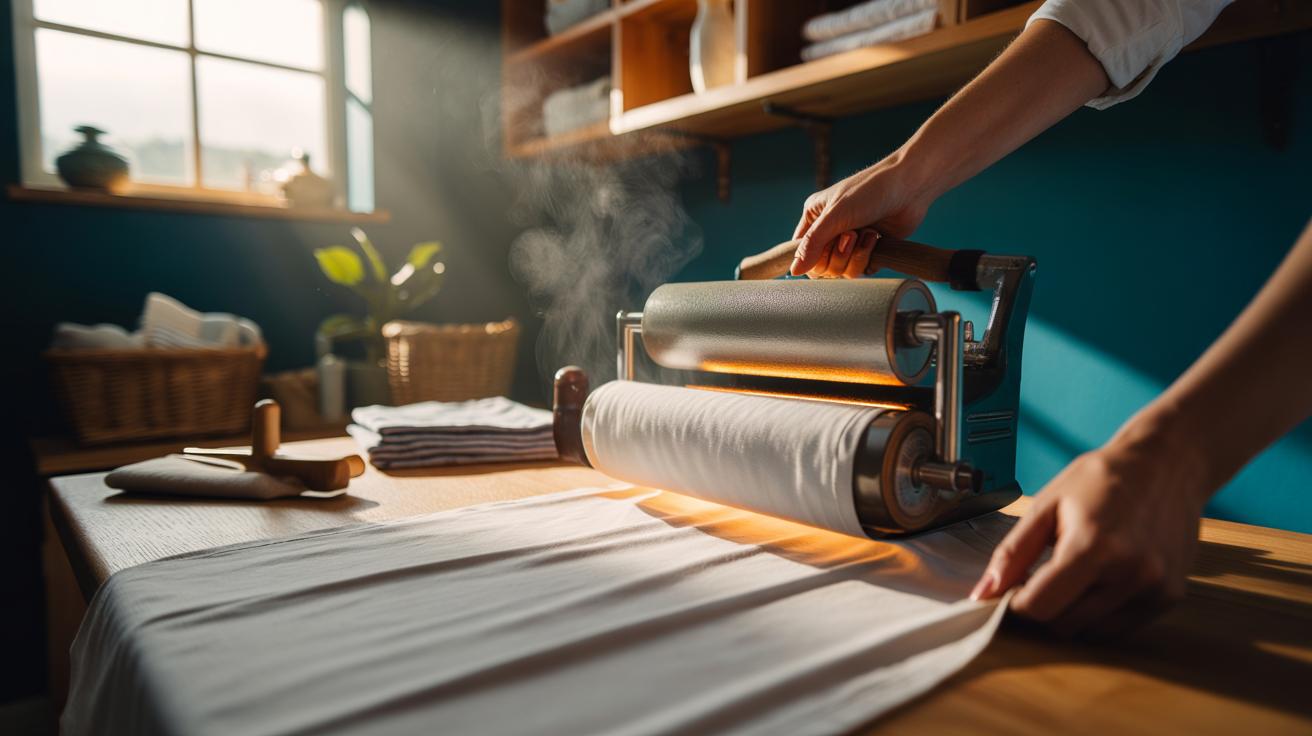
The original household mangle was a hand-cranked pair of cylinders that squeezed water and refined texture. Today’s rotary ironer keeps the principle but replaces elbow grease with controlled heat and even pressure. A heated shoe meets a padded roller; fabric feeds through in a smooth arc. The result is a broad, consistent contact patch that flattens fibres without the top-to-bottom wrist gymnastics of a handheld iron. That uniform pressure is the secret to hotel-sheet sharpness at home, particularly on natural fibres like linen and mid-weight cotton.
Because the roller carries the workload, you guide rather than press. Sheets, duvet covers, tablecloths and napkins flow continuously, bypassing the stop–start rhythm of tip, pivot and steam bursts. Collars, cuffs and yokes also benefit: a quick pass sets edges cleanly before you finesse curves on a tailor’s ham or sleeve board. When pieces are pre-dried to slightly damp, a roller delivers a near-commercial finish in minutes, saving wrists and reclaiming weekend time.
Energy, Time, and Fabric Care: The Practical Advantages
UK households often run irons rated 2,200–2,800W, yet jobs still drag because the contact area is small. A compact rotary ironer may draw a similar peak, but it finishes large pieces faster, so the heating cycle is shorter overall. In plain terms, doing a family’s bedding on a roller can be both quicker and less energy-intensive than working through item by item with a handheld iron. The fabric benefit is just as real: the roller’s steady temperature and pressure reduce scorching risk, and the padded bed minimises shine on wool blends. Pairing with a pressing cloth protects delicate weaves and dark colours.
| Device | Best For | Approx. Speed (Pillowcase) | Finish | Learning Curve |
|---|---|---|---|---|
| Rotary Ironer | Sheets, duvet covers, napkins, tablecloths | 6–10 seconds | Very uniform, crisp edges | Short: feed and fold technique |
| Steam Iron | Shirts, small areas, complex seams | 45–60 seconds | Good but variable by stroke | Low: familiar tool |
There’s also a sustainability angle. With fewer aggressive steam bursts and less re-pressing, fibres endure less stress, extending garment life. For crisp cotton poplin or laundered linen, the roller’s even heat sets the weave without flattening texture. If you’re chasing that hotel-linen hand at home, this is the tool that gets you closest.
Setting Up at Home: Space, Safety, and Budget
Not every flat has space for a commercial ironer, but modern home models are compact, fold for storage, and park vertically behind a door. Look for a comfortable working width (60–85cm suits most UK bedding), a reliable temperature dial, and a finger-guard bar for safety. Clear feed-in and feed-out space is essential—treat it like a small workstation. A sturdy, waist-height position prevents strain and keeps fabric gliding smoothly. For delicate items, use a light mist spray rather than drenching; the roller will finish residual moisture into a keen, dry press.
Budgets vary. New machines start higher than premium irons, but the second-hand market is lively, with ex-B&B or domestic units appearing online. Inspect rollers for flat spots, check heater consistency, and ensure the padding is intact. Consumables are modest: replacement covers, de-scaling if applicable, and the occasional pressing cloth. When you press weekly—especially bed linen—the time saved quickly offsets the outlay, while the quality upgrade is obvious after the first wash day.
Where You’ll See It: Hotels, Launderettes, and Slow-Living Homes
Hospitality has long relied on roller presses to keep room changeovers brisk and bedding immaculate. That professional logic is filtering into domestic life, particularly among families with multiple sets of sheets and renters running shared laundry days. In the UK, forward-looking launderettes are adding self-service ironers for a small premium, turning a chore into a quick pit-stop before work. The trend aligns with a broader return to repair, care, and garment longevity, where pressing is part of stewardship rather than drudgery.
Home sewists have embraced the roller for lengthwise seams, pleats, and pre-washing finishes. Vintage lovers use it to revive damask table linens and starched napkins for entertaining. Paired with a tailor’s clapper and sleeve board, it forms a compact, capable pressing station that flatters structured shirts and soft summer dresses alike. For small London flats or suburban utility rooms, a folding rotary ironer provides professional standards without commandeering space. It’s the kind of “old new” tool that earns its corner.
What looks like nostalgia is, in truth, a practical upgrade: the roller press is an elegant fix for large, flat textiles and a faithful ally to well-made clothes. By swapping frantic steam for measured pressure, it restores texture, sharpens edges, and accelerates wash-day routines. Add a few classic aides—a pressing cloth, a clapper, and patience for corners—and the finish rivals professional services at home. With energy, time, and garment care in mind, could this revived tool be the most sensible addition to your laundry arsenal—and if so, which items in your wardrobe would you press first?
Did you like it?4.4/5 (20)