In a nutshell
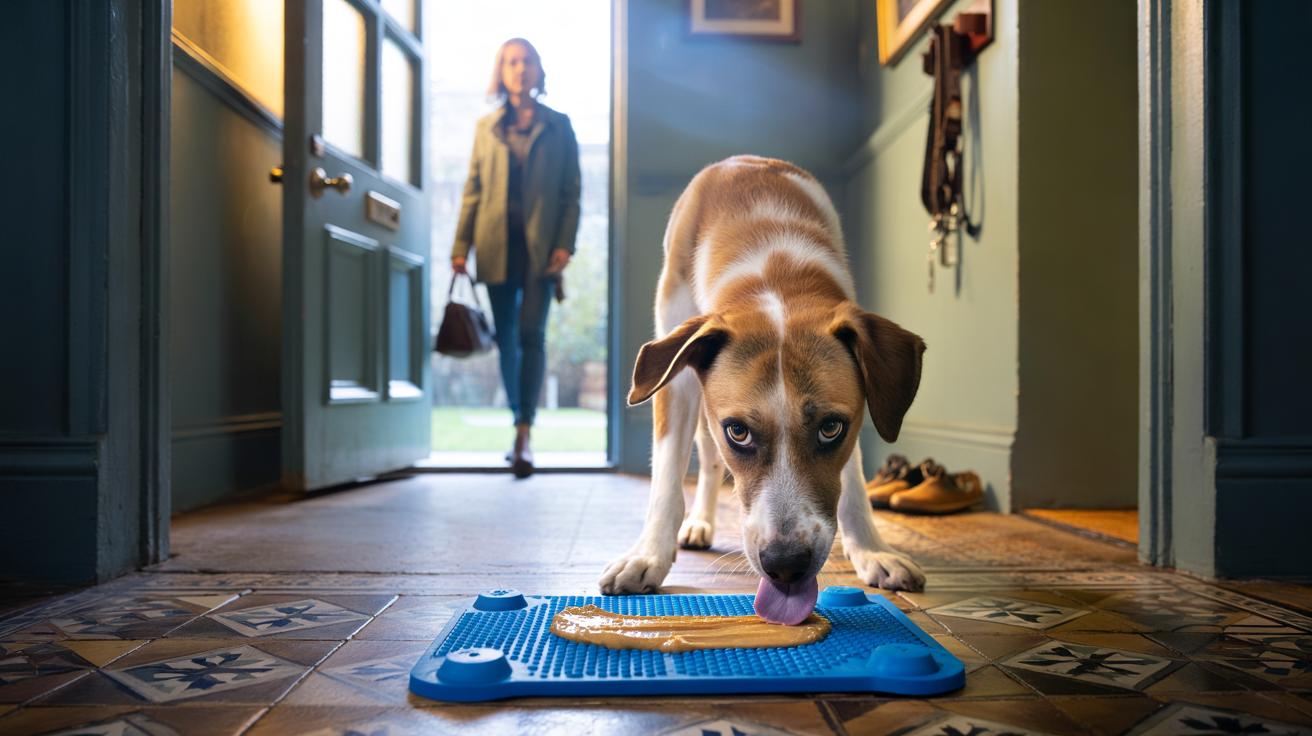
- 🐶 A modest £3 lick mat redirects anxious energy into soothing, repetitive licking, pairing departures with a predictable reward to reduce separation anxiety.
- 🧩 The mat leverages counterconditioning: present it before you leave so keys, shoes, and door cues become linked to calm, endorphin-releasing activity.
- 📅 Follow a one-week plan: start with short, supervised sessions, then extend with frozen halves and real-life cues, recording progress to stay below your dog’s threshold.
- ⚠️ Avoid common pitfalls: don’t overfeed, keep spreads thin, maintain consistent timing, use sound masking for triggers, and remove the mat on return to protect the association.
- 🩺 Respect welfare limits: the mat is a tool, not a cure; seek a veterinary check and a clinical behaviourist (APBC/CCAB) for entrenched anxiety or escalating distress.
For thousands of British dog owners, the hardest part of the day is shutting the front door and hearing the howls start. Separation anxiety doesn’t just fray nerves; it can trigger destructive scratching, barking, and stress vomiting. That’s why a modest, £3 lick mat—the silicone grid you’ll find in discount shops and pet aisles—has become a quiet revolution. When prepared and timed right, it turns departures into a predictable, rewarding routine that lowers arousal and encourages calm. The idea is simple: redirect your dog’s brain toward a soothing, problem-solving task. Introduce the mat just before you leave, make it easy, and keep the experience consistently positive. Here is how to harness this small tool for big behaviour change.
Why a Lick Mat Calms Anxious Dogs
Dogs lick to self-soothe; the repetitive motion can release endorphins and help downshift the nervous system. A lick mat serves up a slow, focused task that occupies your dog’s mouth and mind, creating a bridge from high alert to quiet concentration. Crucially, it pairs the moment you leave with a predictable reward, a cornerstone of humane counterconditioning. Rather than anticipating panic, your dog begins to anticipate a tasty puzzle that arrives on a reliable schedule. Predictability is calming for dogs because it turns scary “unknowns” into known sequences.
There’s also an enrichment bonus. Many anxious dogs are bored or under-stimulated at key stress points, particularly in small flats or on days with limited exercise. Licking slows them down, while the grid texture increases time-on-task without overfeeding. Unlike scatter feeding, a mat anchors your dog to a safe spot—useful when you need to exit quietly. The key principles are ease, duration, and association: start with easy spreads, stretch duration with freezing, and ensure the mat appears before you touch your keys, not after you walk out.
The £3 Setup: What to Buy and How to Use It
Look for a silicone lick mat with shallow grooves and, ideally, suction cups for tiles or crate doors. Dishwasher-safe is a plus. Budget UK options often land near £3; spend slightly more if your dog is a determined licker. For spreads, choose xylitol-free peanut butter, dog-safe yoghurt, mashed banana, low-salt meat paste, soaked kibble, or wet food. Swipe on a thin layer—heavy dollops can frustrate beginners and stack calories. Introduce the mat during a calm moment, then present it five minutes before you plan to leave, so your cues (bag, shoes, keys) occur while your dog is already engaged.
On the first three sessions, supervise to ensure your dog licks rather than chews and that the mat remains intact. If your dog guards resources, place the mat in a gated area for safety. Progress to freezing half the mat to extend duration without excess volume. Keep portions modest—think teaspoon, not tablespoon—and deduct equivalent calories from meals. Always remove the mat when you return so the powerful reward remains linked to separations. A simple phone camera on a shelf can show whether anxiety drops as licking takes over.
| Spread | Approx. Cost per Use | Freeze? | Notes |
|---|---|---|---|
| Xylitol-free peanut butter | £0.10–£0.20 | Yes | High value; use thin smear |
| Dog-safe yoghurt | £0.08–£0.15 | Yes | Check tolerance for dairy |
| Mashed banana | £0.05–£0.10 | Yes | Sweet but sticky; mix with yoghurt |
| Wet food (pâté) | £0.20–£0.35 | Yes | Low mess; easy to spread |
| Soaked kibble paste | £0.05–£0.12 | Yes | Budget-friendly, familiar flavour |
A One-Week Plan to Turn Panic into Calm
Day 1–2: Introduce the mat while you are home. Smear an easy spread and place it on the floor. Touch your keys and coat while your dog licks. Keep “absences” to 10–30 seconds—step into the hallway and return before the mat is finished. Short, successful reps build confidence faster than rare long attempts. Day 3–4: Freeze half the mat to increase duration. Now leave for 2–3 minutes. Record on your phone; if your dog pauses licking and whines, you’ve exceeded their threshold—dial back and try again. Celebrate quiet finishes with praise when you re-enter.
Day 5–7: Present the mat, then add real-life departure cues—bag, shoes, lights. Extend absences to 5–10 minutes. Offer a brief, neutral farewell; don’t fuss. Rotate flavours to keep motivation high and prevent “same-old” fatigue. By week’s end, many dogs will show a predictable pattern: eager approach, engaged licking, then a snooze. If your dog escalates at any point, reduce intensity, shorten the gap, or make the spread easier. Consistency beats heroics; stack small wins, twice daily if possible.
Common Mistakes and How to Fix Them
Problem: Only giving the mat after you’ve left. Fix: Always present the mat before departure so your cues are paired with licking, not panic. Problem: Spreads are too thick or difficult. Fix: Start with ultra-thin smears on shallow patterns and warm spreads slightly for easy pickup. Problem: Overfeeding. Fix: Account for mat calories by trimming meal portions and prioritising low-fat, low-salt options. Problem: Chewers destroying the mat. Fix: Supervise early sessions, switch to tougher designs, or attach the mat to tiles at head height to discourage gnawing.
Problem: Inconsistent timing. Fix: Keep a simple routine—mat down, quiet exit within two minutes—so predictability does the heavy lifting. Problem: Environmental triggers (street noise, postie). Fix: Add sound masking and close curtains to reduce visual alerts. Problem: Dog finishes before you’re gone. Fix: Freeze half the mat, use stickier spreads, or layer textures (yoghurt base with light peanut butter drizzle). If anxiety persists despite careful work, pause and reassess your thresholds rather than pushing longer durations.
Evidence, Welfare, and When to Get Help
While a lick mat isn’t a cure-all, it aligns with established principles in behaviour science: predictable reinforcement, lowered arousal, and gradual exposure can reduce distress. Studies on enrichment and fear learning suggest that structured routines and high-value rewards improve coping and may reduce stress markers over time. The welfare upside is clear: fewer meltdowns, safer teeth and gums than aggressive chewing, and a calmer home. Still, ethical use matters. The mat must never mask severe anxiety that leaves a dog in distress; it’s a tool to support training, not a substitute for humane pacing.
Know the limits. Seek a veterinary check if your dog shows gastrointestinal issues, sudden behavioural changes, or noise sensitivities that worsen. For entrenched separation anxiety—pacing, heavy panting, accidents—consult a clinical behaviourist (APBC/CCAB). They can design a desensitisation plan and, where appropriate, collaborate with your vet on medical support. Combine professional guidance with your £3 mat and you’ll stack the odds in your dog’s favour: calm departures, confident returns, and a routine both of you can trust.
For many households, the humble lick mat is the affordable bridge from dread to routine—a daily ritual that flips the script on goodbyes. It’s simple, scalable, and easy to sustain on a busy schedule. Start small, track what works, and protect the association by reserving the mat for departures. Consistency, not complexity, is your secret weapon. As your dog learns to settle and you reclaim quiet exits, what variations—flavours, timings, placements—will you experiment with to tailor the £3 lick mat trick to your own home?
Did you like it?4.5/5 (21)