In a nutshell
- 🫁 The 3‑breath pause extends the exhale to engage the vagus nerve, shifting the body from sympathetic arousal to parasympathetic calm and easing panic in about a minute.
- ⏱️ Simple method: inhale for ~4 counts, pause 1, exhale for 8–12 through pursed lips—repeat for three breaths; the core rule is a longer, slower exhale than inhale.
- 📊 Evidence base: slow‑paced breathing boosts Heart Rate Variability (HRV), supports Respiratory Sinus Arrhythmia (RSA), stabilizes CO₂ levels, and reduces amygdala reactivity.
- 🧭 Practical cues: use nasal inhales and pursed‑lip exhalation, add discreet anchors (touch, visual counting), maintain comfortable posture, and avoid over‑holding or chasing perfect counts.
- 🛡️ Expected effects: steadier heartbeat, dropping shoulders, clearer focus; practice during calm times for reliability, and seek professional support if panic remains frequent or overwhelming.
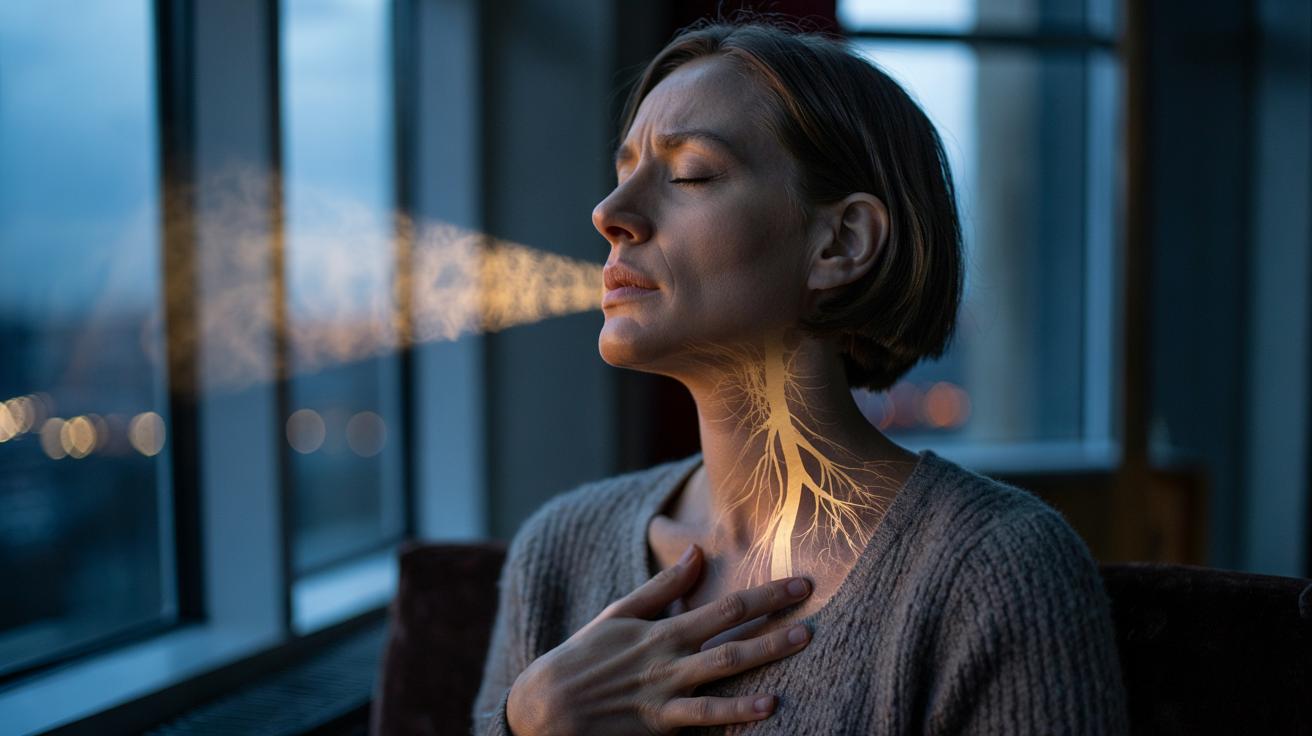
Panic tightens the chest, narrows attention, and convinces the body that danger is imminent. Yet the body has a built‑in brake: the vagus nerve, which can be tapped in seconds through a simple pattern of three slow, deliberate breaths. This “3‑breath pause” relies on extending the exhale to tell your nervous system it’s safe to stand down. Within a minute, many people feel the swell of panic ease as heart rate settles and clarity returns. The method is discreet enough for a queue, a meeting, or a night-time wake‑up, and it rests on a clear physiological principle: long exhalation boosts parasympathetic tone.
Why Slow Exhale Calms the Body
The autonomic nervous system toggles between sympathetic arousal (fight‑or‑flight) and parasympathetic rest. The vagus nerve is the principal parasympathetic highway from brainstem to heart, lungs, and gut. During inhalation, heart rate naturally rises; during exhalation, vagal braking intensifies and heart rate falls—a phenomenon called Respiratory Sinus Arrhythmia (RSA). Extending the exhale lengthens the vagal “brake” window, increasing a sense of safety and control. This isn’t mystical; it’s mechanical. Slower exhalation nudges baroreceptors and respiratory centers that stabilize blood pressure and calm the amygdala’s alarm, lowering the odds that a surge becomes a spiral.
Crucially, panic often rides on rapid, shallow breaths that shed too much CO₂. That drop can amplify tingling, dizziness, and dread. A deliberate, longer exhale restores a healthier carbon dioxide balance and reduces chest tightness. The effect compounds across a few cycles: the heart rhythm smooths, interoceptive signals feel less ominous, and thinking widens. By choosing the breath, you choose the message your body sends to your brain: stand down, not stand by.
The 3-Breath Pause, Step by Step
Find a posture that lets your ribs move: feet grounded, shoulders soft, jaw unclenched. Breathe through your nose if possible. For Breath 1, inhale gently for about four counts. Pause for one soft beat. Exhale through pursed lips for eight counts, as if cooling a spoon of tea. For Breath 2, repeat—but lower your shoulders a notch on the exhale and let the belly fall. For Breath 3, keep the exhale silky and slightly longer than before. The only rule that matters: the exhale is slower and longer than the inhale.
| Breath | Inhale | Pause | Exhale | Cue |
|---|---|---|---|---|
| 1 | 4 counts (nose) | 1 beat | 8 counts (pursed lips) | “Soften the jaw” |
| 2 | 4–5 counts | 1 beat | 8–10 counts | “Drop the shoulders” |
| 3 | 4–5 counts | 1 beat | 10–12 counts | “Empty like a sigh” |
If counting spikes anxiety, swap numbers for sensations: a cool nose‑inhale, a warm lips‑exhale. Keep the effort low; strain signals threat. You can repeat another three‑breath set if needed. Stop if you feel faint, and resume with gentler, shorter exhales once steady. Consistency primes your nervous system: a minute of practice during calm hours makes the pause quicker and more reliable during storms.
Science, Evidence, and What to Expect
Slow‑paced breathing with extended exhalation increases Heart Rate Variability (HRV), a proxy for flexible vagal tone. Studies show that 6–10 breaths per minute and ratios favoring longer out‑breaths reduce cortisol, dampen amygdala reactivity, and improve interoception—your sense of internal signals. In clinical contexts, similar techniques help patients shorten episodes of acute anxiety and improve recovery after startling stimuli. While not a cure for underlying disorders, a three‑breath sequence can interrupt the panic cascade before it peaks. The timescale matters: many will notice a shift within 30–60 seconds, not hours, because the mechanism is neural, not psychological alone.
Expect tangible signs: a heavier, slower heartbeat; shoulders drifting down; a widening of peripheral vision; thoughts moving from catastrophic to concrete. Some people feel a “yawn‑sigh” reflex as vagal tone rises—this is a green light. If the first set doesn’t change much, do a second with even gentler inhales and slightly longer exhales. If panic remains overwhelming or frequent, seek professional guidance; breathing is a tool, not a solitary treatment plan.
Make It Work Anywhere: Practical Cues and Pitfalls
In public, pair the 3‑breath pause with a simple anchor. Touch forefinger to thumb on each exhale, or count three objects of a single color while you breathe. Sitting, keep your spine tall enough for the diaphragm to move; standing, unlock your knees. Driving, keep eyes on the road and make exhales only modestly longer. Think “quieter, not bigger” breaths—amplifying the inhale can backfire. If you’re lightheaded, reduce the count and aim for comfort. A hand on the sternum can help your brain read warmth and pressure as safety cues.
Avoid common traps: chasing a perfect number, over‑holding the breath, or sighing so hard that you gasp afterward. Use pursed‑lip exhalation to naturally slow the outflow; it adds gentle resistance and steadies rhythm. Nasal inhales humidify and calm, but mouth is fine if your nose is blocked. Practice a few sets after waking and before bed to groove the pattern. When the wave hits, familiarity makes the pause feel automatic rather than forced.
The three‑breath pause is small, portable, and grounded in physiology: longer exhales tell the vagus nerve the coast is clear, and the body believes it. In a world that pushes us to speed up, this is a rare lever that works better when you do less. Try it today in a calm moment, then again the next time your pulse climbs without cause. Mastery is measured not by willpower, but by how swiftly you remember to exhale. Where might a single minute of slower breathing make the biggest difference in your day?
Did you like it?4.4/5 (26)