In a nutshell
- 🦶 A quick, discreet feet-on-floor trick grounds anxiety by focusing on the soles, shifting attention to present-moment sensation and cutting mental noise in under a minute.
- 🧠 It works by boosting interoception and proprioception, which compete with worry loops, and by activating the parasympathetic system through longer exhales via the vagus nerve—leaving you alert, not alarmed.
- 🛠️ How-to: place feet flat, heels heavy; map heel-to-toe and label sensations; breathe in 4, out 6; note “thinking” and return to the soles; finish by expanding awareness and choosing the next useful action.
- 🗓️ Make it stick with cues (kettle click, Teams chime, red lights); thin soles give richer feedback but trainers work; wheelchair-friendly swap: press palms to thighs/armrests; remember consistency beats duration.
- 🚫 Avoid clenching or checking if anxiety is “gone”—focus on the task; it’s not a cure-all for clinical conditions, so consider GP/therapist support; portable practice that turns anxiety into useful attention.
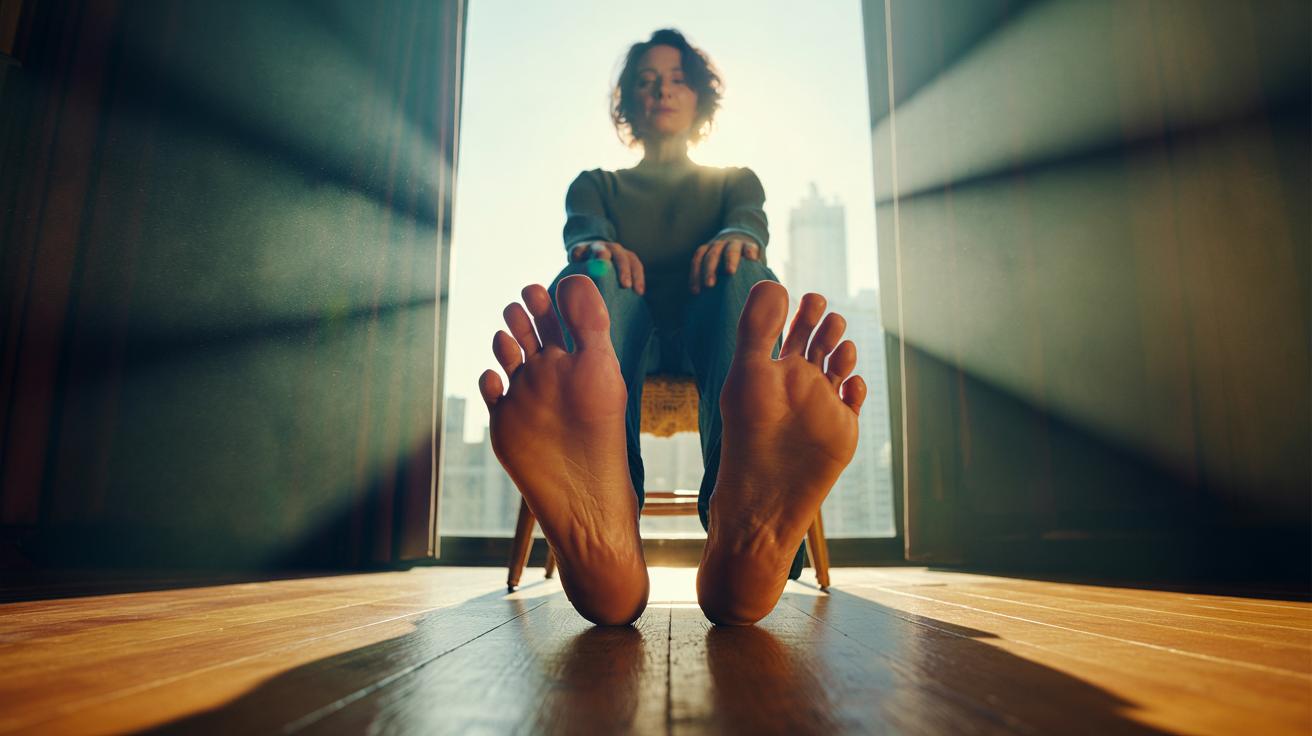
You can’t always reason with a racing mind, but you can change what the body is doing in real time. The “feet-on-floor” trick is a compact bit of body awareness that cuts through mental noise by anchoring attention in the soles of your feet. Stand or sit, place both feet flat, and give your weight to the ground. This simple shift can short-circuit spiralling worry within a minute. It’s discreet on the Tube, helpful before a presentation, and free. What makes it effective isn’t magic; it’s physiology. The act of noticing pressure, texture, and temperature redirects the brain’s spotlight, turning anxious forecasts into present-moment attention you can actually feel.
Why Grounding Works: The Body’s Fast Lane to Calm
The feet carry dense networks of touch and pressure receptors. When you focus on them, you amplify interoception and proprioception—the senses that tell your brain what the body is doing. That sensory stream competes with verbal worry loops, lowering mental bandwidth for catastrophising. When you feel your feet, your thoughts have less room to spiral. This redirection engages the parasympathetic nervous system, nudging heart rate and breathing towards steady rhythms. Longer, slower exhales reinforce the signal via the vagus nerve, a feedback line between lungs, heart, and brain.
There’s a cognitive angle too. The brain is a prediction machine; threat raises its threat forecasts. Deliberately mapping pressure points through your shoes provides high-certainty data. Stronger sensory evidence reduces guesswork—dampening anxiety’s “what if?” engine. The result isn’t sedation but a rebalanced state: alert, not alarmed. The ground becomes a reference point, and your attention, once scattered, lands somewhere tangible.
How To Do The Feet-On-Floor Reset
Start by placing both feet flat—standing or seated—with heels heavy and toes relaxed. Notice contact: the weight through the balls of your feet, the edges of your shoes, any warmth or coolness. Let the ankles soften. Imagine your weight pouring downwards like sand. Add a slow breath: in through the nose for four, out for six. On each exhale, release the calves, then the thighs, then the jaw. Keep eyes open if you need to stay situationally aware.
Next, map sensation. Sweep attention from heel to toe on the left foot, then the right. Label silently: “firm”, “springy”, “tingly”, “numb”, “warm”. Precision matters; it’s how you train focus. If anxious thoughts cut in, note “thinking” once and gently return to the soles. Fifty seconds can shift your state. For a stealth option in a meeting, press toes into the insole for the length of an exhale, then release on the inhale.
Finish by expanding awareness outward: feet, shins, breath, room. Ask, “What is my next useful action?” Let the answer be small—send the email, sip water, take the first step. Grounding is not avoidance; it is readiness.
| Step | What to Do | Timing | What to Notice |
|---|---|---|---|
| 1. Contact | Place both feet flat, weight heavy | 10–15s | Pressure, temperature, edges of shoe |
| 2. Breath | In for 4, out for 6 | 30–40s | Exhale length, jaw and calf release |
| 3. Map | Sweep heel-to-toe, label sensations | 20–30s | “Firm”, “tingly”, “warm”, “numb” |
| 4. Expand | Include breath and room; choose action | 10–15s | Calmer attention, clearer next step |
Make It Stick: Cues, Contexts, and Common Mistakes
Pair the practice with daily cues: the kettle’s click, a Teams chime, red lights, doorways. Shoes matter; thin soles give richer feedback, but you can still work through trainers by pressing toes then softening. If you use a wheelchair or have limited standing, swap feet for hands: press palms to thighs or armrests, trace contact, breathe out longer than you breathe in. Consistency beats duration. Ten short resets across a day steady the nervous system more reliably than one heroic session.
Avoid common traps. Don’t clench your feet; you’re sensing, not bracing. Don’t scan for anxiety to see if it’s “gone”; check the task in front of you instead. If memories intrude, name “remembering”, return to the soles, continue the exhale. This is not a cure-all for clinical conditions, and support from a GP or therapist can be wise. The aim is workable calm, not perfect calm. Over time, the floor becomes a habit you can trust.
In an age of alarms and endless tabs, the ground is the one constant that doesn’t argue back. The feet-on-floor reset is humble, portable, and repeatable: a practical way to convert anxiety into useful attention you can act on. Treat it like brushing your teeth—brief, regular, non-negotiable—and watch how it subtly changes your day’s texture. When the mind sprints ahead, the soles invite it home. Your body can be the headline that drowns out the noise. When will you try your next thirty-second reset, and where might it carry you next?
Did you like it?4.4/5 (25)