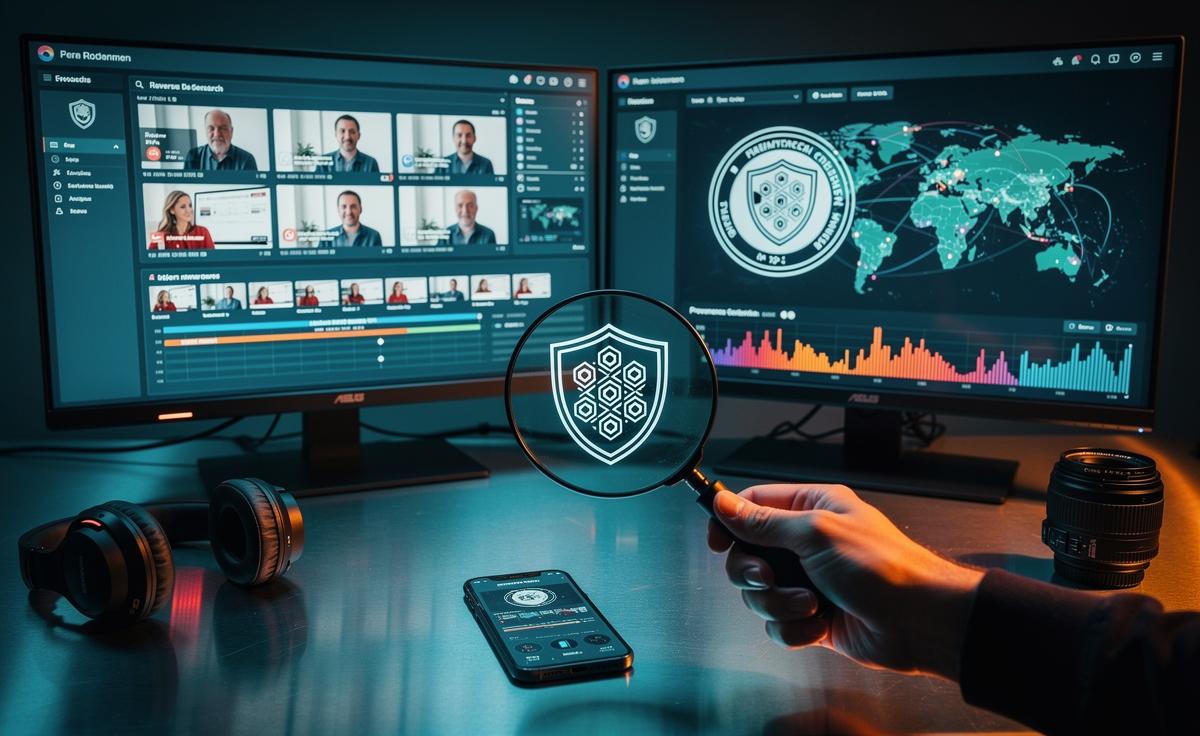
In a nutshell
- 🔎 Read for surface signals: manipulative headlines, missing bylines, stale dates, weak sourcing, and links that don’t trace to primary documents—pause, probe, then proceed.
- 🧾 Check C2PA/Content Credentials: open provenance badges, validate signatures, and review edit histories; treat credentials as guidance, not gospel, and pair with transparent sourcing.
- 🎥 Verify media fast: run reverse image search, use InVID-WeVerify for keyframes/metadata, apply geolocation via maps, and treat deepfake scores (e.g., Reality Defender) as a second opinion.
- 🌐 Trace the network: inspect first sharers and amplification patterns, query the domain with WHOIS, and consult reputable checks like Full Fact, AFP/Reuters, and Google Fact Check Explorer.
- 🧰 Use a focused toolkit and a 60-second flow: origin → quick searches → media tests → independent corroboration → decision; archive with the Wayback Machine and keep an audit trail.
Fake news has learned new tricks. So must we. In 2026, falsehoods travel through slick newsletters, polished websites, and AI-polished videos that look like broadcast bulletins. The antidote is not cynicism; it’s method. This guide distils the habits and tools that UK readers and reporters rely on daily to separate rumour from reporting. You don’t need a forensics lab. You need discipline, a short checklist, and a few clever services that do the heavy lifting. The goal is simple: pause, probe, then proceed. With that rhythm, and with the right kit, you’ll spot what’s genuine and what’s engineered to mislead.
Signals in the Story: Language, Layout, and Links
Start with the surface. The headline sets the trap: exaggerated certainty, ALL CAPS, or emotional triggers (“shocking”, “exposed”, “they don’t want you to know”) are classic red flags. Scan the byline. Is there a named reporter with a traceable track record, or a generic “staff” label and no profile? Check the date and the location. Old stories relit with new pictures are a favourite disinformation tactic. Recycled outrage, new wrapper.
Then read like a sub-editor. Are there primary sources, quotes with full names and roles, links to documents, public records, or official statements? Or just vague attributions—“experts say”, “sources confirm”—with no links? If a claim matters, it should be traceable. Look for numerical anchors: percentages, budgets, case counts. Do they add up? Do they match what trusted datasets show? If not, park the piece and verify independently before sharing.
Finally, interrogate the site. Is the design a jumble of pop-ups and low-rent programmatic ads? Are “About” and “Contact” pages present, with a company address and registration? Hover over links to see the actual destination; shortened URLs can mask click-farms. Broken citations, dead PDFs, or links that loop back internally are not just sloppiness—they’re signals.
Provenance and Authenticity: Reading 2026’s Content Credentials
By 2026, a growing share of legitimate publishers attach Content Credentials built on the C2PA standard. Think of them as a nutrition label for media. Click the “cr” or “info” badge and you can view the provenance manifest: who created the asset, which software touched it, timestamps, edits. When provenance is present and consistent, confidence rises. The BBC, major UK broadsheets, and wire services increasingly ship images and videos with these cryptographic receipts.
But provenance is a guide, not a guarantee. Absence of a C2PA label does not prove fakery; many freelancers still publish without it. Likewise, presence can be spoofed if you’re only looking at a screenshot of a label. Always open the credential viewer—such as the Content Authenticity Initiative’s Verify—and check if the signature validates and the chain of edits makes sense. Does a “live” video claim to be shot on a model that didn’t exist at that timestamp? Are edits minor (colour balance) or substantive (object removal)? Discrepancies matter.
For text, inspect metadata in the page source, and note whether revisions are logged. Trust frameworks like The Trust Project indicators or transparent corrections policies add weight. Provenance reduces ambiguity; it doesn’t replace judgement. Pair it with traditional sourcing before you commit.
Images, Video, and Audio: Verifying Visuals in Seconds
Visuals sell misinformation because our eyes want to believe. Don’t. With images, run a reverse image search via Google Lens or TinEye to see older uses. Drop suspicious photos into InVID-WeVerify for EXIF checks, clone detection, and a quick scan of social redeployments. Keyframes from videos can be extracted in seconds; search those frames to find original context. If a “new” video shows up in 2019 search results, you have your answer.
For footage, map the scene. Street signs, shadows, shopfronts, and skylines are geolocation clues. Use Street View, Mapillary, or satellite maps to cross-verify landmarks. Audio deserves its own scrutiny: AI voice clones are now startlingly clean, but background room tone, abrupt cuts, and impossible mic perspective still betray composites. Tools like Reality Defender or university-hosted detectors can flag likely deepfakes; treat them as a second opinion, not a verdict.
Frame-rate and compression artefacts also reveal tampering. In protest clips, count frames between flashes or sirens to spot edits. Watch for mismatched reflections, inconsistent shadows, or lips that trail phonemes by a beat. Strong claims need strong visuals backed by independent corroboration: witness reports, official logs, or contemporaneous coverage from reputable outlets.
Network Clues: Who Shared It and Why
False narratives spread in patterns. Real reporting flows from source to outlet to wider audiences. Fabrications often explode from clusters of new or low-reputation accounts. On X, Reddit, or Telegram, check the first appearance of a link: who posted it, when, and how quickly it was amplified. Burst graphs from research tools, or even platform-native analytics, can show inorganic surges typical of coordination. Coordinated velocity is a warning sign.
Inspect the domain. Use a WHOIS lookup to see creation date and registrant. A “national news” site registered last month is suspect. NewsGuard ratings, IPSO membership, or an imprint with Companies House details add transparency. For claims across borders, see whether professional fact-checkers—Full Fact, AFP Fact Check, Reuters Fact Check—have weighed in. Google’s Fact Check Explorer gathers disparate verdicts in one place.
Finally, follow the money. Are posts hashtag-jacked into unrelated trends? Are influencers disclosing sponsorships? Check the site’s advertising and affiliate policies. Astroturf operations often recycle imagery and talking points across multiple shells. In the UK, Ofcom’s media literacy materials remain a practical primer on recognising manipulative formats and engagement bait. When distribution looks unnatural, your scepticism should spike.
Your 2026 Verification Toolkit
You don’t need every tool. You need the right ones, ready on the bookmark bar, with a routine that’s fast under pressure. Think in categories: source checks, media forensics, network mapping, and authoritative corroboration. Build a minimal stack you actually use, then extend it for deep dives. Speed matters, but method wins. Below is a compact menu of reliable options and what they’re best for.
| Task | Tool Examples | What to Check |
|---|---|---|
| Reverse image search | Google Lens, TinEye | Earlier appearances, original context, higher-res sources |
| Video forensics | InVID-WeVerify | Keyframes, metadata, duplicate frames, social traces |
| Provenance credentials | C2PA/Content Credentials Verify | Creator, edit history, signature validity |
| Domain background | WHOIS, DNS lookup | Registration date, ownership, server location |
| Fact-check aggregation | Google Fact Check Explorer, Full Fact | Existing verdicts, claim wording, sources cited |
| Archival context | Wayback Machine | Past versions of pages, vanished claims, edits over time |
| Deepfake screening | Reality Defender | Likelihood scores, artefact notes, risk classification |
Pair the tools with a 60-second flow: identify the claim; locate the origin; run a quick search; test the media; look for independent confirmation; then decide. Save your checks. Screenshots and links form a transparent audit trail—useful if you later publish or need to retract. Discipline beats panic.
Being hard to fool is a habit, not a mood. The mix of C2PA labels, reverse searches, and basic source hygiene will catch most fakes before they catch you. When a story triggers instant outrage, stop and ask, “Who benefits if I share this now?” Then do the work. It’s quicker than you think, and it protects your circle from becoming vectors of someone else’s agenda. Curiosity is your best defence. Which two steps from this toolkit will you adopt today—and what would you add from your own experience?
Did you like it?4.7/5 (21)