In a nutshell
- 🔺 Rising costs driven by rights inflation, soaring production budgets, and invisible tech like content delivery networks and cloud services, compounded by higher debt costs, currency swings, and UK VAT.
- 🧩 Fragmented libraries and exclusivity force viewers to stack apps; UK sports rights auctions and industry consolidation increase churn and complexity, pushing up customer acquisition costs and prices.
- 📺 Ad-supported tiers swap cash for attention and data—lower fees but more interruptions—while bundles can save money yet hide traps such as trial flips, promo expiries, and rigid contracts.
- 🛠️ Smart tactics: rotation of services, right-sizing plans (skip unnecessary 4K or extra streams), seek student rates and genuinely cheaper annuals after VAT, and lean on BBC iPlayer, ITVX, and Channel 4 between must-watch releases.
- 💡 Viewers retain leverage: deliberate churn, cancelling after key shows, and resisting marginal upsells signal demand for value and help reset your monthly streaming spend.
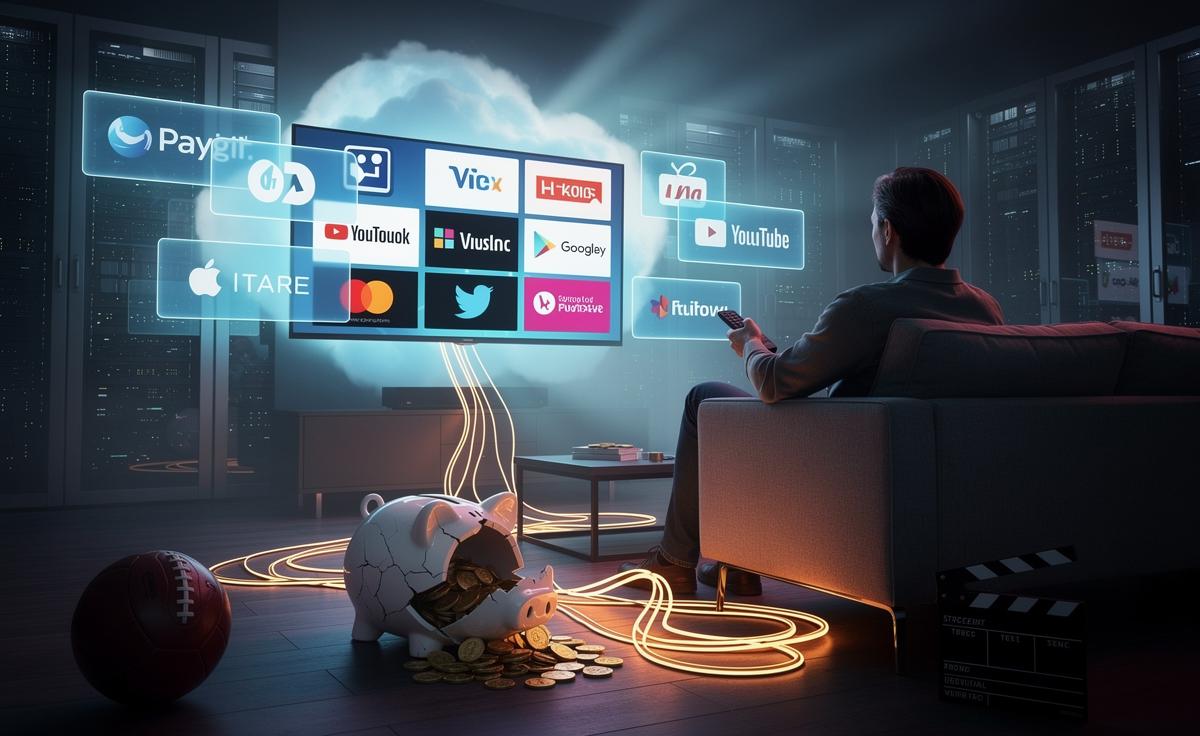
Streaming once promised liberation from the bloated TV bundle. Now monthly bills creep up, add‑ons multiply, and once‑simple choices look increasingly complex. In the UK, households juggling films, prestige drama, and live sport are discovering a new kind of cost: not just money, but time and attention. The reasons run deeper than corporate greed. They’re structural, tangled, and global. Rights inflation, higher production budgets, and the cloud bills behind every 4K stream all feed into prices. What looks like a tenner on your bank statement is actually the end point of a long value chain straining under its own success. Here’s why your shows feel dearer by the month—and what that tells us about the future of entertainment.
The Hidden Economics Behind Your Subscription
Every stream begins with a cost stack. Original series and films don’t just appear; they demand writers’ rooms, talent deals, union agreements, and extensive post-production. The price of premium scripted drama rose sharply in the last five years, and high-end nonfiction isn’t far behind. Licensors, having seen platforms wield catalogue hits as growth engines, now ask more for library rights. Even when services pull older titles, they may be doing it to avoid residual liabilities. The reality is simple: content inflation didn’t cool just because subscriber growth did.
Then there’s the plumbing no one sees. Global content delivery networks, cloud transcoding, security and watermarking, recommendation engines—each line item is small on its own, yet punishing in aggregate. Energy costs and data-centre pricing filter through to your bill. Currency swings matter too: many rights are dollar‑denominated, while revenues in the UK land in pounds, and VAT must be carved out. Finally, the growth era was funded by cheap debt. As rates rose, so did the cost of carrying vast libraries. When money costs more, streaming costs more.
Content Wars, Consolidation, and the Price of Choice
Choice sounds like a victory, until it fragments your favourites across five apps. Exclusivity, once a marketing hook, has become a moat: one studio’s hit can no longer be licensed freely without weakening its own platform. That creates a paradox for viewers. To keep up, you stack subscriptions; to save money, you churn. Churn, in turn, raises customer acquisition costs, forcing services to spend again on discounts and advertising to win you back. Fragmentation isn’t an accident—it’s a business model, and it’s not cheap.
Consolidation layers on another twist. Mergers promise synergies, but they also trigger write‑downs, catalogue clean‑ups, and shifting strategies on windowing. Some services are returning to old tactics: selling shows abroad while hoarding domestic exclusivity, or staging releases to eke out marketing impact. UK viewers feel this in sport especially, where rights auctions for football and Formula 1 keep resetting the market. Below is a snapshot of the pressures that quietly nudge your monthly fee upward.
| Cost Driver | What It Means | Typical Result |
|---|---|---|
| Original productions | Higher budgets, risk of flops, residuals | Price rises, fewer cheap tiers |
| Licensing pullbacks | Studios keep hits in‑house | More services needed for one library |
| Sports rights | Auctions escalate every cycle | Separate add‑ons, premium bundles |
| Debt and rates | Cost of financing rises | Lean catalogues, sharper pricing |
| Churn management | Promo spend to win back users | Complex offers, annual locks |
The Ad-Supported Trade-Off and the Return of Bundles
To square the circle, platforms pitch a compromise: pay less, watch ads. The ad-supported tier is often a genuine saving, with the hidden price charged in attention. Expect higher ad loads at peak hours, fluctuating quality, and occasional gaps where certain titles remain locked to pricier plans. Cheaper tiers are not charity—they’re a swap of money for minutes, data, and patience. For some households, that’s a fair trade. For others, especially families, the interruptions make live TV look attractive again.
Bundles are the second lever. Telcos and TV providers package multiple streamers at a discount, sometimes with cloud storage, mobile data, or set‑top convenience. The maths can work—especially when billing consolidates and contract terms freeze pricing for a while. Yet bundles have traps: trial periods that flip into premium, promotional rates that vanish, and rigid contracts that blunt your ability to churn tactically. Aggregators promise simplification, but complexity often reappears in the small print. When you can’t easily leave, you quietly overpay.
How Viewers Can Push Back Without Missing Out
Power has shifted, but not completely. The surest tactic is rotation: keep one or two core services, then churn through the rest based on release calendars. Maintain a shared watchlist, set reminders for renewal dates, and binge deliberately. Many households overbuy quality—paying for 4K and multiple streams they never use—so check your plan’s actual benefits. If you’re mostly on tablets and a single TV, a cheaper tier might be indistinguishable.
Look for student rates, mobile bundles, and annual plans only when the saving is real after VAT. Lean on free, ad‑funded options like BBC iPlayer, ITVX, and Channel 4’s service to fill gaps between prestige drops. Avoid impulse add‑ons tied to one tournament or series; buy a single month, not a season, and cancel the moment the credits roll. Attention is your currency—spend it where the value per hour is highest.
Streaming isn’t broken; it’s settling into adulthood, with all the bills that entails. Content costs more, money costs more, and the gold rush is over, so platforms are engineering predictability at your expense. Yet you still hold leverage. You can rotate, downshift to ad tiers, bundle wisely, and refuse marginal upsells. If pricing is the industry’s nudge, churn is yours. In a market built on optionality, the most powerful word remains “cancel.” How will you redesign your viewing habits this year to pay less while watching smarter?
Did you like it?4.5/5 (29)