In a nutshell
- 💡 Bumpy arms (keratosis pilaris) stem from excess keratin clogging follicles; best results come from gentle physical exfoliation plus leave-on keratolytics and steady moisturising.
- ☕ Used coffee grounds provide effective mechanical exfoliation, while caffeine offers antioxidant and soothing support but is not a true keratolytic that dissolves keratin plugs.
- 🧴 Safe routine: massage cooled, used grounds with oil/cream on wet skin for 30–60 seconds, 1–2 times weekly; follow with moisturisers containing urea (5–10%) or lactic acid (5–12%); keep pressure light.
- 🔬 Evidence and expert view: coffee scrubs can improve texture and reduce redness as an adjunct, not a cure; dermatologists favour a three-part plan—polish, keratolytics, and barrier support.
- ♻️ Extra tips: patch test sensitive skin, avoid freshly shaved or broken skin, collect grounds to protect drains, and prioritise consistency over intensity for lasting smoothness.
Across Britain, countless people rub used coffee grounds into their upper arms, hoping to smooth that tell-tale “chicken skin.” The appeal is obvious: a low-cost, sustainable scrub that turns yesterday’s brew into today’s beauty fix. Advocates say the gritty texture buffs away roughness while the caffeine inside works on the stubborn keratin plugs that clog hair follicles. The truth is both promising and nuanced. The grounds’ exfoliating power does much of the visible smoothing, while caffeine may support the skin’s environment in subtler ways. Here’s how this home remedy may help, when it might not, and what science—and dermatologists—suggest you combine it with for the best results.
What Causes Bumpy Arms (Keratosis Pilaris)
Keratosis pilaris, or KP, occurs when excess keratin collects in and around hair follicles, forming tiny, sandpapery bumps. Genetics plays a role, as do dry air, friction from tight sleeves, and disrupted skin barrier function. The plugs themselves are largely protein, not oil, which is why classic acne tactics often disappoint. KP is harmless but persistent, and it benefits from regular, gentle exfoliation plus diligent moisturising. On the arms, redness and a matte, pebbled look are common, especially in cooler months. While there’s no permanent cure, the condition responds predictably to a routine that lifts dead skin cells and softens the keratin that’s jamming the follicular openings.
Two broad strategies help: first, physical exfoliation to dislodge superficial scale; second, keratolytics such as lactic acid, salicylic acid, or urea that chemically loosen the proteinaceous plugs. Consistency matters more than force. Over-scrubbing can inflame follicles, worsening redness. That’s where a used coffee scrub can fit: it offers measured mechanical polishing alongside plant compounds that may calm the look of angry bumps.
Why Used Coffee Grounds Can Help
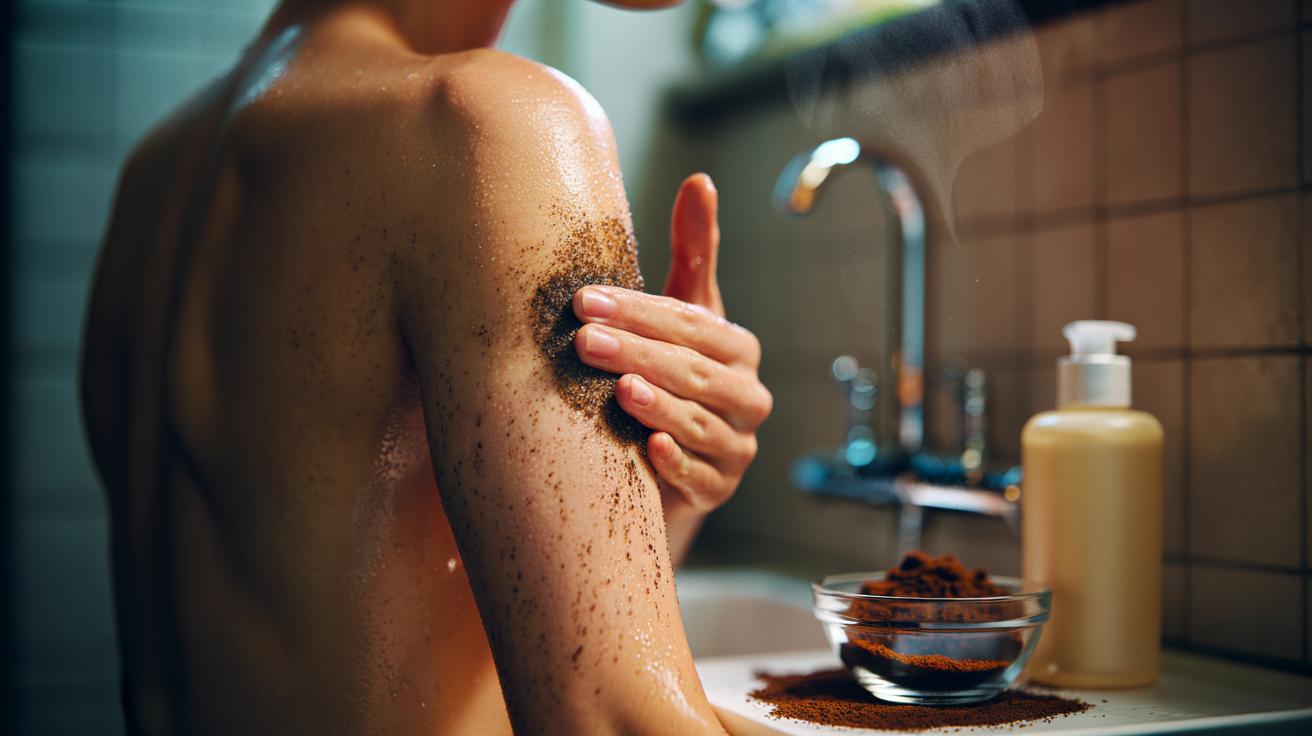
Used coffee grounds have a fine-to-medium grit that gently abrades the stratum corneum, speeding the removal of compacted dead cells. Their natural oils and polyphenols can leave skin feeling conditioned, reducing the tightness that often accompanies KP. The scrub’s primary benefit is physical exfoliation: rolling the grounds over damp skin loosens surface roughness and encourages plugs near the top of the follicle to lift. Unlike sugar or salt, grounds are less soluble, so they retain texture long enough to massage without melting away immediately.
Sustainability is another draw. Repurposing yesterday’s puck or filter contents avoids waste and yields a fresh, mildly fragrant polish. For many, the ritual is part of the appeal—short, controlled sessions in the shower, followed by a fragrance-free moisturiser, often deliver an instant touch-test improvement. What you feel is smoother skin; what you don’t see is micro-tear restraint—the key is a light hand, circular motions, and limited frequency to avoid irritation.
| Component | Primary Action | Relevance to KP |
|---|---|---|
| Grounds’ texture | Physical exfoliation | Dislodges surface scale and loosens superficial plugs |
| Caffeine | Antioxidant, vasoconstrictive, soothing | May reduce redness; supports environment for smoother look |
| Coffee oils/polyphenols | Light emolliency, antioxidant effect | Helps reduce tightness; complements moisturising step |
Caffeine’s Role in Breaking Down Keratin Plugs
Let’s address the headline claim with precision. Caffeine is not a classic keratolytic like salicylic acid, lactic acid, glycolic acid, or urea; it doesn’t directly dissolve keratin the way those agents do. Instead, topical caffeine shows antioxidant and anti-inflammatory activity, and it can transiently constrict superficial blood vessels. For bumpy arms, that can translate to calmer-looking skin and less redness around follicular openings. In vitro research also hints that caffeine may influence keratinocyte behaviour and barrier signaling, indirectly aiding turnover.
So where does “breaking down” come in? Mechanistically, the heavy lifting is the mechanical exfoliation plus any true keratolytics you pair with it. Caffeine’s likely contribution is supportive and indirect: it helps create a less inflamed environment, may enhance the skin feel, and could modestly improve penetration of accompanying actives when formulated together. Think of it as an adjunct that nudges the landscape, while the scrub action and proven acids or urea tackle the keratin itself.
How to Try a Coffee Scrub Safely
Use cooled, used coffee grounds—they’re less abrasive than fresh—and mix with a cushion of gentle oil or a fragrance-free cream. On wet skin, massage lightly for 30–60 seconds per arm, then rinse. Aim for 1–2 sessions a week; more can backfire by causing micro-irritation. Pressure should be whisper-light: let the granules do the work. After rinsing, apply a moisturiser containing 5–10% urea or 5–12% lactic acid to soften keratin over time. This pairing harnesses instant polish with sustained chemical smoothing.
Patch test if you have sensitive skin, eczema, or active inflammation, and skip open cuts or freshly shaved areas. If redness or stinging persists beyond 24 hours, stop. To protect plumbing, collect grounds with a drain screen or wipe off with a damp cloth before showering. Results are incremental, not miraculous: most people notice improved feel after the first use, with better texture over several weeks when the scrub is combined with daily moisturising.
What the Evidence Says and the Dermatology Perspective
Human data on coffee scrubs for KP specifically is limited, though the individual components are well understood. Physical exfoliation’s benefits are established, and keratolytics remain first-line. Studies of topical caffeine in other contexts show anti-inflammatory effects and improved skin feel, supporting its role as an adjunct. The consensus: coffee scrubs can be a helpful, low-cost add-on, not a standalone cure. Expectations should be grounded—texture improves, redness may ease, but plugs tend to return without ongoing care.
Dermatologists typically recommend a three-part strategy: gentle physical polishing, leave-on keratolytic moisturisers, and barrier support with ceramides or glycerin. In stubborn cases, prescription options or professional peels add horsepower. If your skin is very reactive, skip scrubs and use a soft washcloth plus urea or lactic acid instead. Consistency beats intensity every time: a steady, non-irritating routine preserves gains and keeps arms looking and feeling smoother.
Used coffee grounds won’t rewrite skin biology, but they can make bumpy arms feel instantly sleeker while caffeine lends a calming, antioxidant assist. Pair that tactile polish with time-tested keratolytics and a reliable moisturiser, and you have a pragmatic routine that respects skin’s limits and your wallet. The best routine is the one you’ll keep, so choose textures and scents you enjoy, and track progress across weeks, not days. Where do you stand: will you repurpose your morning brew for your arms, or would you rather stick with bottled actives—and what evidence would convince you to switch?
Did you like it?4.5/5 (22)