In a nutshell
- ⏱️ Exploit the 30-second activation window: combine wet and dry, fold lightly, then cook immediately while CO2 from bicarbonate of soda is at peak fizz.
- ⚖️ Nail the ratios and acids: 180 g flour, 240 ml buttermilk (or milk + lemon), 1 egg, 25 g sugar, 30 g butter, 1/2 tsp bicarb, 1 tsp baking powder—balanced pH prevents a soapy taste.
- 🍳 Master pan craft: medium heat, thin oil film, 60 ml scoops; flip when edges set and craters stay open; don’t press; rack the stack—height equals fluff.
- 🔁 Keep it lumpy: about 10 seconds folding + 20 seconds settling; overmixing ruptures bubbles and toughens gluten; dual leaveners give instant and sustained lift.
- 🧪 Troubleshoot smartly: keep batter warm, add 1 tsp water if later batches flatten, tweak sugar for browning, use dairy-free acidified milk, and control fat to avoid lacy edges.
In Britain we call it bicarbonate of soda, but the promise is universal: cloud-light pancakes, fast. The trick is chemistry on a stopwatch. Stir the right acid into your batter and CO2 lifts every forkful. No whisking marathons, no mysterious overnight rests. Just timing. Combine wet and dry, count to 30, and get that batter in the pan while the bubbles are at full fizz. This piece sets out the science, the ratios, and the pan craft, so your weekend stack rises tall and tastes clean, never soapy, every single time.
The 30-Second Activation Window
Think of bicarbonate of soda as a tiny gas canister that opens the instant it meets acid. Add buttermilk, live yoghurt, or a splash of lemon and the reaction begins. Seconds matter. The peak foam arrives within the first half-minute after combining, before the batter thins and bubbles burst. That is your ‘go’ signal. Preheat the pan first, whisk wet and dry in separate bowls, then marry them quickly. Aim for 10 seconds of gentle folding, 20 seconds of settling, and straight to the skillet.
Texture depends on trapped gas. Overmix and you rupture forming bubbles, toughening gluten and flattening lift. Under-acidify and you get a soapy echo. Balance is simple: soda neutralises acid to create water, salt, and CO2. When the pH edges from sharp to mellow, a clean flavour emerges and browning improves. Keep the batter slightly lumpy. Those soft pockets work like mini air cells, expanding as steam joins the soda’s push, giving that custardy middle and feathered edge.
One quiet advantage: speed preserves temperature. A warm batter in a ready pan seizes the first wave of gas. If you wait, you waste lift. That’s the 30-second law.
Ratios, Ingredients, and Quick Substitutions
For a family stack (8 pancakes), start with a reliable base that respects pH. Use 180 g plain flour, 240 ml buttermilk, 1 large egg, 25 g sugar, 30 g melted butter (cooled), 1/2 tsp bicarbonate of soda, and 1 tsp baking powder, plus 1/4 tsp fine salt. Why both leaveners? Soda gives the instant fizz; baking powder offers sustained lift for even crumb. The acid must match the soda, or you taste the soda. If you lack buttermilk, combine 220 ml milk with 20 ml lemon juice or cider vinegar and rest 5 minutes.
| Ingredient | Standard Amount | Purpose | Quick Swap |
|---|---|---|---|
| Plain flour | 180 g | Structure, starch gel | Half-and-half with cake flour for extra softness |
| Buttermilk | 240 ml | Acid for soda, tang | Milk + 2 tsp lemon; kefir; live yoghurt thinned |
| Bicarbonate of soda | 1/2 tsp (2–3 g) | Immediate CO2 release | Do not omit; adjust acid instead |
| Baking powder | 1 tsp (4 g) | Secondary lift, even crumb | Optional, but improves consistency |
| Sugar | 25 g | Browning, tenderness | Honey or caster sugar; reduce for savoury |
| Butter | 30 g, melted | Moisture, flavour | Neutral oil for crisper edge |
Method in brief: whisk dry; whisk wet; preheat a non-stick pan lightly oiled; combine wet into dry. Fold just until streaks vanish. From first stir to first ladle, do not exceed 30 seconds. For dairy-free, use oat milk + 2 tsp lemon and 1 tsp vinegar to keep the acid load. A pinch more sugar can nudge browning if your pan runs cool.
Pan Technique, Heat, and Timing
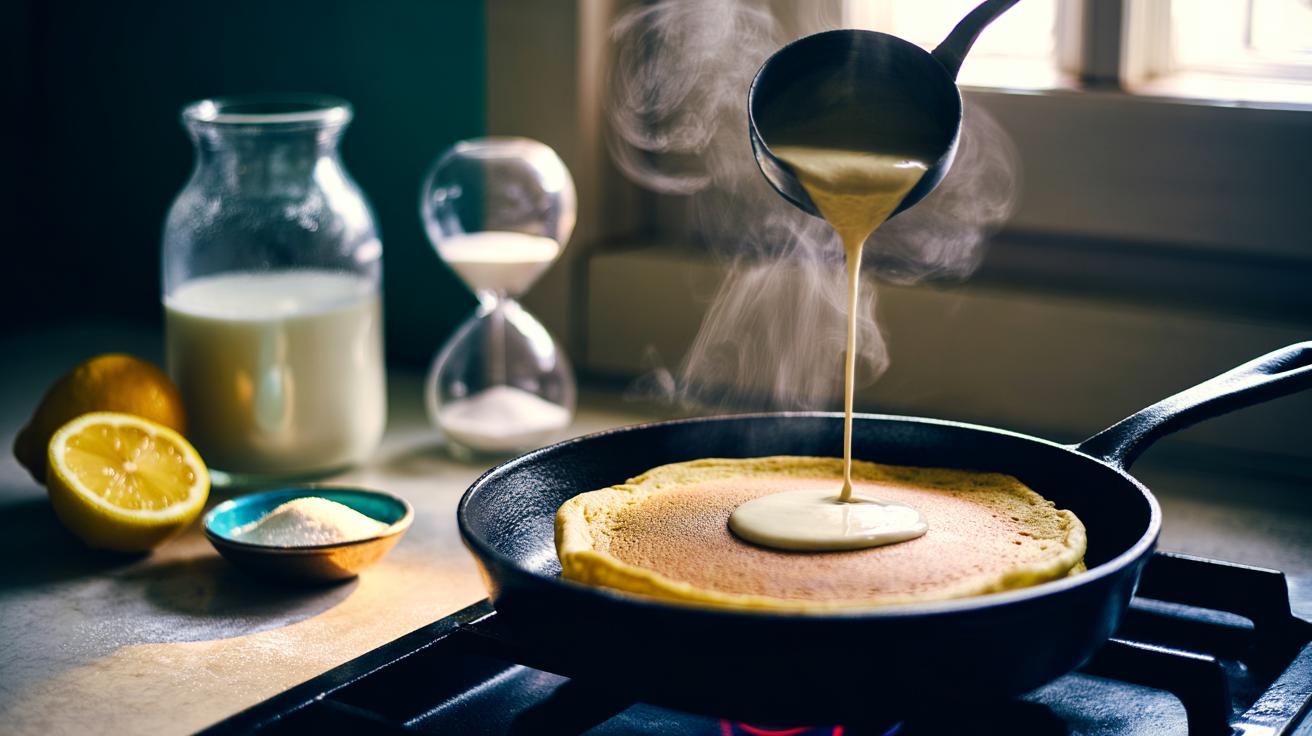
Heat is your silent partner. Medium or a touch below. You want a soft sizzle, not an angry hiss. Flick water: a bead should dance for two seconds and vanish. Brush the surface with oil; finish with a dot of butter for flavour. Ladle 60 ml portions so the centre cooks at pace with the rim. Once the batter hits, do not spread it thin—height equals fluff. Bubbles will form, then sit; flip when edges set and the surface shows popped craters that no longer refill.
Time markers help. First side: about 1–2 minutes, depending on pan mass. Second side: 45–60 seconds. Resist pressing with the spatula; you will expel steam and CO2. Stack on a wire rack, not a plate, to avoid soggy bottoms. If making batches, keep the bowl near the hob so batter stays warm and active. If the last pancakes look flatter, sprinkle a teaspoon of water into the batter and fold once—fresh steam helps, though chemistry remains king.
Season the pan between batches with a smear of oil on kitchen paper. Too much fat leads to lacy, fried edges and undercooked centres; too little sticks. Control the film, control the rise. That restraint, combined with your 30-second sprint, builds the perfect crumb: aerated, tender, tall.
Mastering fluff is a game of moments and balance. Strike the match—acid meets bicarbonate of soda—and move decisively while the mixture breathes. Choose smart ratios, keep lumps, mind the heat, and let bubbles tell you when to turn. Breakfast turns theatrical: lift, flip, plume of steam, golden finish. Next weekend, try cocoa with extra yoghurt, or blueberries dusted in flour to prevent sinking, and test your timings again. What variation will you cook first, and how will you tune your own 30-second window to make it sing?
Did you like it?4.5/5 (25)