In a nutshell
- 🍚 Mild rice vinegar acidity (4–5% acetic) gently denatures surface proteins, improving flavour cling and juiciness—keep acid modest to tenderise without turning fibres mushy.
- 🧪 Pair acidity with enzymes—ginger (zingibain), kiwi (actinidin), pineapple (bromelain), papaya (papain), or shio koji—in tiny doses for overnight marination matched to specific cuts.
- 🥢 Practical method: about 240 ml liquid with 1–2 tbsp rice vinegar, 1–1.5 tsp salt, a little sugar, soy, oil, and ginger; marinate 6–12 hours at 4°C, then pat dry, sear hard, and finish gently.
- ⚠️ Science and safety: aim for pH 4.5–5.5 and 0.5–0.8% salinity; marinate cold in non-reactive containers; never reuse raw marinade without boiling.
- 🔥 Limits and tips: marinade penetration is shallow, so engineer the surface and rely on searing; follow cut-specific times (fish short), then slice across the grain for tenderness.
Rice vinegar seems gentle, almost shy compared with punchier Western acids, yet it works with quiet precision. It brightens, it perfumes, it softens. Pair that delicacy with natural enzymes, and you have a subtle overnight engine for tenderness that doesn’t bulldoze texture. The trick is balance: acidity to gently unwind surface proteins, enzymes to snip long chains into softer segments, and salt to help retain moisture during cooking. Think less brute force, more choreography. Use it on chicken thighs, pork steaks, or flank steak and wake to meat that cooks faster, browns better, and eats juicier. Done right, the flavour remains clean, the bite still confident, the fibres relaxed rather than ragged.
Why Rice Vinegar Changes Texture
Rice vinegar is mostly water with around 4–5% acetic acid, placing a marinade’s pH in the mildly acidic range when properly diluted. That’s where the magic begins. Acids partially denature surface proteins like myosin and loosen connective interfaces, allowing flavours to cling and moisture to hold. Because the acid is mild and typically used at 1–2 tablespoons per cup of liquid, it acts as a scalpel rather than a sledgehammer. It freshens without the metallic snap of stronger vinegars, preserving the meat’s intrinsic sweetness. That nuance matters when you want bright savouriness without a pickled edge.
Acid alone won’t melt collagen overnight. Slow cooking does that. Yet a well-salted, mildly acidic bath changes how the meat cooks the next day. Salt migrates farther than acid, helping solubilise myofibrillar proteins, which improves water retention and browning. Meanwhile, aromatic molecules from soy, garlic, or spring onion settle into surface layers. Penetration is shallow—millimetres, not centimetres—so focus on surface transformation and searing technique. Keep the ratio sane: roughly 240 ml marinade with 1–2 tbsp rice vinegar, 1–1.5 tsp fine salt, and a little sugar or mirin for balance. Too much acid for too long equals mush; restraint keeps fibres supple.
Enzymes That Team Up Overnight
Acid lays the groundwork; enzymes refine the texture. Fresh ginger contains zingibain; kiwi offers actinidin; pineapple, bromelain; papaya, papain. These proteases nick protein chains into shorter, softer fragments. They remain active at fridge temperatures, albeit more slowly, which suits an overnight rest. Rice vinegar’s mildness is crucial here. It lowers pH enough to brighten flavour, yet not so far that it shuts the enzymes down completely. A small grating of ginger or a few teaspoons of mashed kiwi can be transformative. Go light for overnight—enzymes don’t need a big dose to make their point.
Fermented rice seasonings add a different dimension. Shio koji (a koji rice ferment) brings proteases and amylases alongside deep savoury notes; blended with rice vinegar it tenderises while building umami. Enzyme choice should match cut: ginger or shio koji for beef and pork; kiwi for lean cuts that risk drying; pineapple and papaya for tougher, heavily worked muscles—used sparingly to avoid pithy textures. If in doubt, reduce the enzyme quantity or shorten the chill. Balance with salt and a touch of sugar to protect juiciness and promote browning the next day.
| Cut | Rice Vinegar (per 240 ml) | Enzyme Source | Suggested Time | Notes |
|---|---|---|---|---|
| Chicken thighs | 1–2 tbsp | Ginger (1 tsp grated) | 6–12 hours | Juicy, hard to overdo; pat dry well. |
| Beef flank/skirt | 1–2 tbsp | Shio koji (1 tbsp) or kiwi (1 tsp) | 8–12 hours | Slice across grain after resting. |
| Pork shoulder steaks | 2 tbsp | Ginger (2 tsp) or papaya (1 tsp) | 8–16 hours | Edge towards longer time for thicker cuts. |
| Lamb leg steaks | 1–1.5 tbsp | Kiwi (1 tsp) | 6–10 hours | Keep enzyme modest to avoid woolly texture. |
| Salmon fillet | 0.5–1 tbsp | None or ginger (pinch) | 15–45 minutes | Do not marinate fish overnight. |
A Practical Overnight Marinade Method
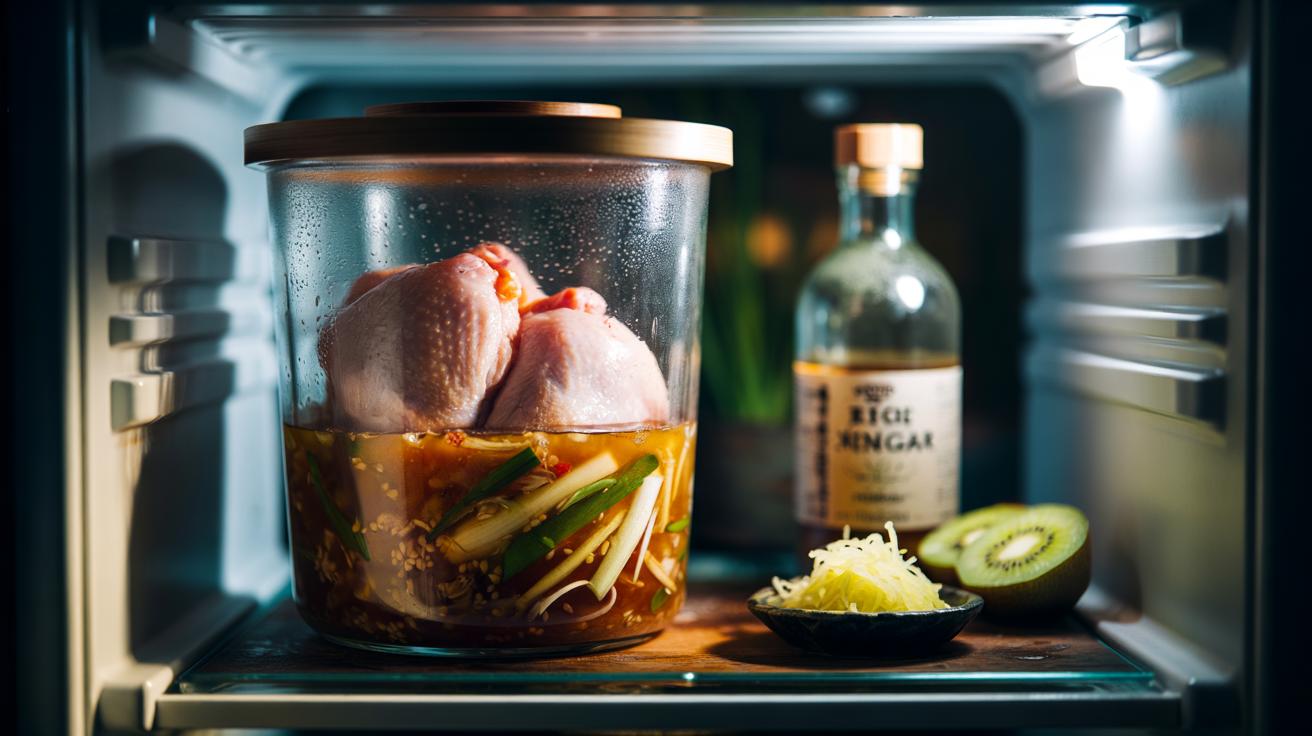
For two large chicken thighs or a 500 g beef flank: whisk 240 ml water with 2 tbsp rice vinegar, 1 tbsp light soy sauce, 1 tsp fine salt, 1 tsp sugar or honey, 2 tbsp neutral oil, 1 tsp freshly grated ginger, 1 minced garlic clove, and a pinch of white pepper. Optional: 1 tbsp shio koji instead of ginger for extra umami. Pour into a non-reactive bag or container, add meat, press out air, and chill at 4°C. Turn once at the halfway mark. Keep the acid modest for overnight success; the aim is relaxed fibres, not ceviche.
Before cooking, remove the meat and pat it bone-dry. This single act determines whether you’ll get a lacquered crust or a pale steam. Brush away clingy aromatics that might burn, then sear hard in a hot pan or grill, finishing gently to target temperature. Save the marinade only if you boil it for several minutes. Adjust glaze thickness with a knob of butter or a splash of stock. Garnish fresh—spring onion, toasted sesame, a squeeze more rice vinegar to sharpen the edges. The result tastes bright yet rounded, with fibres yielding rather than breaking.
Science, Safety, and Flavor Balancing
The sweet spot sits around pH 4.5–5.5 in the marinade, saline at roughly 0.5–0.8% by weight. That combination enhances water binding and tightens flavours without curdling the surface. Penetration remains limited, so think of marinades as engineering the exterior while heat management finishes the job. Add a little sugar for caramelisation; counter with soy or miso for umami; leave a path for acidity to shine. Salt early, acid moderate, enzyme tiny. Then cook with confidence: high heat for colour, gentle finish for succulence.
Safety is non-negotiable. Marinate chilled, 0–5°C. Use glass, ceramic, or food-grade plastic; avoid aluminium with acid. Never reuse raw marinade without boiling; enzymes and acid don’t kill pathogens. Discard after two days. Rinse only if the surface tastes too sharp, then dry thoroughly. For sensitive cuts—fish or scallops—cut times dramatically. Finally, rest cooked meat briefly so juices redistribute, then slice across the grain. With this discipline, rice vinegar and judicious enzymes give you tenderness, clarity, and lift without losing the meat’s character.
Handled with care, rice vinegar acts like a tuning fork for meat: it clarifies flavour while guiding texture towards tenderness. Enzymes supply the finesse, clipping long proteins so each bite feels easy yet intact. Keep the acid modest, keep the chill steady, and measure the enzymes with a light hand. The next morning, you’ll taste the difference in the pan within seconds. It’s clean, it’s quick, it’s compelling. Which cut will you try first for an overnight test—and what enzyme partner will you match with your bottle of rice vinegar?
Did you like it?4.5/5 (28)