In a nutshell
- 🧊 Ice-water shock revives wilted lettuce by driving water back into cells, restoring turgor pressure and crisp texture; it reverses dehydration, not spoilage.
- 🥬 Step-by-step: large bowl + plenty of ice (aim 0–4°C), separate and trim ends, submerge 5–20 minutes by leaf type, no salt, swirl, then spin dry and chill to set.
- ⏱️ Quick reference: Romaine 10–15 min; Iceberg 12–20; Butterhead 6–10; Baby leaves 4–8—colder water speeds recovery.
- ⚠️ Limits and safety: won’t fix slimy or brown leaves; avoid over-soaking and warm water; keep kit clean, add a dash of vinegar if desired, and dry thoroughly to curb microbes.
- 🌍 Beyond the bowl: revived leaves improve flavour and dressing cling, extend to some herbs and kale, and deliver less waste, more crunch, better value for UK kitchens.
We’ve all pulled a bag of lettuce from the fridge to find it limp, lacklustre, and destined for the bin. Pause before you toss it. A bowl, a handful of ice, and cold tap water can reverse the slump in minutes. This simple shock treatment restores crispness by driving water back into thirsty cells, reviving texture and bite. It’s quick, cheap, and surprisingly scientific. Rehydrate wilted lettuce with ice water and you’ll rescue salads, sandwiches, and weeknight suppers without a last-minute supermarket dash. Here’s what’s happening at a cellular level, how to do it properly, and the limits you should respect.
Why Lettuce Wilts: The Cellular Story
Wilting is not mystery. It’s physics. Leaf cells are tiny water balloons braced by cellulose walls. When full, they exert turgor pressure that keeps a leaf upright and snappy. Lose water and the balloons slacken; pressure falls; limpness follows. The culprits are familiar: dry refrigerator air, time, bruising in transit, and salt from yesterday’s dressing drawing moisture out by osmosis. Even proximity to ethylene-producing fruit can accelerate decline. Wilting is usually dehydration, not decay.
An ice-water bath flips the gradient. Cold, clean water moves back across semi-permeable cell membranes into the vacuoles, refilling them. The chill also tightens pectins in the cell walls, improving bite. You feel it as a crisp snap. This is not cosmetic; it’s a reversible physiological change in the tissue’s water status. It works best on sturdy leaves—romaine, little gem, iceberg—because their thicker midribs and abundant xylem channels act like capillaries. Very tender leaves respond too, just faster and more delicately. What was slack becomes perky as pressure is restored.
The Ice Water Method: Step-by-Step
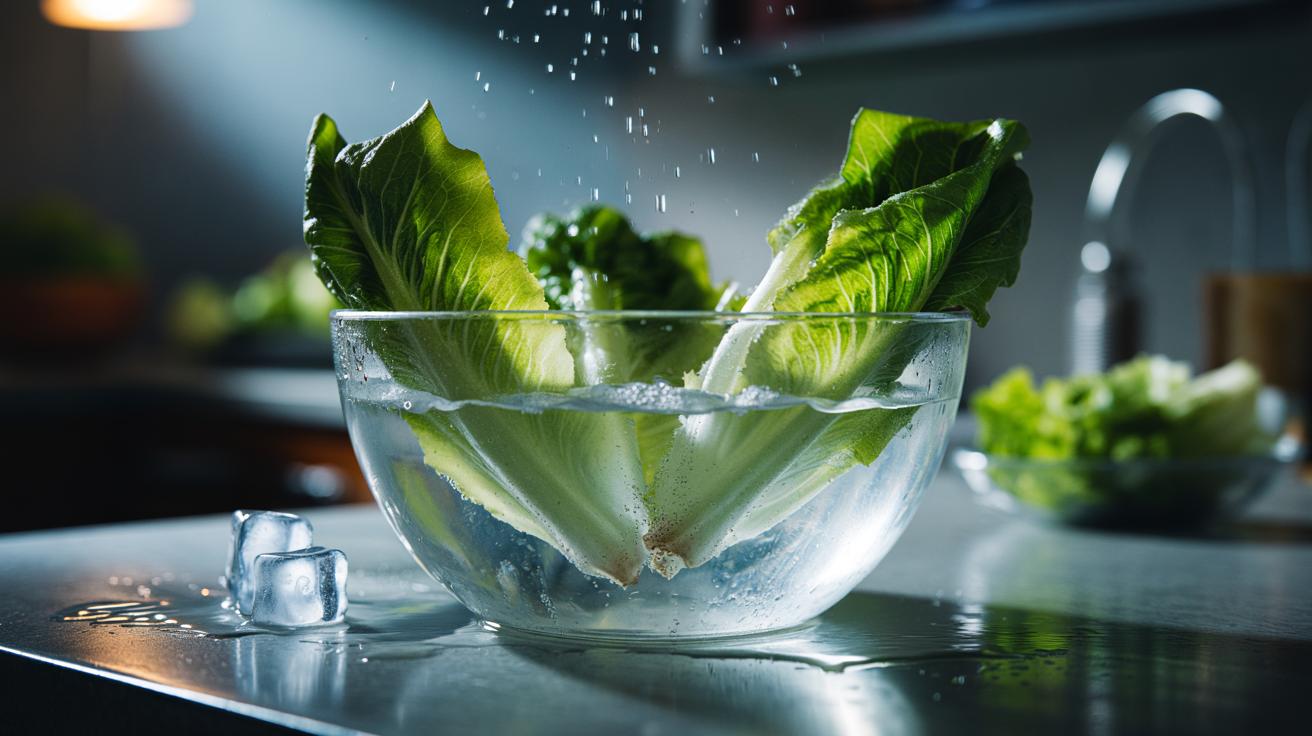
Use a large bowl. Add cold water and plenty of ice—aim for 0–4°C. Separate leaves, trimming 5–10 mm from the stem end to open vessels. Rinse off grit. Submerge fully, weighing the leaves down with a plate if they float. Set a timer. For sturdy lettuces, allow 10–20 minutes; delicate leaves need 5–8. Swirl once halfway to dislodge bubbles so every surface meets the cold. Do not salt the water—salt draws moisture out.
Lift the leaves gently into a salad spinner. Spin until dry; residual water dilutes flavour and stops dressings clinging. Finish with a clean tea towel if needed. Store in a lidded container lined with a paper towel to absorb stray moisture. Chill for 15 minutes to “set” the crispness. You’ll notice brighter edges and firmer ribs, a sign that turgidity is back. For prepped lunches, layer leaves lightly to avoid compressing the newly rehydrated tissues.
| Lettuce Type | Soak Time | Water Temp | Notes |
|---|---|---|---|
| Romaine/Little Gem | 10–15 minutes | 0–4°C | Trim ends; excellent recovery in ribs |
| Iceberg | 12–20 minutes | 0–4°C | Quarter first for faster penetration |
| Butterhead | 6–10 minutes | 0–4°C | Gentle handling; bruises easily |
| Mixed Baby Leaves | 4–8 minutes | 0–4°C | Watch carefully; over-soak becomes soggy |
What Works, What Doesn’t: Limits and Pitfalls
Ice water rescues dehydration. It cannot reverse deterioration. If leaves are slimy, smell sour, or show extensive browning, that’s microbial spoilage, not thirst. Bin them. Similarly, blackened crush marks and torn veins won’t re-knit. Over-soaking is another trap: beyond 20–30 minutes, waterlogging can dilute flavour and leave a washed-out crunch. Keep it brief. Warm water? No. It relaxes pectins, reducing snap and inviting bacteria to multiply.
Mind hygiene. Use potable water and a clean bowl. If you’re nervous, a few drops of distilled white vinegar per litre can lower microbial load without taint. Dry thoroughly; clinging moisture accelerates decay in the fridge. Nutrient loss is minimal because the treatment is cold and short, though a little vitamin C may leach. The trade-off is worth it: a revived, high-water-content leaf that carries dressing beautifully. When in doubt, assess with your senses—sight, smell, touch—and err on the side of safety.
Beyond the Bowl: Texture, Flavour, and Sustainability
Crispness changes taste perception. Rehydrated leaves break cleanly, releasing aroma compounds quickly and letting acidic dressings sparkle without drowning the plate. The surface dries to a fine matte, so vinaigrettes cling instead of pooling. For sandwiches, revived romaine stands up to heat and sauce, preserving structure. You can extend the trick to herbs—flat-leaf parsley and coriander perk up with 3–5 minutes—while kale prefers a colder, slightly longer dip before massaging with oil. Ice water is a universal reset for tired greens.
There’s a thrift story here too. UK households waste mountains of salad weekly. This technique slashes bin-bound leaves, preserves money, and reduces the hidden footprint of refrigerated transport. Keep greens in breathable containers, cushion them with towel lining, and revive only what you’ll eat. For pre-service in a busy kitchen, refresh in batches, spin, and hold chilled for an hour—quality remains high. The result? Less waste, more crunch, better flavour. That’s a small, smart fix with outsized impact.
Rehydrating wilted lettuce with an ice bath isn’t a chef’s myth. It’s a practical application of plant physiology that any home cook can harness in ten minutes. You’ll save cash, cut waste, and serve salads that snap. Keep your bowl big, your water icy, and your timings tight; let the fridge finish the job. Next time limp leaves stare you down, will you reach for the bin—or the ice tray and a splash of cold water to bring them roaring back to life?
Did you like it?4.6/5 (24)