In a nutshell
- 🍋 Lime peel delivers concentrated zest and aroma that instantly brightens flavour without adding liquid or extra acidity.
- ⚗️ Driven by volatile oils (limonene, citral, linalool), zest stimulates aroma and the trigeminal nerve, giving food a fresh, sparkling lift.
- 🧰 Technique matters: use a microplane, avoid the bitter pith, add zest off the heat, and rub into sugar for baking to maximise perfume.
- 🍽️ Smart pairings: finish fatty fish, roast meats, yoghurt sauces, and desserts; try quick boosts like lime salt or compound butter for instant brightness.
- 🌱 Sustainability: buy fragrant, heavy limes; zest first, juice second; freeze or dry zest; make oleo-saccharum and candied peel for zero-waste flavour.
Sometimes the quickest route to brighter cooking isn’t another squeeze of juice, but the fragrant snap of lime peel. Those speck-sized shards of zest carry concentrated aromatic oils that lift savoury stews, desserts, and cocktails in seconds. Just a pinch can transform a dish. The effect feels immediate because scent reaches us before flavour does, priming the palate and sharpening perception. Used well, lime peel adds sparkle without watering food down or skewing its balance. It’s thrifty, too: you’re turning what many bin into an instant upgrade. Here’s how to capture that green lightning and direct it, with precision, onto your plate.
How Lime Peel Wakes up the Palate
The magic starts with the peel’s volatile oils—notably limonene, citral, and hints of linalool. These compounds evaporate easily and deliver a clean, high-toned perfume that our nose reads faster than our tongue reads taste. Fresh zest amplifies aroma before a bite is taken. Because aroma drives flavour perception, food tastes livelier, sweeter, or more nuanced without any extra sugar or salt. Zest also frames acidity beautifully: juice brings tang, but peel brings bloom and length, adding complexity rather than simple sourness.
There’s a tactile trick at play, too. Citrus oils stimulate the trigeminal nerve, that subtle “sparkle” we associate with freshness. In stews or roasts, this is what cuts through richness without making the dish thin. On grilled fish, the same oils emphasize clean sea-notes; on chocolate, they tease out floral tones. Importantly, the peel’s pith—the white layer beneath the skin—contains bitter compounds. Keep it out, and the result is all lift, no grimace. Think of zest as a precision instrument for brightness, used in pinches rather than handfuls.
Techniques to Extract Maximum Aroma without Bitterness
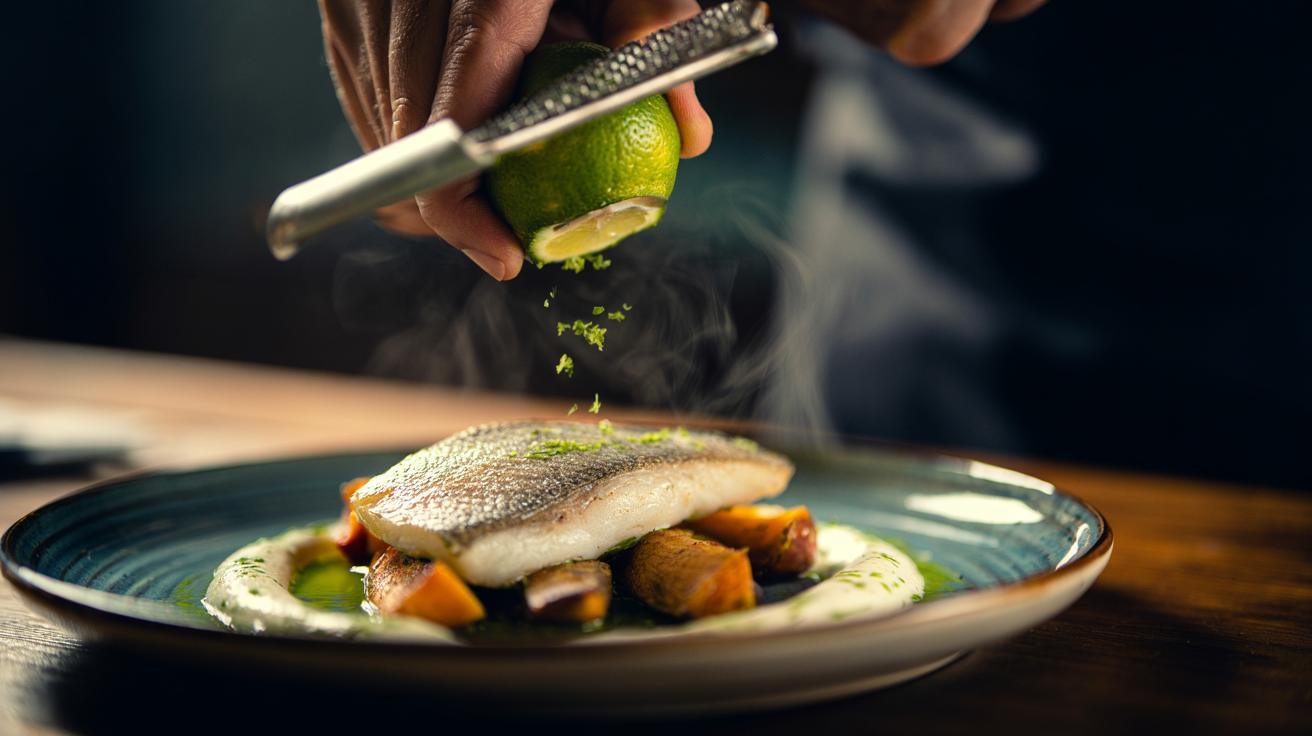
The goal is simple: remove only the coloured layer of peel, where the oil glands live. A fine microplane gives feathery zest that disperses instantly; a channel knife or peeler creates strips for syrups, infusions, or garnishes. Work lightly. If you see white, you’ve gone too deep. Zest wants minimal heat and maximum surface area. Add it at the end of cooking or off the heat for peak perfume, because high temperatures drive off those precious volatiles. For baking, rub zest into sugar first; the crystals bruise the oil sacs, supercharging aroma through gentle abrasion.
Precision helps. Wash and dry limes thoroughly, especially if they’re waxed. Rotate fruit as you grate so you don’t dig in. For dressings, mash zest with a pinch of salt to make a quick citrus paste that dissolves smoothly. If any bitterness sneaks in, balance with a trace of honey, not more salt. Below is a quick tool guide for texture and use.
| Tool | Texture | Best Use | Tip |
|---|---|---|---|
| Microplane | Fine, fluffy | Finishing, baking | Grate over hot food at the table |
| Channel knife | Long ribbons | Cocktails, candied peel | Twist ribbons to release oils |
| Vegetable peeler + knife | Thin sheets, minced | Infusions, marinades | Scrape off any pith before mincing |
| Fine box grater | Coarser flecks | Gremolata, salsa | Grate lightly to avoid pith |
Pairings and Smarter Applications across the Menu
Lime peel thrives in contrast. On the savoury side, it enlivens fatty fish, roast chicken skin, avocado, buttered grains, and coconut-laced curries. Fold zest into a quick gremolata with parsley and garlic for steak, or stir into yoghurt to create a bright, cooling sauce for spiced lamb. A finishing sprinkle beats long marinades for brightness. Where heat is involved, save some zest for later. Smoked mackerel pâté becomes fresher with a last-second dusting; so does a tray of roasted sweet potatoes, turning earthy sweetness into something vivid.
Sweets love zest’s perfume. Rub it into caster sugar for cakes or shortbread. Mix with demerara for a crunchy rim on tarts. Partner zest with dark chocolate, cardamom, or vanilla to pull out floral notes without sourness. In drinks, muddle zest briefly—do not pulverise—so oils bloom without excess bitterness. For zero-fuss boosts: whisk zest with flaky salt for a five-second lime salt; beat into softened butter for a compound butter that melts over corn, prawns, or asparagus; or sprinkle over ripe mango with chilli for a punchy, street-food snap.
Buying, Storing, and Sustainability: Use the Whole Lime
Choose limes that feel heavy for their size and smell fragrant even uncut; weight signals juiciness and oil-rich peel. If buying waxed fruit, scrub in warm water before zesting. Organic skins are ideal when the peel is the star. Zest first, juice second — always. Once a lime is zested, it dries out quickly; wrap and chill, then use the juice within a day. Freeze excess zest in a sealed jar, or stir it into sugar and dry for a fragrant pantry staple. Dehydrated zest keeps for months and reawakens wonderfully in steam or syrup.
Think zero waste. Make a quick oleo-saccharum by massaging zest into sugar, then use the syrup in cocktails or mocktails. Candy strips of peel for garnishes and baking; the blanching step tames bitterness. Infuse neutral oil with ribbons of peel for salads that don’t want lemon’s bluntness. Even the spent, zested halves deserve a second life as cleaning allies: salt them and rub over chopping boards to deodorise. With a little planning, you capture the lime’s full spectrum—aroma, acidity, and subtle bitterness—without binning the best bit.
Lime peel is the quick-change artist of the kitchen: tiny effort, outsized reward. You’re not masking flavours; you’re revealing them, letting savoury depth shine and sweet notes sing while meals stay balanced. Add zest off the heat for peak perfume, and keep portions modest for clarity. From weekday pasta to showpiece puddings, the tactic is the same: grate, stir, taste, stop. That restraint is the difference between sparkle and shout. What dish on your table would benefit most from a bright green whisper of zest today?
Did you like it?4.7/5 (23)