In a nutshell
- 🌧️ Pebble trays raise local relative humidity by roughly 5–15% and lower VPD, preventing crispy tips and supporting steadier photosynthesis and growth.
- 🧱 Simple setup: a watertight saucer, a layer of pebbles, and water just below the stone tops; keep the pot elevated to avoid root rot and place near warmth but away from draughts.
- 🌿 Best for tropicals like calatheas, ferns, begonias, and aroids, plus orchids; not suited to succulents or Mediterranean herbs that prefer drier air.
- 🧪 Realistic limits: they condition a small zone, not whole rooms; they’re steadier than misting and don’t invite pests when clean—use a humidifier for large spaces.
- 🧼 Maintenance matters: rinse pebbles monthly, use rain/distilled water in hard-water areas, group plants to amplify effect, and treat the tray as a low-tech personal humidifier.
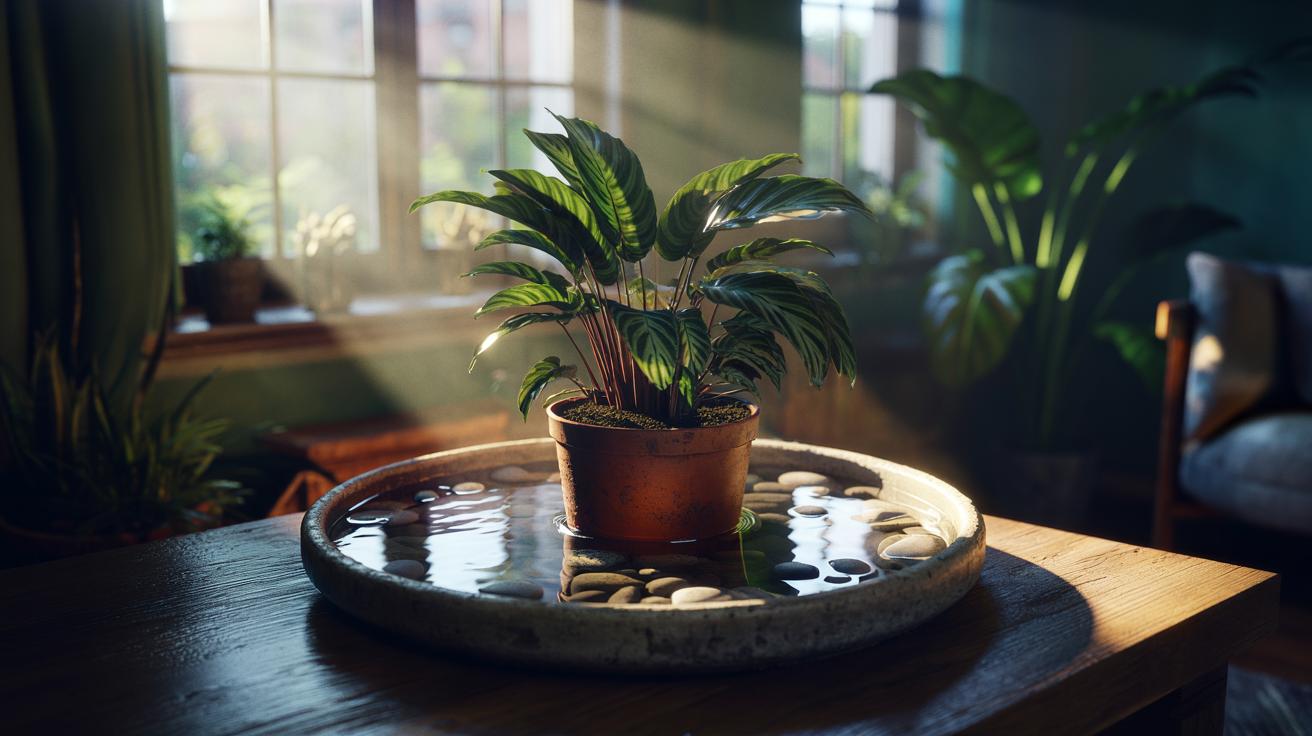
Houseplants evolved under hot, damp skies. Our heated British homes, by contrast, are crisp and dry for much of the year. Enter the humble pebble tray. It’s a shallow dish filled with stones and water, sat beneath the pot so evaporation lifts moisture around the leaves. Small outlay, real results. This simple trick creates a gentle microclimate that mimics the soft, saturated air of a tropical understory without turning your sitting room into a rainforest. It’s tidy, quiet, and requires no plugs. Keep the pot base above the water line to avoid root rot. Done well, it can mean fewer crispy tips, stronger growth, and a plant that looks happier every morning.
What Pebble Trays Actually Do
At its core, a pebble tray leverages evaporation. Water warms, turns to vapour, and nudges up the relative humidity (RH) within a small zone around the plant. Because foliage sits in that rising plume, the boundary layer of air on each leaf becomes more humid, reducing vapour pressure deficit (VPD) and slowing water loss through stomata. That matters. High VPD pulls moisture from leaves, leading to brown edges and stalled growth in humidity-loving species like calatheas and ferns. Pebble trays temper that pull. They don’t drench the room; they relieve the leaf.
Numbers help. In UK living rooms hovering at 35–45% RH, a well-placed tray can bump local humidity by 5–15% within 10–20 cm of the plant, especially in still air and on warm sills. The effect fades with distance and draughts. It’s a targeted solution, not a whole-house fix. Think of it as a personal humidifier for your begonia, providing a constant, gentle rise rather than the fleeting spike you get from misting. Small tray, big change. Predictable, passive, and delightfully low-tech.
How To Build and Place a Tray
Choose a watertight saucer wider than your pot. Add a single layer of washed pebbles, leca, or aquarium gravel, then pour in water until it sits just below the top of the stones. Place your plant on the pebbles so the pot never touches water. Never let the pot sit in water—drainage must remain uncompromised. Position the tray where warmth encourages evaporation but away from strong, drying draughts: east or north windowsills, shelves near a radiator (not directly on one), or a bright bathroom ledge. Top up as levels drop. Rinse pebbles monthly to sidestep algae and mineral crust.
| Pot Size | Tray Diameter | Water Depth | Pebble Size | Expected Local RH Gain | Top-Up Frequency |
|---|---|---|---|---|---|
| 9–12 cm | 16–20 cm | 1–1.5 cm | 8–12 mm | 5–8% | Every 3–4 days |
| 14–17 cm | 24–28 cm | 1.5–2 cm | 10–16 mm | 8–12% | Every 2–3 days |
| 20–25 cm | 32–38 cm | 2–2.5 cm | 12–20 mm | 10–15% | Daily or as needed |
For best results, group plants so their combined transpiration and the tray’s vapour reinforce each other. Use distilled or rainwater in hard-water areas to avoid white deposits. Clean monthly—hot water and a drop of washing-up liquid keeps biofilm and fungus gnats at bay. It’s maintenance-light, not maintenance-free. A tidy tray works harder and looks smarter on the sill.
Which Plants Benefit Most
Think rainforest. Calatheas, marantas, and stromanthes show fewer crisped edges. Ferns—from Boston to maidenhair—unfurl finer, lusher fronds. Aroids such as philodendron, monstera, and alocasia develop larger leaves and cleaner splits when humidity rises. Begonias stop sulking. Fittonia perks up. Even orchids, many of them epiphytes, enjoy steadier moisture in the air without water sitting in the crown. Pebble trays boost ambient humidity without wetting leaf surfaces—ideal for fungus-prone species.
Not all plants want the spa treatment. Succulents and cacti prefer dry air and fast-drying soil; they’ll gain nothing here. Mediterranean herbs like rosemary and lavender are also happier without. For mixed shelves, aim trays at the humidity lovers and keep desert dwellers a little apart. Watch for signals: perkier new growth, fewer brown margins, and slower soil dry-down indicate the tray is helping. If you spot mould on compost or lingering damp around the pot, reduce water depth and improve airflow. Humidity should comfort leaves, not swamp roots.
Science, Limits, and Common Myths
Humidity shapes how plants breathe. Higher RH lowers VPD, so stomata don’t need to slam shut to conserve water; photosynthesis keeps humming along. That translates into steadier growth, better leaf expansion, and less stress. Pebble trays are effective because they create a continuous plume of moisture where the plant actually lives—within a hand’s breadth of the leaves. They are also quiet and cheap to run. Yet they have bounds. In draughty rooms or with a fan blasting, the vapour disperses too quickly. Trays complement, not replace, good light, watering rhythm, and feeding.
Three myths deserve retiring. First: “They humidify the whole room.” They don’t; they condition a small zone, which is exactly what many plants need. Second: “Misting is better.” Misting spikes humidity for minutes and can promote leaf spots; trays offer slow, steady gains without wet foliage. Third: “They invite pests.” Cleaned monthly and refreshed often, trays don’t breed gnats; saturated compost does. If you want a forest vibe across a big space, add a proper humidifier and a hygrometer. For a single shelf in a radiator-dry flat, pebble trays are a quiet victory.
In a country of central heating and fickle forecasts, pebble trays are a gentle nudge toward the tropics—no sockets, no noise, no faff. They tame VPD, soothe ferns, and rescue calatheas from crispy edges. The principle is elegant: controlled evaporation where the plant breathes. Your only jobs are topping up, keeping pebbles clean, and ensuring pots stay high and dry. Ready to give your jungle corner a calmer climate—and which plant will you treat to its own shimmering pool of humidity first?
Did you like it?4.6/5 (21)