In a nutshell
- 🌱 Nitrogen-rich urine (urea rapidly becoming ammonium) fuels microbes, raises pH, adds moisture, and can push compost temperatures into 50–60°C for faster breakdown.
- 📏 Hit the C:N sweet spot around 25–30:1: layer browns, lightly dose diluted urine (about 200–400 ml per 20–30 L of dry browns, diluted 1:3–1:10), then cover; sharp ammonia smell means add more carbon.
- 🛠️ Safe collection and application: use a sealed container, apply within 24 hours, pour into a “well,” dilute, and cap with 5–8 cm of browns; dose at dusk and pause contributions during antibiotic courses.
- 🛡️ Odour and risk control: maintain aeration and structure, cap all additions, use biochar or mature compost to bind ammonia, site heaps on soil, prevent runoff, and practice neighbour-friendly discretion.
- 💚 Big benefits, small effort: a free, low‑carbon accelerator that tightens nutrient loops, cuts fertiliser use, and delivers hotter, faster compost—provided you stick to small, regular doses, ample carbon, and good airflow.
Gardeners chase speed. They want heaps that steam, not bins that sulk. One quietly radical accelerator sits in the loo: human urine. Rich in nitrogen, balanced with potassium and a touch of phosphorus, this readily available liquid feeds microbes the way coffee fuels reporters on deadline. Done right, it turns a slow, woody heap into a lively, heat-building mass. Done badly, it smells and leaks nutrients. The difference is technique. Add urine as a targeted, measured input, not a free-for-all drench. In this piece, we unpack the science, the ratios, and the etiquette so you can compost faster, cleaner, and with fewer trips to the garden centre.
How Urine Speeds the Rot: the Science
Compost lives or dies on its microbial workforce. Those bacteria and fungi need energy (carbon) and protein-building blocks (nitrogen). Urine supplies nitrogen in the form of urea, which quickly hydrolyses to ammonium, bumping up pH and turbocharging microbial metabolism. Heat follows. So does faster breakdown of stubborn “browns”. When the heap has plenty of carbon but too little nitrogen, urine is the cleanest, quickest corrective. It arrives dissolved, spreads evenly, and doesn’t add physical bulk.
There’s more. Urine contributes moisture, essential for diffusion of enzymes through the pile. In a too-dry heap, microbes stall; a light application can lift moisture into the sweet spot. Expect activity to surge within a day, with temperatures rising into the 50–60°C range if your carbon base is generous and particle size is right. Caution matters. Over-application pushes ammonia off-gassing, wastes nutrients, and invites odours. Think of urine as a precision ingredient, not a flood. Feed the heap, not the ground beneath it.
Getting the Mix Right: Carbon-to-Nitrogen Balance
The alchemy of hot compost rests on the carbon-to-nitrogen (C:N) ratio. Aim for roughly 25–30:1. Most home piles skew high in carbon—dry leaves, straw, shredded cardboard, woody prunings. Urine, being nitrogen-rich with negligible carbon, nudges the blend toward that target without bulking the heap. The tactic is simple: layer carbon materials, moisten, then dose sparingly with urine, and cap with more browns. Short, frequent additions beat rare deluges.
| Material | Primary Role | Typical C:N or Nutrient | Practical Tip |
|---|---|---|---|
| Dry leaves | Carbon “browns” | 50–80:1 | Shred for faster decay |
| Shredded cardboard | Structure + carbon | 60–100:1 | Moisten before layering |
| Fresh grass | Nitrogen “greens” | 12–20:1 | Mix to prevent matting |
| Human urine | Soluble nitrogen | High N, minimal C | Apply lightly, then cover |
Rules of thumb help. For a 20–30 litre layer of dry browns, 200–400 ml of fresh urine—diluted 1:3 to 1:10 with water—usually suffices. Watch the pile. If you smell sharp ammonia, you’ve overdone it; add more carbon and mix. It’s easier to add nitrogen than remove it.
Practical Methods for Safe Collection and Application
Keep it simple. Fresh urine from a healthy person is typically low-risk and nearly sterile on exit. Collect in a dedicated, sealable container, rinse daily, and either apply immediately or within 24 hours to limit ammonia loss. For households, a labelled jug in the bathroom and a discreet evening run to the heap does the job. Apply in several small passes rather than one dramatic pour. This reduces leaching and evens distribution.
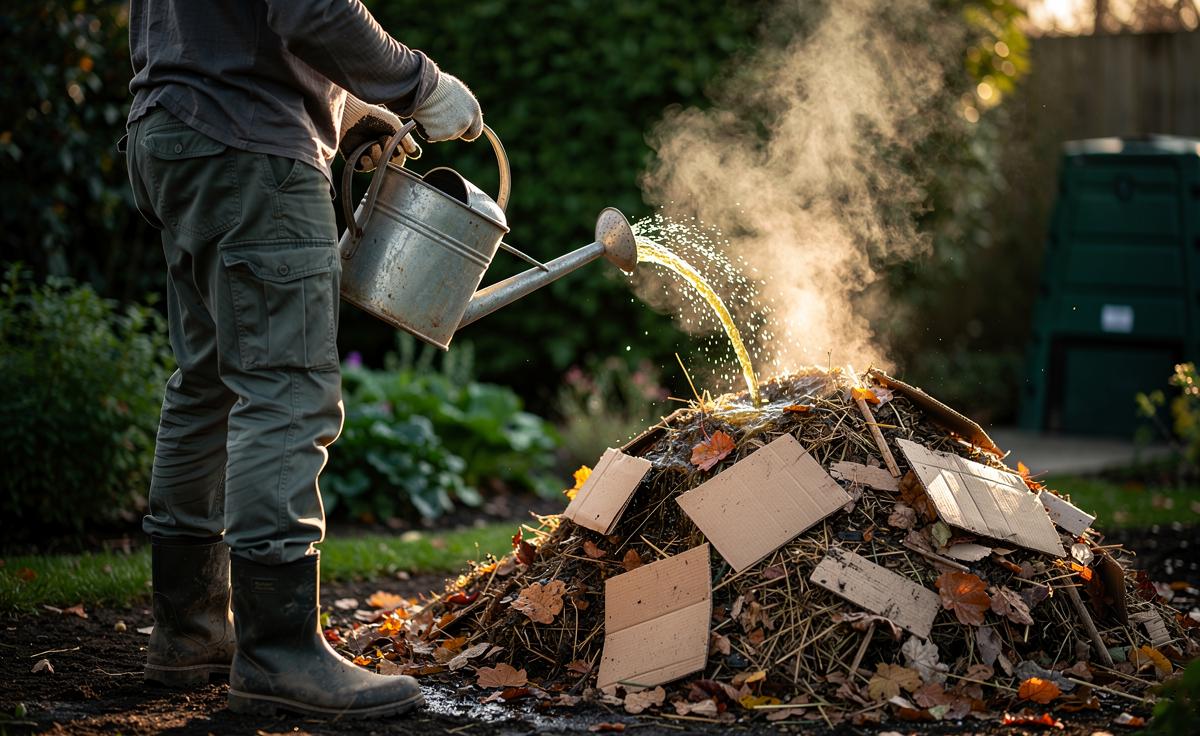
Technique matters. Open a “well” in the heap, splash or water in diluted urine, then cover with a 5–8 cm layer of browns. In summer, apply at dusk to cut volatilisation; in winter, target the core of an insulated pile to sustain heat. If you use sawdust in a composting loo, combine it with leaf mould to balance airflow and minerals. A simple watering can marked “fertiliser” keeps things tidy—and neighbour-friendly. If you’re taking antibiotics or specialised medicines, pause contributions until finished. When in doubt, let the heap feast on plant-based greens instead.
Odour, Pathogens, and Etiquette: Managing Risks
Odour is optional, not inevitable. Smell arises when excess nitrogen meets poor aeration. Fix both. Keep structure airy with shredded stems or coarse browns, and always cap urine additions. A handful of biochar or mature compost sprinkled on top also binds ammonia. If a whiff persists, add more carbon and turn the heap. No scent? You’re in the goldilocks zone.
Hygiene is straightforward. Avoid direct application to edible leaves or soil crops during growth; keep urine in the compost stream instead. Most pathogens of concern don’t survive the heat and time of a well-managed pile, and good practice—hot phase followed by curing—adds redundancy. Store containers closed, wash hands, and maintain discretion. Neighbours matter. Use private application times, keep the bin lidded, and communicate if you share space. Finally, protect waterways by situating heaps on soil, not hardstanding, and shielding from heavy rain. The goal is rapid decomposition and nutrient capture, not runoff.
Used thoughtfully, urine is a quiet revolution: a free, local, low-carbon boost that turns a languishing heap into a humming engine of soil health. It tightens nutrient loops at home, trims fertiliser bills, and reduces water use by putting a daily waste stream to work. The craft lies in balance—small, regular doses; generous carbon; good airflow; swift cover. That’s it. Your compost will tell you if you’ve got it right, with heat, earthy aromas, and fast crumble. Ready to try a measured splash and watch the heap come alive, or will you stick with the slow lane a little longer?
Did you like it?4.8/5 (22)