In a nutshell
- 🟡 Banana peel “whitening” mainly provides brief surface clean-up via friction on the acquired pellicle; it offers no bleaching agents and does not change intrinsic tooth colour.
- 🧪 Acidity matters: bananas/peels sit near pH ~5, close to enamel’s critical pH (~5.5). Smiling retracts lips and thins saliva, reducing buffering and raising acid erosion risk with prolonged contact.
- 📊 Evidence is lacking: reports are anecdotal, and DIY acidic hacks can harm enamel. In the UK, effective whitening relies on hydrogen peroxide chemistry and is regulated for safety and predictability.
- ✅ Safer strategies: brush with fluoride toothpaste, limit frequent acidic snacks, seek professional cleaning for stains, and opt for dentist-supervised whitening when appropriate.
- 💡 Practical tips: keep fruit contact brief, avoid brushing for 30 minutes after acids, hydrate, and chew sugar-free gum to boost saliva. Protect enamel first; brighten it second.
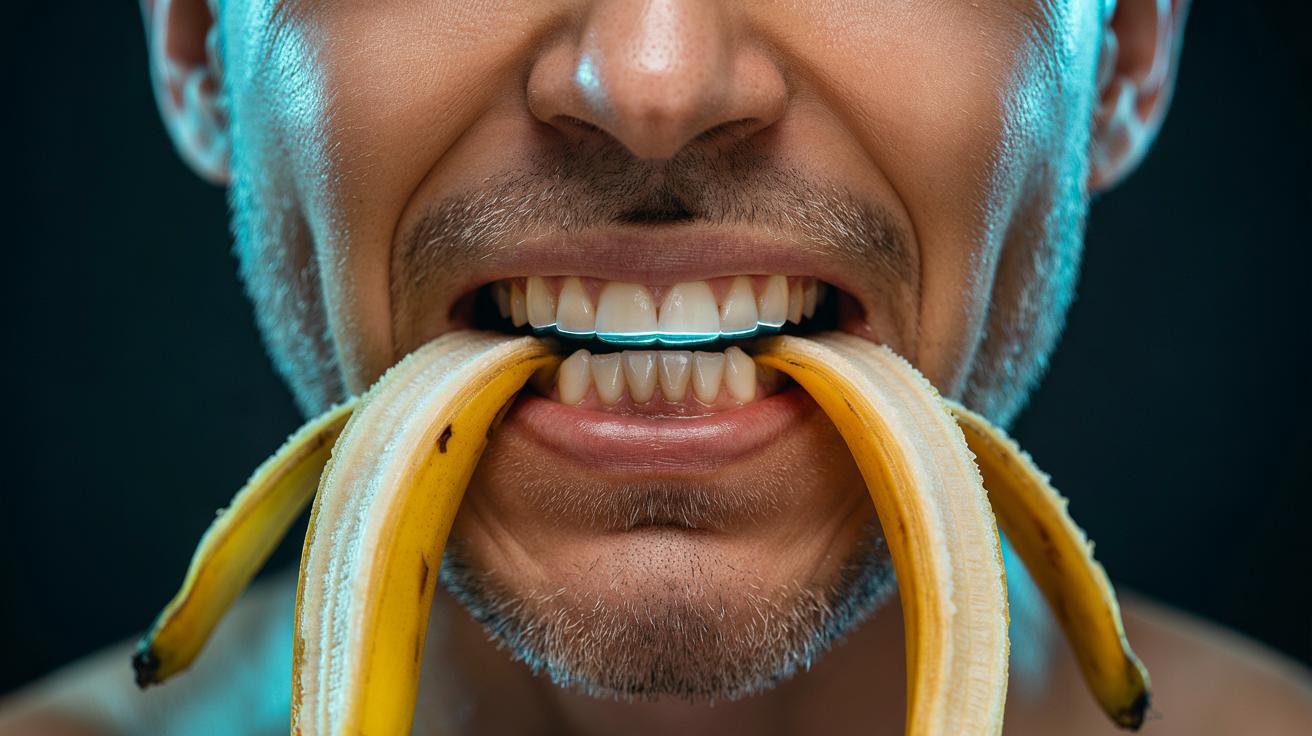
Across social media, a curious trick has resurfaced: placing a banana peel inside the cheeks and smiling to “whiten” teeth. The claim rests on the idea that fruit acids and minerals rub onto enamel, lifting stains with a grin-induced polish. As a UK reporter covering health hacks, I looked into the chemistry behind this trend and what actually happens in the mouth when you smile with fruit pressed to your teeth. The simple truth is that acids, saliva, and timing decide whether this habit is harmless, pointless, or risky. Here is how acids behave on enamel, why the mechanics of a smile matter, and the evidence-based alternatives that genuinely brighten your smile without compromising oral health.
What Actually Happens When You Rub Banana Peel on Teeth
The banana peel technique relies on light friction and the peel’s thin film of sugars, mild organic acids, and compounds like polyphenols and potassium. When you smile with the peel tucked into your cheeks, the lips retract and the peel’s surface glides across the front teeth. This can dislodge soft plaque and temporarily smooth the acquired pellicle—a protein layer that naturally coats enamel. Any fleeting “brightness” usually reflects a cleaner surface rather than a true change in tooth colour, which lives within enamel and dentine.
What the peel does not contain is a genuine bleaching agent. Whitening, in the clinical sense, requires oxidisers such as hydrogen peroxide or carbamide peroxide that break chromogenic molecules within the tooth. Banana peel has neither. Its mild acidity and sugar content can even feed bacteria and drop pH at the tooth surface. Used habitually, that mix risks acid erosion and sensitivity rather than any meaningful whitening effect.
Acids, Saliva, and the Smile: A Mini Chemistry Lesson
Enamel starts to soften when the pH around it falls to roughly 5.5—the so‑called critical pH. Bananas and their peels are mildly acidic, typically near pH 5. When you smile broadly, teeth are exposed to air, and the protective saliva film can thin. Less saliva means less buffering capacity to neutralise acids and fewer minerals to drive remineralisation. Pressing an acidic surface against enamel during that drier window tilts the balance toward demineralisation.
Saliva usually restores pH within minutes after an acid challenge, but only if you stop the exposure. Holding any fruit—peel or pulp—against teeth extends contact time, delaying recovery. That matters because the repeated cycle of acid attack and rushed brushing can wear enamel. In practice, a post-snack smile is harmless; a grin that pins fruit acids to enamel is not a clever whitening shortcut. If you do experiment once, allow saliva time to work and avoid brushing for at least 30 minutes.
Real whitening relies on chemistry that targets stain molecules, not on acids that dissolve mineral from the tooth surface.
Evidence, Risks, and Safer Whitening Options in the UK
There is no robust clinical evidence that banana peel produces measurable whitening. Reports of brighter teeth are anecdotal and likely reflect polished plaque or dehydration that temporarily lightens tooth appearance. Dental organisations caution against DIY acidic methods—lemon, strawberry, and charcoal included—because they can abrade enamel or pull pH below safe levels. In the UK, products for true whitening are regulated: over-the-counter pastes chiefly use mild abrasives and optical agents, while hydrogen peroxide gels above 0.1% and up to 6% are supplied by registered dentists after an examination.
Safer strategies include using fluoride toothpaste twice daily, limiting frequent acidic snacks, and choosing dentist-supervised whitening when appropriate. Smokers and heavy tea or coffee drinkers may benefit from professional cleaning to remove extrinsic stains before any bleaching. Think of enamel as a non-renewable resource—protect it first, brighten it second. If sensitivity, white spots, or cupping at the biting edges emerge, stop all acidic hacks and seek dental advice.
Quick Facts at a Glance
Before balancing a peel in your cheeks, weigh the chemistry and the likely outcome. The table below summarises key points practitioners share when patients ask about fruit-based whitening. The consistent message: short-lived shine is not the same as safe, stable whitening. Keep the focus on pH control, saliva support, and proven agents.
| Topic | Key Point | Why It Matters |
|---|---|---|
| Banana/peel pH | Typically around pH 5 | Near the enamel critical pH; prolonged contact risks softening. |
| Smile mechanics | Lips retract, saliva film thins | Reduced buffering lets acids act longer on enamel. |
| Whitening action | No peroxide, no oxidation | Friction may clean; it does not chemically whiten. |
| Best practice | Fluoride, stain control, supervised gels | Protects enamel and delivers measurable, predictable results. |
For those chasing camera-ready smiles, adopt habits that aid saliva: chew sugar-free gum after meals, sip water, and time acidic treats with main meals. If you ever test a fruit-based hack, keep contact brief and avoid brushing for half an hour to prevent abrasive loss on softened enamel. Professional assessments can identify whether stains are extrinsic (surface) or intrinsic (within tooth), guiding realistic choices. Realistic expectations and protective routines beat quick fixes, and they preserve tooth health for the long term.
The romance of natural hacks is understandable, yet chemistry sets the rules. Banana peel inside the cheeks while smiling may momentarily smooth plaque, but the underlying acids and sugars do not bleach, and repeated exposure can erode enamel. If a whiter smile is your goal, blend stain-smart habits with regulated treatments that respect tooth biology. Your enamel has no spare, so choose methods that brighten without thinning. What small change—hydration, timing, or professional guidance—will you try first to make your smile both whiter and stronger?
Did you like it?4.4/5 (26)