In a nutshell
- 🦶 Warming feet triggers vasodilation, helping shed heat from the core and aligning the body’s natural pre‑sleep cooling for faster drift‑off.
- 🌡️ The “warm feet trick” can trim sleep‑onset latency by about 15 minutes, aided by a wider distal–proximal temperature gradient.
- 🛁 Practical routine: a 10‑minute foot soak at 37–40°C, dry thoroughly, then wear breathable socks; keep the bedroom cool at 16–18°C.
- 🛏️ Options include warm socks, a nearby wheat bag or hot‑water bottle (not on skin), plus dimmed lights and a calm wind‑down for added benefit and consistency.
- ⚠️ Safety first: extra caution for diabetes, peripheral neuropathy, and Raynaud’s; avoid high heat, and consult a GP if insomnia or breathing issues persist.
Struggling to switch off at night? A small, counterintuitive ritual could make the difference between clock‑watching and drifting off. By gently warming your feet before bed, you cue blood vessels near the skin to open, letting surplus heat escape and nudging your body towards the natural drop in core temperature that precedes sleep. This “warm feet trick” can trim sleep‑onset latency by around 15 minutes for many adults, especially when paired with a cool, dark bedroom. It’s simple, cheap, and grounded in thermoregulation science rather than wellness gimmickry. Here’s how it works, how to do it safely, and who should take extra care.
Why Warm Feet Help You Drift Off
As bedtime approaches, the brain coordinates a cascade: melatonin rises, alertness falls, and core body temperature begins to decline. The body achieves this cooling by sending warm blood to the skin’s surface, particularly in the hands and feet where specialised vessels aid heat exchange. Gently warming the feet accelerates this process via vasodilation. Warm feet act like radiators, helping shed heat from the core. Researchers often assess this through the distal–proximal skin temperature gradient; when the gradient widens, people tend to fall asleep faster.
In practical terms, warming your feet expands the heat‑loss “highway” so your internal sensors can tick towards sleep‑friendly values. The effect is modest but meaningful: a small core temperature nudge can reduce sleep‑onset latency without sedatives. It dovetails with the circadian dip that typically starts a couple of hours before lights‑out. Think of it as aligning the body’s thermal gears with the clock’s nightly rhythm, encouraging natural drowsiness rather than forcing it.
How to Do the Warm Feet Trick Step by Step
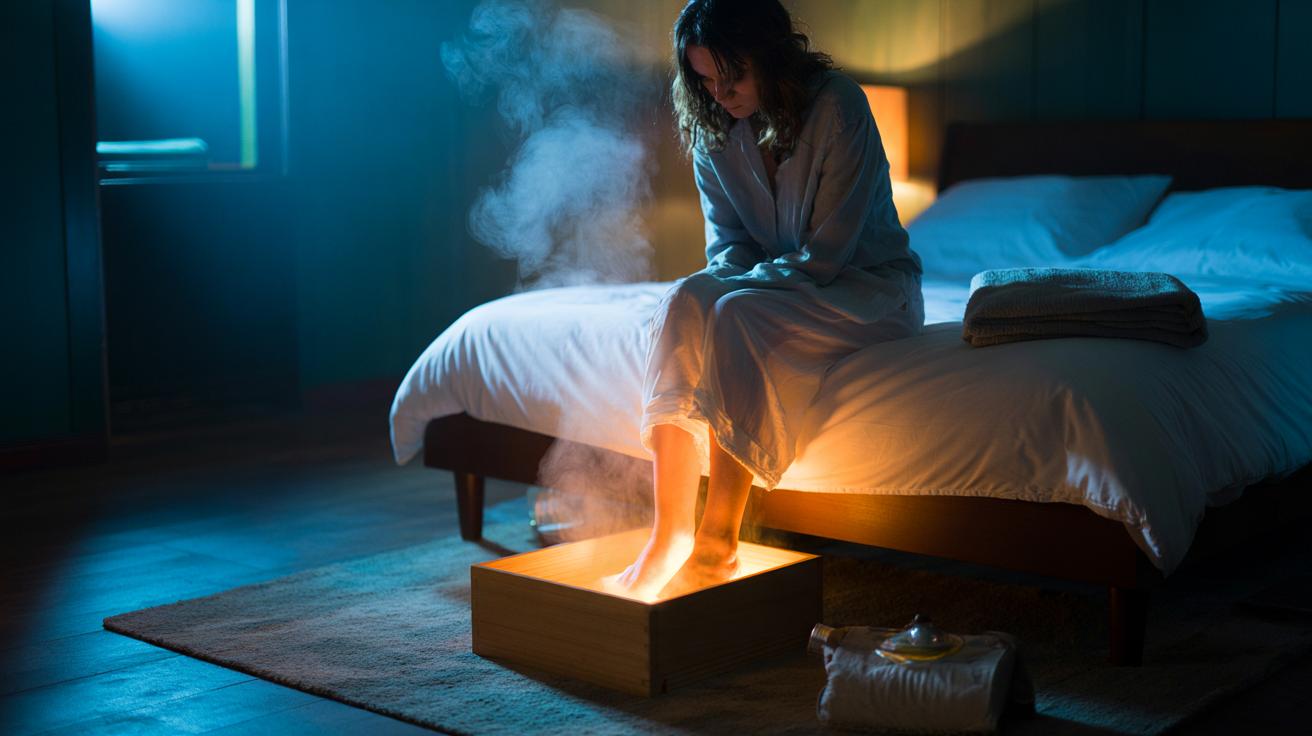
About 30–60 minutes before bed, soak your feet in warm water for 10 minutes at roughly 37–40°C. Dry them well, then put on loose, breathable socks. The aim is comfort and gentle warmth, not heat. Keep the bedroom cool, ideally 16–18°C, to promote the skin‑to‑air heat gradient that drives core cooling. Dim lights and avoid stimulating screens to support melatonin release. Many people find combining this routine with a quiet wind‑down, such as reading or a short breathing exercise, compounds the benefit.
Test water with your hand first and avoid anything that feels hot or tingly. Do not place hot items directly on skin during sleep. A microwavable wheat bag or a hot‑water bottle near—but not touching—your feet can maintain mild warmth as you settle. Consistency helps: repeat the routine at the same time nightly for a week to gauge your response. If you wake hot, ease back the warmth or shorten the soak.
| Method | What to Do | Duration | Expected Effect | Safety Note |
|---|---|---|---|---|
| Warm foot soak | Water at 37–40°C, dry, add socks | 10 minutes | Promotes vasodilation, faster sleep | Test temperature; avoid scalds |
| Warm socks only | Loose merino or bamboo socks | Overnight if comfy | Maintains mild distal warmth | No tight bands; keep breathable |
| Wheat bag/Hot‑water bottle | Place near feet, not on skin | As you fall asleep | Gentle sustained warmth | Check covers; avoid overheating |
Smart Add-Ons: Socks, Baths, and Bedroom Tweaks
Choose socks that trap a pocket of air without compressing. Merino, cashmere blends, or bamboo viscose breathe well and resist clamminess. If a soak isn’t convenient, try a warm shower, letting water run over your feet for a few minutes before drying and donning socks. The goal remains the same: warm feet, cool room. Keep bedding layered so you can shed warmth if you start to overheat. A light duvet and a separate throw at the foot of the bed gives you simple, sleepy‑friendly control.
Small environmental tweaks amplify the effect. Dim lamps an hour before bed, keep screens out of the bedroom, and aim for quiet, steady airflow. A fan can assist the skin‑to‑air heat exchange without chilling you. If you’re sensitive to temperature swings, pre‑warm your feet then step into a room set near 17°C. Regular timing, calm routines, and this gentle thermal nudge often combine to produce a smoother descent into sleep.
Who Should Be Cautious and When to Seek Advice
Take care if you live with diabetes, peripheral neuropathy, or vascular disease, as reduced sensation raises burn risk. Use mild warmth only, avoid electric heat pads in bed, and inspect skin for redness. People with Raynaud’s may find the trick comforting, but should still steer clear of hot water. In pregnancy, gentle foot warmth is generally fine; skip high heat and heavy electric blankets. For children, opt for socks rather than hot‑water bottles, and supervise any pre‑bed soak.
Persistent insomnia, loud snoring with pauses in breathing, night sweats, or unexplained temperature intolerance warrant a chat with your GP. The warm feet trick is a behavioural aid, not a cure‑all. If pain, anxiety, or shift work is keeping you up, a broader plan—sleep scheduling, light management, or cognitive behavioural strategies—may be needed. Use the routine as a low‑risk trial for two weeks; if there’s no improvement, reassess and consider professional guidance.
Sleep thrives on simple signals, and warming your feet is one of the most elegant: a small comfort that unlocks the body’s natural cooling cascade. Pair mild distal warmth with a cooler room, dim light, and predictable timing, and you stack the odds in favour of a quicker lights‑out. Warm the feet to cool the core, then let drowsiness do the rest. Will you try a soak, socks, or a nearby heat source tonight—and which combination feels like the easiest, most sustainable addition to your bedtime routine?
Did you like it?4.5/5 (29)