In a nutshell
- 🧪 Acetic acid in white vinegar dissolves limescale and soap scum by converting calcium deposits into soluble salts, delivering instant clarity.
- ⚡ Quick method: mix 1:1 warm water and vinegar, soak 5–10 minutes or wipe for 30 seconds, then rinse and dry; place a cup of vinegar on the top rack for the rinse phase (not the reservoir).
- 🔍 Diagnose the haze: shine returns with vinegar = residue; frosty even when wet = etching, which vinegar cannot repair.
- 🛡️ Prevention tips: lower dishwasher heat, use minimal detergent, load glasses on the top rack, set water softener correctly, and consider filtered rinsing plus periodic vinegar maintenance.
- ⚠️ Care notes: avoid prolonged vinegar on decorated or gilt glass, keep acids off marble/limestone surfaces, and use plain distilled or spirit vinegar to prevent aromas and residue.
Across UK kitchens, a dull, cloudy film on glassware can turn a dinner party’s stemware into a disappointment. The fix arrives from the cupboard, not the chemist: everyday white vinegar revives clarity quickly and safely. Powered by mild acetic acid, vinegar unlocks the mineral and soap residues that blur shine, restoring a crisp, showroom sparkle. The trick is understanding what causes the haze, and applying a simple routine that works in minutes. Below, we explain the science, offer a step-by-step method, and show how to distinguish removable film from permanent etching, so you can polish like a pro without buying specialist products.
The Science: Why Vinegar Dissolves the Haze
That grey veil is usually limescale from hard water or stubborn detergent salts. Vinegar’s acetic acid reacts with calcium carbonate and magnesium deposits, turning them into water‑soluble salts and carbon dioxide. In plain terms, it converts gritty, light-scattering residue into something that rinses away cleanly. Because this reaction is fast at room temperature, you see an instant polish rather than a slow soak. The mildly acidic pH also breaks down soap scum (calcium stearate), which is why fingerprints and rainbow smears vanish alongside chalky spots.
There is a crucial caveat: etching—microscopic erosion caused by hot, alkaline wash cycles—cannot be reversed by acid. If the glass looks frosted even when wet, it’s likely etched, not dirty. For everything else, vinegar’s speed and low toxicity make it the ideal first-line cleaner. Use plain distilled or spirit vinegar; flavoured vinegars can leave sugars or aromas behind.
Step-by-Step: Instant Polish With Household Vinegar
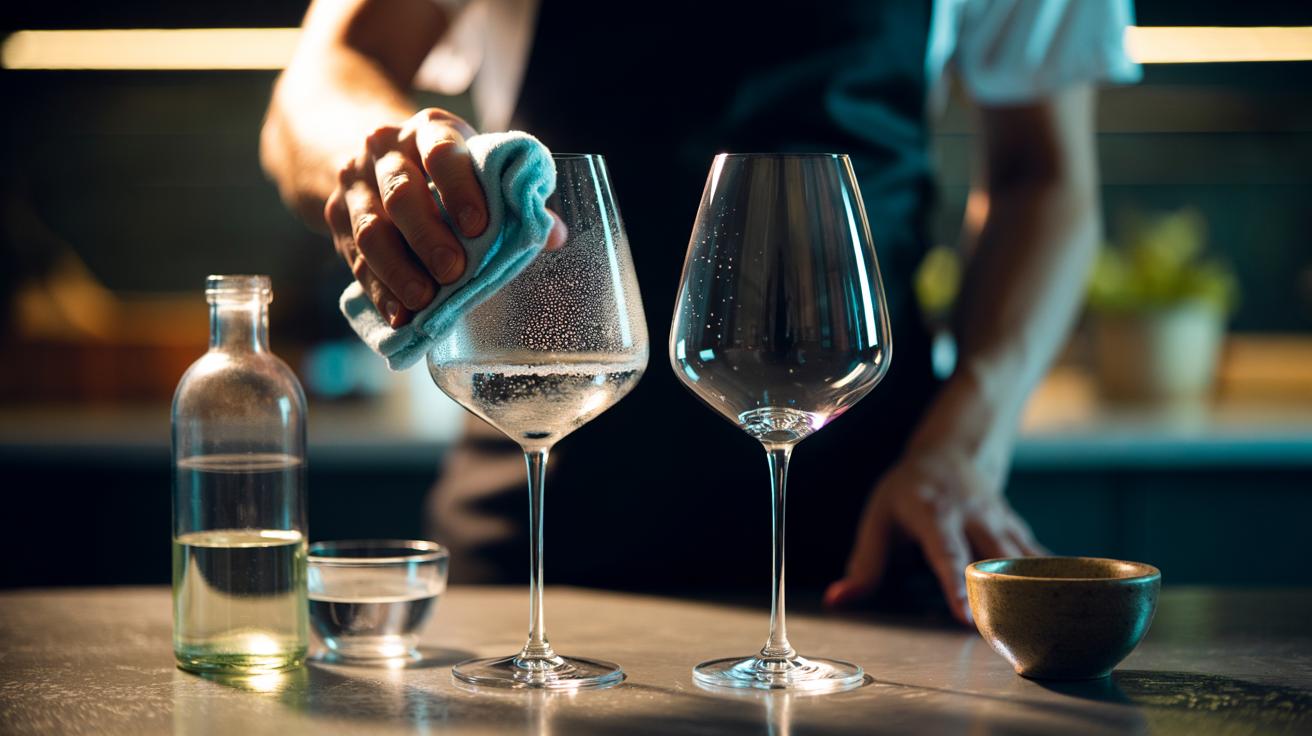
1) Prepare a 1:1 mix of warm water and white vinegar in a bowl or sink. For heavy scale, use vinegar neat. 2) Submerge glasses for 5–10 minutes, or wipe affected areas with a soft microfibre cloth soaked in the solution. A 30‑second wipe is often enough for fresh deposits. 3) Rinse thoroughly with clean water—ideally filtered or deionised to prevent new spots. 4) Dry immediately using a lint‑free towel, holding the bowl and stem separately to avoid torque.
Dishwasher quick fix: place a heat‑safe cup of vinegar on the top rack for the rinse phase only; do not pour vinegar into the rinse‑aid reservoir. Avoid prolonged contact on decorated, gilt-rimmed, or hand-painted glass. For decanters, fill with warm vinegar solution, swirl with uncooked rice to dislodge scale, then rinse well. If your home has very hard water, consider a rinse aid plus periodic vinegar maintenance to keep clarity between deep cleans.
When Vinegar Won’t Help: Etched vs Cloudy
Not all haze is created equal. If a single wipe with vinegar restores lustre, you’re dealing with mineral film or detergent residue. If the surface looks matte or milky even when wet, the glass may be etched—typically from high heat, excessive detergent, or overly soft water that encourages aggressive cleaning action. Vinegar removes residue; it cannot rebuild glass that’s been microscopically roughened. Use this quick test: dab vinegar on a spot, wait 30 seconds, and rinse. Shine returns? It’s residue. No change? It’s likely etching.
| Cause | What You See | Fix With Vinegar? | Time Needed |
|---|---|---|---|
| Limescale (hard water) | Chalky spots, grey film | Yes — dissolves deposits | 30 seconds to 10 minutes |
| Detergent residue | Rainbow sheen, smeary patches | Yes — breaks soap scum | 1–3 minutes |
| Etching (heat + alkalinity) | Permanent frostiness, even when wet | No — irreversible wear | Not applicable |
To prevent etching, lower dishwasher temperature, use the lightest effective detergent, load glasses on the top rack, and avoid marathon cycles. Ensure softeners are set correctly for your local water hardness. Never leave vinegar to pool on marble or limestone worktops while you work.
Vinegar earns its place in the cleaning arsenal because it is cheap, effective, and quick—ideal for restoring glass brilliance before guests arrive. The key is diagnosis: remove mineral film fast, but recognise when cloudiness is etched and switch to prevention. With a jug of vinegar, a soft cloth, and smarter dishwasher habits, your glasses can gleam like new in minutes. Will you try the instant wipe, the short soak, or both, and which tweak—lower heat, less detergent, or filtered rinse—makes the biggest difference in your kitchen?
Did you like it?4.5/5 (22)