In a nutshell
- 🧪 Citric acid in fresh lemon rapidly dissolves limescale and soap scum through mild acid reaction and gentle abrasion.
- ⏱️ Under-a-minute method: dry the tap, press a halved lemon on the aerator and base for 20–30 seconds each, rinse, then buff with a microfibre cloth.
- ✨ Best for light deposits on chrome, stainless steel, glass, and ceramic; an ideal quick-maintenance tactic in hard-water homes.
- ⚠️ Limits and care: avoid prolonged contact on brushed nickel, lacquered brass, and natural stone like marble; use stronger soaks for heavy build-up and protect seals.
- 🔄 Comparisons: lemon wins for speed and scent; white vinegar excels in longer soaks for moderate scale; cream cleaners remove grime but can leave residue.
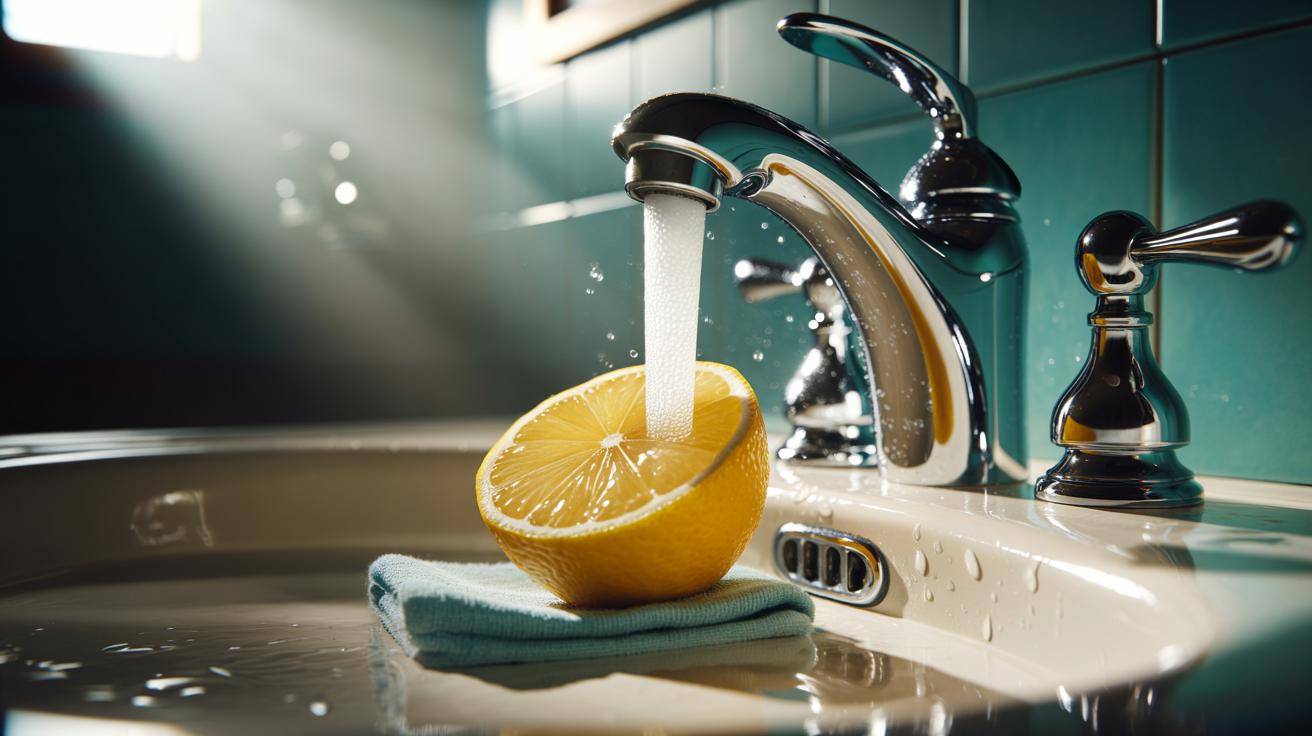
Under Britain’s hard-water skies, gleaming taps don’t stay gleaming for long. White crusts bloom around the aerator, a chalky ring grips the base, and water marks dim the shine. The quickest rescue is hiding in the fruit bowl: a halved lemon. Its citric acid blitzes limescale, loosens soap scum, and leaves a bright, clean scent that feels instantly fresh. A quick squeeze, a firm press, and a minute later the dullness lifts, no harsh chemicals, no fuss. Chrome, stainless steel, and a microfibre cloth are the only supporting cast required. A halved lemon can restore a dull tap to showroom sparkle in under 60 seconds.
The Science of Speed: Citric Acid vs Limescale
Fresh lemon delivers a compact chemistry lesson on your tap. The juice carries citric acid, a mild organic acid that chelates metal ions and reacts with calcium carbonate—the building block of household limescale. As the acid meets the carbonate, it forms soluble calcium citrate and releases a whisper of carbon dioxide, which gently disrupts the crust. The peel’s texture adds soft abrasion, while the juice’s low pH cuts thin films of soap scum. It’s a one-two punch: chemical dissolution plus light mechanical lift, all in seconds.
Speed comes from concentration and contact. Lemon juice sits around pH 2; that’s potent enough to nibble through a thin limescale veil almost on contact. Pressing the cut face directly onto the aerator or base ensures full-strength action without dilution. Because the acid is weak and the exposure short, finishes like chrome tolerate it well. The key is fresh juice, firm pressure, and a focused 30–60 seconds on the worst spots—no elbow-busting scrubbing required.
How to Get a Mirror Finish in Under a Minute
Start with a dry surface, so the acid won’t be watered down. Halve a fresh lemon and pick out obvious pips. For sensitive skin, consider light gloves. Turn off the tap, wipe away puddles, and have a microfibre cloth to hand. Dry first, then apply—this simple order protects the acid’s bite and shortens the job.
Press the cut lemon onto the aerator and let it sit for about 20 seconds, applying slight pressure and a twisting motion to coax the juice into the mesh. Next, sweep around the base where rings form, again giving 20–30 seconds of contact. Rinse quickly with warm water and buff dry with the microfibre cloth, working top to bottom to avoid drip marks. For a flourish, a single drop of food-grade oil on the cloth can add temporary beading. Keep acids away from natural stone splashbacks and sealant edges—precision beats mess every time.
When Lemon Works Best—and When It Doesn’t
Lemon excels on light limescale, fresh water spots, and soap residue across chrome, stainless steel, glass, and ceramic. It’s especially handy in hard-water zones across the South East and Midlands, where daily deposits accumulate fast. The quick-hit method shines as a maintenance ritual: a 60-second pass after weekend cleaning, or a rapid refresh before guests arrive. Its natural oils add a brief gloss, and the fragrance neatly cancels bathroom odours without synthetic sprays. Think of it as a smart, swift top-up rather than a deep descale.
There are limits. Thick, aged limescale around base plates or under leaky taps often needs longer soaks or a stronger descaler. Be cautious with brushed nickel, lacquered brass, and living finishes that can patinate; always spot test. Keep acids off marble, limestone, and concrete worktops, which etch easily. Rubber gaskets won’t love prolonged exposure, so avoid drenching seals. If deposits persist, remove the aerator and soak it in warm water and mild white vinegar before a lemon-led polish. Use lemon for speed; use time and tools for heavy build-up.
Speedy Comparisons: Lemon, Vinegar, and Shop Cleaners
Plenty of routes lead to shine, but not all are built for haste. Lemon is fast, tactile, and aromatic. White vinegar is thorough and cheap, yet slower without heat or extended soaking. Shop-bought cream cleaners bring surfactants and abrasives, shifting grime quickly but at the cost of rinsing and residue. The table below sets out the essentials for a tap-side decision.
| Method | Typical Contact Time | Best For | Notes |
|---|---|---|---|
| Lemon (fresh) | 30–60 seconds | Light limescale, soap film, quick shine | Smells fresh; spot test on delicate finishes |
| White vinegar | 10–30 minutes | Moderate scale, removable aerators | Odour fades; avoid natural stone surfaces |
| Cream cleaner | 1–2 minutes | Grime and staining | Requires thorough rinse; can haze soft metals |
For speed and scent, the lemon wins. For entrenched scale, vinegar soaks work while you get on with other tasks. Creams are a pragmatic middle ground when soap scum and fingerprints dominate. When guests are en route and the basin needs theatre lighting, a lemon half is the sure-fire, sprint-finish option.
Lemon-powered polishing is a tiny act with outsized impact: a lively fizz, a few diligent presses, and a tap reborn in less than a minute. It’s frugal, eco-friendly, and easy to fold into weekly routines, tempering the worst effects of hard water without a cupboard of chemicals. Treat it as a first response, then escalate only if build-up demands it. The bonus is the sensory one: a clean scent that tells the room it’s cared for. Will you put a lemon to work this week—or is there another quick ritual that gives your fixtures their best, lasting shine?
Did you like it?4.5/5 (26)