In a nutshell
- 🧪 The science: non‑polar oils mingle with pressure‑sensitive adhesives, plasticising the glue so it releases; finish by washing with washing‑up liquid to emulsify leftover oil.
- 🛠️ Step‑by‑step: peel and briefly warm, apply a thin film of oil, dwell 1–5 minutes, lift with a plastic card or microfibre, then soap rinse (vinegar shine for glass).
- 🧴 Choosing the right oil: vegetable oils for glass/ceramic/steel, mineral (baby) oil for plastics/painted metal, coconut for verticals, diluted citrus oil for stubborn gunk—always patch‑test.
- 🧰 Surface‑specific tips: plastics need gentle oils; painted walls/varnished wood get short dwell and light blotting; fabrics need backing paper and pre‑treat; avoid common pitfalls like too much oil or mixing cleaners.
- 📊 Quick reference: a simple table pairs oils with “Best For” and “Cautions”; guiding rule—start mild, use little, wait, then lift gently for clean, safe results.
Price stickers on jam jars. Security labels on new tech. Tape ghosts on window frames. Few domestic irritations linger like sticky residue. Yet an unglamorous hero sits in your cupboard: oil. From olive to mineral, a light application can release gluey films that hot water won’t budge. It’s not magic; it’s chemistry you can harness with a soft cloth and patience. When like dissolves like, adhesive gives up its grip. This method protects delicate finishes, avoids harsh solvents, and costs pennies. Here’s how the trick works, why it excels on labels and adhesive remains, and the smart way to choose the right oil for the surface in front of you.
Why Oil Lifts Sticky Residue
Pressure‑sensitive adhesives cling through viscoelasticity: tackifiers and resins flow under light pressure, then hold fast. Most of these glues are largely non‑polar. Oils are non‑polar too, so they mingle with the adhesive’s polymer matrix. That’s the key. The oil seeps in via capillary action, plasticises the glue, and lowers its glass‑transition behaviour, turning a stubborn mass into something that slides rather than bites. This non‑polar meets non‑polar principle is why oil works when soap alone fails.
Because oil doesn’t flash off like alcohol, it stays put long enough to penetrate aged residue. Give it time; seconds for fresh labels, several minutes for sun‑baked tape. As the glue softens, a microfibre cloth or plastic card lifts it without scratching. Expect smearing at first. That’s normal: you’re moving, then collecting, the dissolved adhesive. Finish with warm water plus a squirt of washing‑up liquid to emulsify leftover oil. Always remove the oil film, or dust will settle and the surface will feel tacky again.
Choosing the Right Oil and When to Use It
Most households already have workable options. Kitchen vegetable oils (olive, rapeseed, sunflower) are mild and effective on glass, ceramics and metal. Mineral oil (often sold as baby oil) is colourless and less aromatic, handy for plastics and painted metal. Semi‑solid coconut oil clings to vertical frames, so it won’t run. For hardened gunk, a few drops of citrus oil (d‑limonene) diluted into a carrier can boost solvency. Always patch‑test potent essential oils; they’re strong solvents in their own right.
| Oil | Best For | Cautions |
|---|---|---|
| Olive/Rapeseed/Sunflower | Glass, ceramics, stainless steel | Can leave scent; wash thoroughly |
| Mineral/Baby Oil | Plastics, painted metal, coated wood | May smear; avoid fabrics |
| Coconut Oil | Vertical trim, frames, thick labels | Solid in cold; may cloud glass |
| Citrus Oil (Diluted) | Aged, stubborn residue | Patch‑test on plastics and varnish |
| Eucalyptus/Tea Tree (Diluted) | Sticker ink, tar traces | Strong aroma; avoid bare wood |
Match the oil to the finish. If in doubt, start mild. A tiny amount on a corner tells you plenty. Use as little as necessary, wait, then lift gently. It’s quicker than scrubbing and far safer than aggressive solvents for everyday jobs.
Step‑By‑Step Method for Labels and Tape Gunk
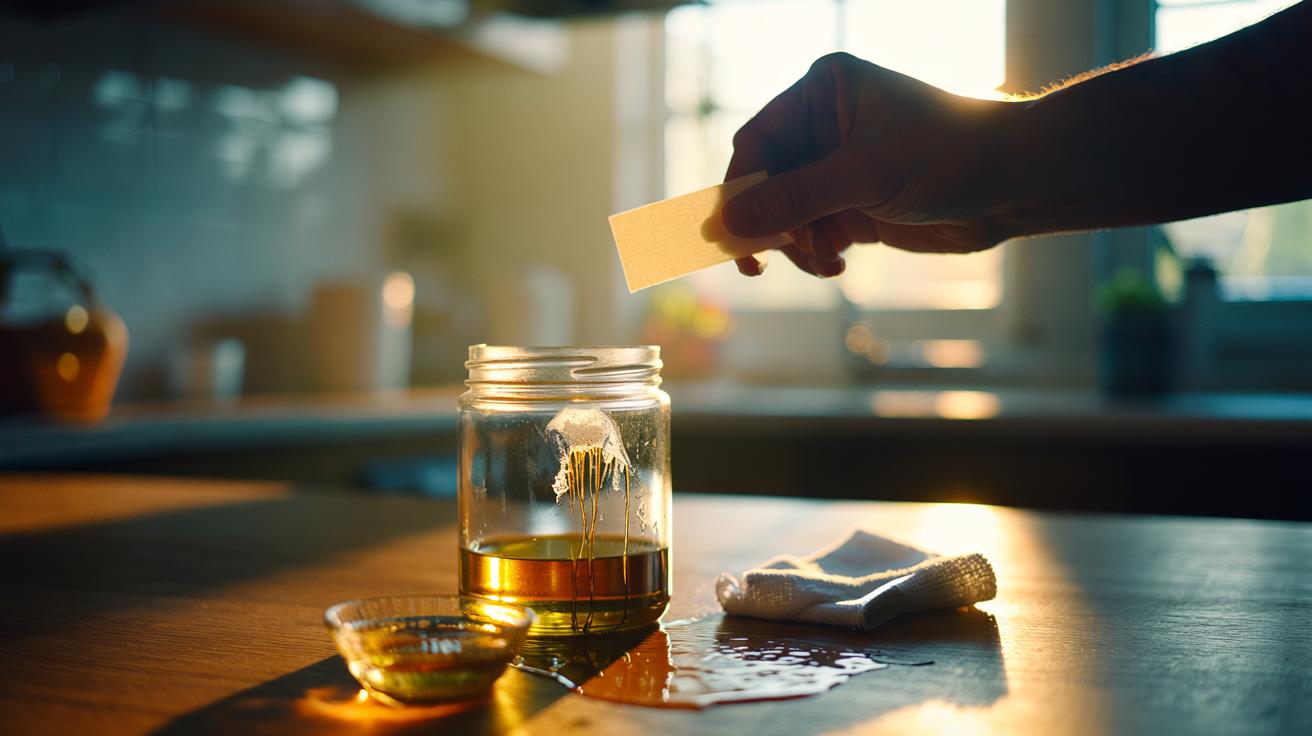
First, peel off what you can without force. Warm the label with a hairdryer for 10–15 seconds if it’s stubborn; heat softens the adhesive and reduces tearing. Now apply a thin film of oil with a cotton pad or fingertips. Don’t flood the surface—just enough to wet the residue. Let it sit. Fresh stickers often release in one minute; old residue might need five.
Use a plastic loyalty card to coax up the softened glue at a shallow angle. Wipe the blade on kitchen roll as it loads. Reapply a drop of oil if dry patches resist. For embossed bottles or textured plastics, switch to a soft toothbrush and tiny circular strokes. Keep the pressure light so you’re not driving grit across the finish. When the gunk is gone, you’ll have an oily sheen. That’s fine.
Clean down: mix warm water with a squirt of washing‑up liquid, then wipe to emulsify and lift any remaining film. Buff dry with microfibre. On glass, a final spritz of vinegar leaves it crystal‑clear. If any haze remains, repeat a short dwell and clean rather than scraping harder. Patience beats abrasion every time.
Surface‑Specific Tips and Common Pitfalls
Glass and glazed ceramics are forgiving. Use any mild vegetable oil, dwell, wipe, then wash. Stainless steel appliances clean well but show streaks: polish along the grain after washing to avoid patchiness. Plastics vary. Polycarbonate and acrylic can craze with strong solvents, so stick to mineral or kitchen oils and avoid undiluted citrus. Always patch‑test plastics behind a bezel or on an underside.
On painted walls and powder‑coated radiators, go gentle: dab on mineral oil, keep dwell short, and blot rather than scrub. Varnished wood is usually fine with minimal oil and swift soap‑and‑water removal; bare wood is thirsty and can stain, so use a barely dampened cloth and immediate washing. Fabric? Place kitchen roll beneath, dab a drop of mineral oil on the residue, then lift with a spoon edge; pre‑treat with detergent before laundering.
Common mistakes: using too much oil (spreads the mess), rushing the dwell, and mixing cleaners (ammonia, bleach, and oils don’t play nicely). Never pair oil with open flame or heat guns near flammable vapours. If residue still laughs at you, combine tactics: brief warmth, a fresh drop of oil, then a proper soap rinse. The sequence matters as much as the product.
Oil is the calm antidote to sticky chaos. It slips beneath the glue, loosens its hold, and lets you wipe away the mess without gouging surfaces or breathing harsh fumes. A teaspoon, a cloth, a minute or two—job done. Keep it simple, keep it gentle, keep it clean. Next time a label fights back, you’ll know exactly what to reach for and why it works. Which surface in your home do you most want to rescue from stubborn adhesive, and what oil will you try first?
Did you like it?4.5/5 (30)