In a nutshell
- ✅ The Squeegee + Sock Hack delivers streak-free patio doors from ground level—pair a telescopic squeegee with a clean microfibre sock to lift grime and control drips, no ladders needed.
- 🧽 Step-by-step: use warm water with a drop of washing-up liquid, scrub with the damp sock, then pull the squeegee top-to-bottom, wiping the blade after each pass, and detail edges with a dry sock.
- 🧰 Tools & ratios: quality rubber blade, microfibre socks, extendable pole; mix about 1–2 drops per litre, work in shade, and add a splash of vinegar for hard-water spots.
- ⚠️ Safety & care: stay grounded with an extendable pole, avoid abrasives, soften dried debris before removal, and maintain kit—rinse socks, replace rounded rubbers, and launder without fabric softener for lint-free results.
- ✨ Benefits: fast, low-cost, and scalable for tall panes and bi-folds; consistency in process beats spray-only cleaning and delivers a crisp, smear-free finish every time.
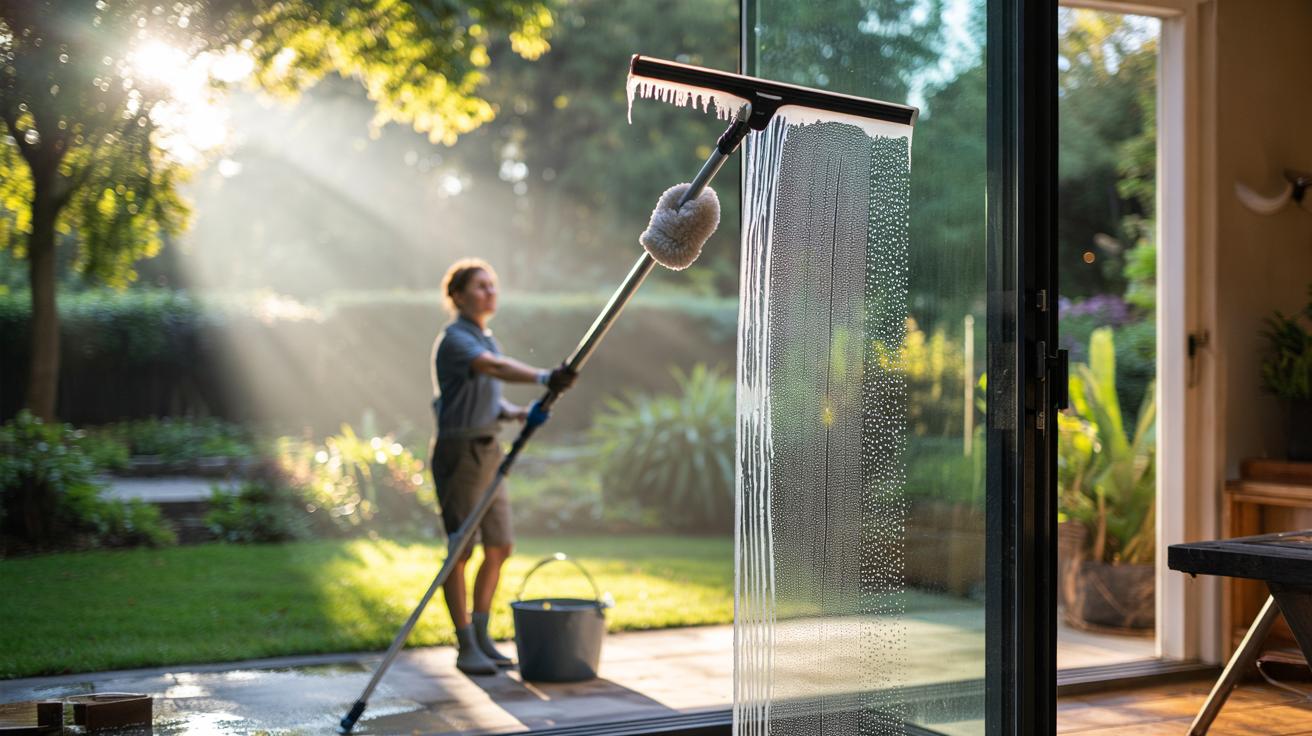
Patio doors invite light into a home, but every smudge, water spot, and greasy fingerprint shows—especially when the sun moves round. If you dread balancing on a ladder with a spray bottle, there’s a smarter route. The squeegee + sock hack blends professional window-cleaning technique with things you already own, giving you a sparkling finish in minutes, without drama. By pairing a telescopic squeegee with a clean microfibre sock, you lift dirt, control drips, and cut out the streaks that sprays often leave behind. This low-cost, low-risk method keeps both feet on the ground and produces a crisp, clear view, even on tall panes and awkward external sliders.
How the Squeegee + Sock Trick Works
Traditional sprays leave residue; towels push it around. A squeegee moves water off the glass in one pass, while a sock sleeve acts as a gentle scrubber and a drip-catcher. Slide a clean microfibre or cotton sock over the squeegee’s sponge side or over a small pad on a pole. Wet it with a mild mix of warm water and a drop of washing‑up liquid. The fibres break the bond between grime and glass, then the rubber blade clears the solution before it dries. Removing liquid before evaporation is the single biggest factor in avoiding streaks, especially on sunlit doors.
The sock also solves the fiddly bits. It absorbs beaded water along edges, catches runs under the frame, and buffs tight corners where blades cannot reach. Paired with a telescopic handle, you can clean top panes at height, keep pressure even, and maintain a smooth downward pull—no wobbly ladder, no missed swirls. Clean contact plus controlled removal equals a clear, smear‑free finish.
Step-By-Step: Streak-Free Patio Doors at Ground Level
Start by brushing off cobwebs and grit from the tracks and frame. Mix a bucket of warm water with a pea-sized blob of washing‑up liquid; too much suds can film the glass. Slip a dry, lint‑free sock over a small pad or the squeegee’s sponge side, dip, and wring so it’s damp rather than dripping. Wipe the glass in overlapping strokes, loosening pollen, fingerprints, and greasy marks. A light solution and gentle pressure protect coatings and seals.
Now switch to the squeegee blade. Starting at the top, pull down in straight, steady passes. Wipe the blade on a dry section of the sock after each stroke to avoid trails. Angle the blade slightly so water runs towards the side you’ve already cleared. Use a second dry sock on the pole to “detail”: dab edges, corners, and the bottom lip where drips gather. Repeat on the outside pane, working in shade if possible to slow drying.
Finish by running the dry sock around the frame and tracks to prevent rust stains and mould spots. If you spot a faint mark, breathe lightly on the area and buff with the sock—your breath adds just enough moisture to reset the sheen. Two tools, two minutes per pane, and no streaks.
Tools, Ratios, and Time-Saving Tips
The simplicity of this method lies in choosing the right basics and keeping them consistent. A quality rubber squeegee leaves a crisp edge; a microfibre sock provides fine agitation and absorbency; a telescopic pole extends your reach. Keep the solution mild—detergent is a surfactant, not a perfume, so you only need enough to break surface tension. Less foam means less residue and fewer streaks. Replace tired blades and rotate clean socks to stay ahead of lint and oils that can smear the surface.
| Item | Why It Matters | Notes |
|---|---|---|
| Telescopic squeegee | Even pressure without a ladder | Look for a firm, replaceable rubber blade |
| Microfibre sock | Lifts grime, catches drips | Wash separately; avoid fabric softener |
| Warm water + washing‑up liquid | Cuts grease with minimal residue | About 1–2 drops per litre |
| Dry detailing sock | Edge and corner finishing | Keep it bone dry for best buffing |
Work top to bottom, shade over sun, and inside before outside. If glass is very dirty, pre‑rinse with a watering can to avoid grinding grit. For hard water spots, add a splash of white vinegar to the bucket, then rinse and squeegee as usual. Consistency in process beats any “miracle” spray.
Safety, Maintenance, and Eco Considerations
Patio openings tempt people onto ladders, yet most panes are reachable with a modest extendable pole. Keep your stance square to the glass, hold the handle with both hands, and use smooth, controlled pulls—your shoulders do the work, not your wrists. Stability on the ground is safer and more accurate than balancing at height. Avoid abrasive powders that scratch coatings, and never jab at dried bird mess; soften it first with the damp sock, then squeegee away. If seals are perished, keep water minimal along the edges.
After each session, rinse the sock and blade in clean water and air‑dry. Replace squeegee rubbers when the edge rounds off or leaves faint lines. For a greener routine, choose fragrance‑free washing‑up liquid, reuse grey water for pre‑rinsing, and launder socks on a cool cycle. The result is a clearer view and less waste. Good kit, cared for, lasts longer and cleans better.
With a squeegee, two clean socks, and a bucket, patio doors go from smeary to showroom in one unhurried sweep. The technique is quick to learn, gentle on glass, and kind to joints and budgets. It also scales: add a slightly longer pole for bi‑folds, switch to distilled water if your area is hard, and keep a dedicated dry sock for final detailing. Once you master the rhythm—wash, pull, detail—the streaks stop appearing. Which part of your home would benefit most from a ground‑level, streak‑free clean next, and what’s stopping you from trying it this weekend?
Did you like it?4.6/5 (30)