In a nutshell
- 🧪 The science: acetic acid in vinegar reacts with calcium carbonate limescale, forming soluble salts and CO₂, dissolving deposits gently without abrasive scrubbing.
- 🛠️ Method: Use an overnight soak (bowl or bag for fixed heads), adjust dilution by buildup level, and keep vinegar off natural stone; warm undiluted vinegar tackles heavy crusts.
- 🚿 Aftercare: Brush loosened deposits, flex rubber nozzles, rinse and flush hot water, and use PTFE tape when refitting—expect a fuller, more even spray and brighter finish.
- ⚠️ Safety: Never mix vinegar with bleach; avoid marble/limestone surfaces; limit exposure on plated finishes; protect seals and thermostatic parts with shorter, monitored soaks.
- ♻️ Ongoing upkeep: Adopt monthly maintenance in hard-water areas to prevent heavy buildup, cut chemical use and costs, and sustain water pressure and efficiency.
Britain’s hard water leaves tell-tale chalky crusts on taps and showerheads, throttling flow and spoiling the shine. A simple soak in household vinegar can restore fixtures without specialist products or elbow-grease. The secret is chemistry: the mild acid dissolves stubborn mineral deposits while you sleep. For tenants and homeowners alike, this low-cost fix rescues pressure, refreshes spray patterns, and pares back plastic bottles under the sink. What sounds like a folk remedy is a well-understood reaction between acid and alkaline scale. With a bag, a jug, and a towel, your shower can go from sputtering to sparkling by morning—no plumber, no harsh fumes, and no scratches on delicate finishes.
Why Vinegar Works on Limescale
Limescale is primarily calcium carbonate, the chalky residue formed as hard water dries. White vinegar contains about 5% acetic acid, which reacts with that carbonate to form soluble calcium acetate, water, and carbon dioxide bubbles. The fizz you see is the reaction liberating CO₂, a visual cue that deposits are actively dissolving. This simple acid–base exchange turns crusty build-up into a rinseable solution. Because vinegar’s acidity is modest, it’s strong enough to break the mineral bonds yet gentle on most metals and plastics when exposure is controlled.
Chemistry aside, there’s smart physics at play. A soak exposes every clogged nozzle and thread to a consistent pH, avoiding the streaks and scratches of abrasive scrubbing. The liquid penetrates micro-crevices where scale anchors. As fresh acid diffuses to the surface, spent solution moves away, keeping the reaction going. That’s why an overnight immersion often outperforms quick sprays or wipes. Stainless steel, chrome, and most ABS plastic heads tolerate this treatment well, though plated finishes benefit from diluted vinegar and shorter times to protect their lustre.
Step-by-Step: Overnight Soak for Any Showerhead
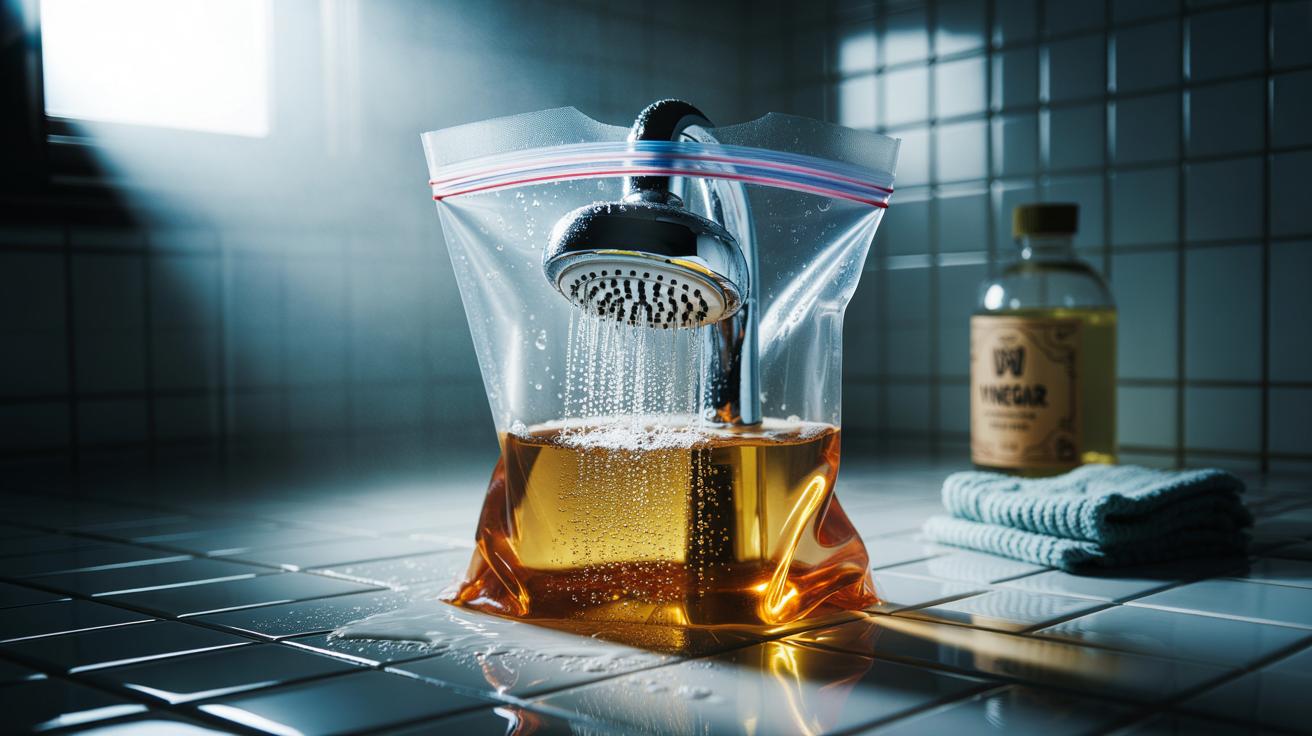
Gather a jug of white vinegar, a container or sturdy food bag, an elastic band or tape, a soft brush, and a towel. If the showerhead unscrews easily, remove it and place it in a bowl of vinegar to submerge. If it’s fixed, fill a bag with vinegar and secure it around the head so the faceplate is fully covered. Keep vinegar off natural stone tiles and unsealed grout to avoid etching. For delicate finishes, cut with equal parts water. Ensure ventilation, then leave the head untouched to let chemistry do the heavy lifting.
| Build-up Level | Vinegar Strength | Soak Time | Notes |
|---|---|---|---|
| Light film | 1:1 vinegar:water | 1–3 hours | Good for plated finishes |
| Moderate scale | Undiluted | 4–8 hours | Check at 4 hours; extend if needed |
| Heavy crust | Undiluted (warm) | 8–12 hours | Scrub gently mid-soak to refresh surface |
After the soak, scrub with a soft toothbrush to lift loosened deposits, paying attention to each nozzle. For rubberised jets, rub them between thumb and forefinger to eject grit. Rinse thoroughly, then run hot water for a minute to purge residual vinegar and debris. If you removed the head, rewrap the thread with PTFE tape before refitting to prevent leaks. The result should be a fuller, more even spray and a brighter faceplate. Finish with a microfibre wipe to deter water spots and slow the return of scale.
Safety, Materials, and What to Avoid
Vinegar is a household staple, but it deserves respect. Never mix vinegar with bleach or chlorine-based cleaners, as this releases toxic chlorine gas. Keep splashes off marble, limestone, and travertine, which are calcium-based stones vulnerable to etching. For plated chrome or brushed nickel, favour shorter soaks and diluted solutions to protect the finish. If a manufacturer’s guide forbids acidic cleaners, apply the bag method with a lower concentration and monitor closely, or remove the head and soak only the faceplate.
Mind seals and components. Rubber O-rings and silicone nozzles generally tolerate brief exposure, but avoid overnight submersion of internal cartridges or thermostatic elements unless specified. Wear gloves if you have sensitive skin, and open a window to disperse any tangy vapour. For homes in very hard-water regions, fit an inline filter or schedule a monthly vinegar maintenance to prevent heavy build-up. Regular light soaks are gentler on finishes and keep water flow consistent, saving on both cleaning effort and hot-water energy as spray patterns remain efficient.
Vinegar’s quiet power is a win for budgets and bathrooms: it rescues water pressure, revives shine, and trims chemical clutter. Underneath the thrift is real science: acetic acid dissolves the mineral scaffold that strangles spray, and a careful soak gives it time to work. As a habit, a quick monthly dip can stop scale in its tracks, leaving only a simple rinse and wipe. If your shower has been lacklustre lately, a measured soak may be the overnight reset it needs. Will you give the bag-and-vinegar method a try this week and track how your spray pattern and pressure improve?
Did you like it?4.5/5 (22)