In a nutshell
- 🧪 Tarnish is silver sulphide (Ag2S) formed by trace sulphur; a foil bath uses electrochemistry—aluminium acts as a sacrificial anode, bicarbonate of soda as the electrolyte, and heat to convert Ag2S back to silver with no abrasion.
- 🔥 Method: line a heatproof bowl with aluminium foil, add boiling water and bicarbonate of soda (pinch of salt optional), ensure silver touches the foil for 2–5 minutes, then rinse and dry; do not polish vigorously.
- ⚠️ Safety: work ventilated and remove items promptly; avoid on plated items, lacquered or intentionally oxidised finishes, coins, and pieces with adhesives or enamel.
- 💎 Gemstones: keep hot, alkaline baths away from porous or delicate stones such as pearls, opals, turquoise and amber; test inconspicuous areas if unsure.
- 🧼 Benefits and care: preserves crisp detail versus abrasive polishes; components’ roles are clear (foil anode, bicarbonate electrolyte, heat booster); store clean silver in anti-tarnish pouches with silica gel and use pieces regularly.
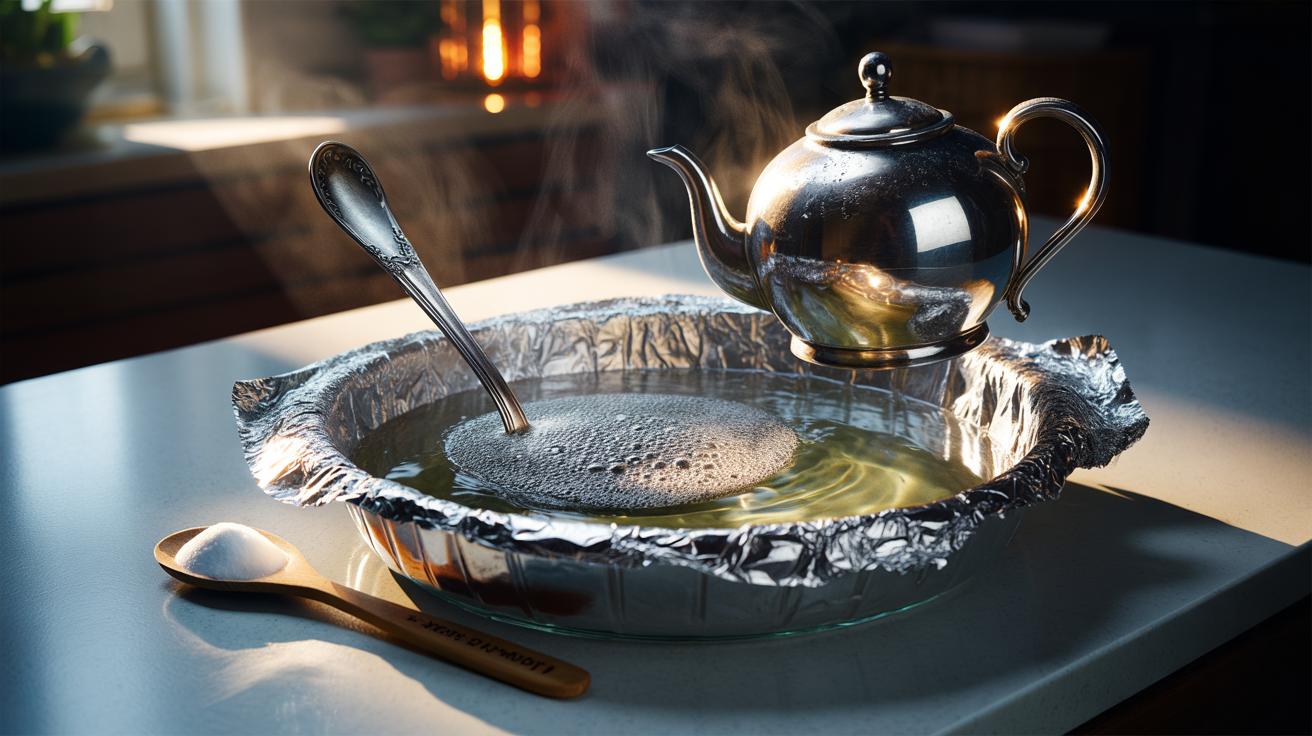
It looks like a parlour trick: throw blackened silver into a bath with “tin foil”, sprinkle in a spoon of white powder, add boiling water, and watch the tarnish vanish. Yet this kitchen-table revival owes nothing to wizardry and everything to electrochemistry. The method exploits aluminium foil, bicarbonate of soda and heat to convert dull silver sulphide back into bright metallic silver. The key is not scrubbing but reversing the chemistry that caused the tarnish in the first place. Here’s how the process works, why it is gentle on solid silver, when it is unsafe, and how to get a mirror finish without wearing away precious metal.
Why Silver Tarnishes: The Chemistry of Oxidation
Silver does not rust, yet it does tarnish when exposed to trace hydrogen sulphide and other sulphur compounds in air, from sources as mundane as wool, rubber bands and eggs. These react with the surface to form a thin, dull film of silver sulphide (Ag2S). The reaction is an oxidation in the redox sense: sulphur gains electrons, while silver’s lustre disappears under the new compound. Environmental humidity accelerates the film’s growth by helping ions move across the surface. The resulting patina scatters light, so even ornate hallmarks lose definition and intricate chasings look flat and tired.
Traditional polishes rely on abrasion: they mechanically remove the sulphide layer, but they also remove a little silver each time. Over years that can soften crisp edges and thin fine details. A better goal is to chemically convert silver sulphide back into silver, leaving the underlying metal intact. That is exactly what the foil-and-bicarbonate bath achieves, using aluminium as the sacrificial metal and warm water as a conductor to shuttle charge where it’s needed.
How the Foil-and-Bicarbonate Bath Reverses Tarnish
When aluminium foil, bicarbonate of soda and boiling water meet, they create a simple galvanic couple. Aluminium is more reactive than silver and becomes the anode, giving up electrons. The tarnished silver acts as the cathode, receiving those electrons. Bicarbonate provides an electrolyte that lets ions move between metals. The net reaction transfers sulphur from silver to aluminium: 3 Ag2S + 2 Al → 6 Ag + Al2S3. In plainer words, the black coating is chemically stripped of sulphur and turned back into silver, while the aluminium sacrifices itself. No abrasive is involved, so solid silver retains its crisp detail.
Heat matters. Near-boiling water increases ion mobility and speeds the reaction, while helping the bicarbonate dissolve and coat surfaces evenly. Lining a heatproof dish with foil ensures abundant contact points between aluminium and the pieces. A pinch of table salt can boost conductivity, though bicarbonate alone works well. You may notice faint bubbling as the redox proceeds. Once the blackness fades, lift out the items, rinse thoroughly, and dry to reveal a clean, uniform shine.
Step-by-Step Method and Safety Notes
Line a glass or ceramic bowl with aluminium foil, shiny side up. Add one to two tablespoons of bicarbonate of soda per litre of water, plus a pinch of salt if desired. Place tarnished silver so it touches the foil. Pour over freshly boiled water to submerge the items. Leave for two to five minutes, turning pieces to maintain contact. When the tarnish clears, remove with wooden tongs, rinse in clean hot water, and dry with a soft cotton cloth. Do not polish vigorously; the shine comes from chemistry, not friction. Lightly buff only to remove any grey film.
| Component | Role | Notes |
|---|---|---|
| Aluminium foil | Sacrificial anode | Must contact silver for best effect |
| Bicarbonate of soda | Electrolyte | Washing soda also works, but is harsher |
| Boiling water | Heat and conductivity | Speeds ion exchange and reaction rate |
| Salt (optional) | Conductivity booster | Use sparingly; rinse thoroughly afterward |
Work in a ventilated space and use a heatproof container. Never leave pieces soaking for hours; once bright, remove, rinse and dry. Avoid this method on intentionally oxidised finishes, lacquered silver, or items assembled with shellac or low-temperature adhesives. To delay future tarnish, store clean silver in anti-tarnish pouches with silica gel, keep it dry, and wear or use pieces—regular, gentle handling slows sulphide build-up by limiting stagnant air at the surface.
When Not to Use This Method: Plated Items and Gemstones
Silver-plated objects deserve caution. Because plating is thin, the galvanic action can undercut weak spots or expose base metal if the layer is patchy. If you suspect very thin or worn plating, avoid the foil bath. Instead, clean with a mild, non-abrasive silver polish and a soft cloth, removing as little metal as possible. The same applies to coins and numismatic pieces, where altering the surface patina can slash value. For museum-grade items or uncertain compositions, seek professional conservation advice rather than a DIY soak.
Jewellery with porous or delicate gemstones—pearls, opals, turquoise, amber—should not be immersed in hot, alkaline solutions. Heat shocks, absorbed liquids and displaced adhesives can cause damage. Enamel work, glued mounts and pieces with deliberate blackened recesses also risk aesthetic or structural harm. Remove stones if settings allow, or clean the silver parts carefully with a targeted approach. When in doubt, test on an inconspicuous area and stop at the first sign of change. The foil method is best reserved for solid silverware, cutlery and unmounted pieces with straightforward metal surfaces.
So the kitchen alchemy has a simple logic: give tarnished silver a more eager partner, offer a conductive bath, and let electrons do the polishing. With aluminium as the willing donor and bicarbonate as the bridge, silver sulphide becomes silver again—no grinding, no loss of detail, just restored lustre. Treat delicate or plated items conservatively and the method becomes a reliable part of your household toolkit. Will you rescue a blackened teapot this weekend, or experiment first with a single spoon to watch the transformation unfold?
Did you like it?4.6/5 (24)