In a nutshell
- 🧪 Vinegar’s acetic acid dissolves mineral-based soap scum (e.g., calcium stearate) fast, with warm solutions improving wetting and cutting dwell times to 2–4 minutes.
- ⏱️ A five-minute method: dilute white vinegar 1:1, spritz tiles, wait 2–3 minutes, wipe with microfibre, then rinse and dry; never mix with bleach.
- 🧼 Surface guide: safe on glazed ceramic/porcelain, glass, chrome, and epoxy grout (with adjusted dilutions); avoid natural stone like marble, limestone, and travertine.
- ⚠️ Safety first: use plain white distilled vinegar, ventilate, wear gloves, and patch-test; prefer short repeat cycles over long soaks to protect finishes.
- ✅ Prevention tips: switch to liquid soap, squeegee after showers, keep a ready-mixed spray for quick wipe-downs, and rinse every time to stop streaks and re-deposits.
Soap scum has a way of dulling even the smartest bathroom, yet the fix is hiding in your kitchen cupboard. Ordinary white vinegar cuts through the chalky film and oily binders that cling to tiles, taps, and glass. Used correctly, acetic acid loosens the residue so it wipes away without heavy scrubbing. The trick is fast application, brief contact time, and a thorough rinse—done right, you can leave tiles looking spotless in under five minutes. Affordable, low-waste, and kind to most non-porous surfaces, vinegar is the no-fuss solution that turns a weekend chore into a quick win. Here’s how it works, and how to use it safely.
Why Vinegar Breaks Down Soap Scum Fast
Soap scum isn’t just “dirt”; it’s a stubborn mix of body oils and mineral deposits from hard water. When fatty acids in soap meet calcium and magnesium ions, they form insoluble salts—think calcium stearate—that cling to tile glaze. Vinegar’s acetic acid (about 5% in household vinegar) dissolves and dislodges these salts by acidifying and chelating the minerals, while its water base softens the greasy film. Because the chemistry is doing the heavy lifting, you don’t need to scour—just give the acid a short window of contact. Warm vinegar speeds the process by lowering viscosity and improving wetting.
On glazed ceramic and porcelain, the glaze is non-porous, so the solution stays on the surface where it can work quickly. A microfibre cloth helps break the bond mechanically once the scum is loosened. Plan for a contact time of 2–4 minutes on non-porous tiles; that’s usually enough to release the film without etching or streaking. Add a drop of mild washing-up liquid if the residue is particularly greasy—the surfactant lifts soils the acid doesn’t fully break down. Always rinse to neutralise the acid and remove dissolved minerals.
A Five-Minute Method for Sparkling Tiles
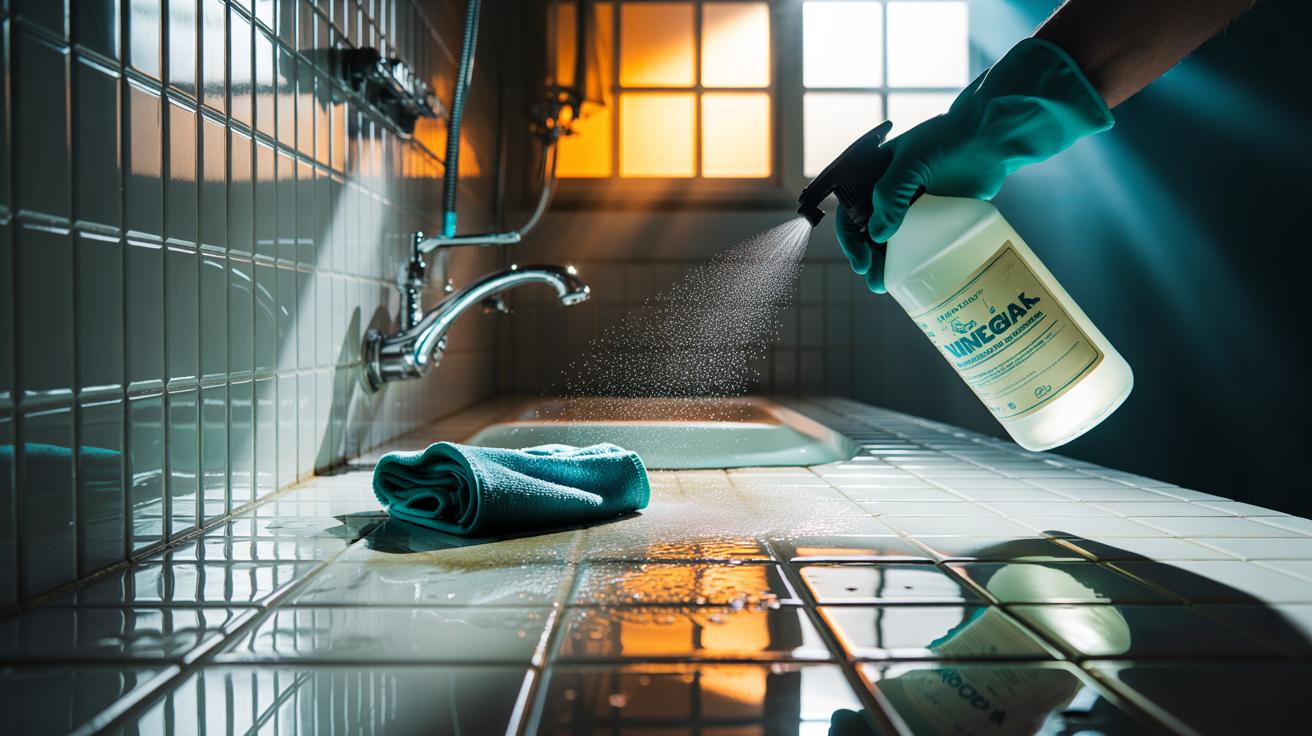
Heat a cup of white vinegar until warm (not hot), then dilute 1:1 with water for everyday cleaning. Spritz the tiles until evenly damp—no need to drench. Let it sit for two to three minutes; this brief dwell time is where the magic happens. Wipe with a microfibre cloth using light, overlapping strokes. For grout lines, a soft brush loosens loosened film without abrasion. Rinse with clean water and squeegee or towel-dry to prevent new mineral spots. Do not mix vinegar with bleach or products containing chlorine—this produces hazardous fumes. For a finishing touch on glass or chrome, buff dry to a shine.
| Surface | Vinegar Dilution | Dwell Time | Notes |
|---|---|---|---|
| Glazed ceramic/porcelain tiles | 1:1 (vinegar:water) | 2–4 minutes | Safe on glaze; rinse well |
| Glass shower screens | Neat or 1:1 | 2–3 minutes | Buff dry to avoid streaks |
| Chrome fixtures | 1:2 | 1–2 minutes | Short contact; rinse to protect finish |
| Epoxy grout | 1:1 | 2 minutes | Non-porous; gentle brushing |
| Cementitious grout | 1:2 | 1–2 minutes | Limit exposure; rinse promptly |
| Natural stone (marble, limestone, travertine) | Do not use | — | Use pH-neutral stone cleaner |
This whole routine fits comfortably into a five‑minute window for a typical shower wall section, especially if you work in small panels. For stubborn corners, repeat a quick spritz-and-wipe cycle rather than extending the dwell time; it keeps finishes safe while compounding the effect. Finish by ventilating the room to disperse odour and accelerate drying.
What To Use, Where To Avoid, and How To Stay Safe
Choose plain white distilled vinegar; it’s clear, predictable, and won’t stain grout like darker malt varieties. A trigger spray, microfibre cloths, and a soft brush are all you need. Never mix vinegar with bleach or disinfectants containing chlorine or chloramine; combine with water only. Wear gloves if you have sensitive skin, open a window, and patch-test in an inconspicuous spot. Vinegar is acid: keep it away from natural stone, unsealed grout, or damaged enamel. If you have stone tiles, use a pH-neutral stone-safe cleaner and keep the vinegar exclusively for glass or glazed areas.
If build-up persists, it’s often a sign of hard water. Two quick cycles will outperform one long soak, keeping you within the five‑minute target. Prevent recurrence with small habits: switch to liquid soap (creates less scum than bars), run a squeegee after showers, and keep a ready-mixed 1:1 spray for mid-week wipe-downs. Rinse every time to remove dissolved minerals and leave a streak-free finish.
Vinegar wins because it attacks the chemistry of soap scum, not just the symptom, and it does so quickly on non-porous tiles. With a warm, diluted spray, short contact time, and a clean rinse, sparkling results are genuinely achievable in less than five minutes. Keep it off stone, never mix it with bleach, and make light, regular wipe-downs your default. The payoff is a bathroom that stays bright with minimal effort and minimal cost. What’s your go-to rapid routine for keeping tiles camera-ready when guests text to say they’re five minutes away?
Did you like it?4.7/5 (23)